Table of Contents
Booking a trip to Africa is one side of the safari planning puzzle.
If you have booked your safari or are planning to book, what to wear is an essential part of your trip plan.
Depending on where you’re visiting in Africa, the weather can be cold or very hot.
If you visit East Africa, expect cold mornings and hot afternoons.
Knowing exactly what to wear on your safari helps you enjoy your trip comfortably.
In this article, we will discuss practical guidelines for safari attire, colors, and dos and don’ts when planning your African safari.
We recommend packing for light and warm clothing,
You could wear cool clothing as your base layer, then wear warmer layers over it that you can remove as the day heats up, whether on game drives or on a walking safari.
Choosing the proper safari attire and other gear is straightforward.
But knowing the proper process makes it easier to buy moisture-wicking, breathable, and safari-color-friendly clothes.
Appropriate safari clothing and colors are essential for layering to ensure the best experience on your trip to Africa.
What are the guidelines for choosing the perfect safari clothing?
Experience is the best teacher; we have guided many visitors in East Africa.
Some visitors were climbers to Mount Kilimanjaro, others came for wildlife safaris and beach holidays.
Every client has a story to tell and special assistance s/he need for packing the ideal safari clothing.
This provides deep insights into essential clothing to pack for a specialized trip to Africa.
Two important things to remember when buying or packing safari clothes are:
Your clothes should be comfortable and in earthy colors, and they work best with layering.
The two (2) guidelines for safari clothes
Comfort and colors
It’s recommended to wear comfortable clothes and earthly or neutral colors.
These colors are tan, light brown, khaki, and olive green.
The importance of these colors is that they are less distracting to wildlife but also protect against flies (tsetse).
Colors such as purple, blue, and black attract many insects during a safari.
It’s better to avoid distracting animals with bright colors.
You now know these colors are not trending; they are the requirements for Safari.
Layering
We cannot stress enough that layering is the best way to stay comfortable in all weather during your safari.
If you visit countries like Tanzania or Kenya, expect cool weather in the mornings and evenings, with the afternoon heating up.
Choosing the best clothes for layering is the tick on your safari packing list.
As noted earlier, clothing is made with fabrics that support wicking and allow moisture to evaporate or move from one layer to the next.
At all costs, avoid cotton clothing; due to its hydrophilicity, cotton traps moisture and disrupts the wicking process.
8 Best Clothes and Gears You’ll Need on Safari
You now have a complete understanding of safari attire and which colors to choose. Here is the list of eight (8) kinds of safari clothes and gear:
1. Trousers
Choose comfortable trousers for the safari. Avoid jeans or tight trousers, which are not suitable for safari.
You need flexible trousers when jumping in and out of the safari vehicles.
Don’t forget to wear safari-friendly colors: khaki, tan, or olive green.
Lightweight trousers, such as cargo trousers, are suitable for long periods of sitting on game drives.
Please make sure they are quick-drying and water-resistant.
The advantage of choosing well-made trousers for safari is their flexibility, whether in the lounge or on hikes.
If you plan to visit Africa for mountain trekking, consider convertible trousers for women and men.
The best-known brand is Columbia, whose trousers are ideal for sun protection and are breathable.
The fabric used for these trousers wicks moisture away to keep you dry and cool throughout mountain trekking.
Refer to the Kilimanjaro packing list.
2. Safari Shirts
We recommend starting with a moisture-wicking t-shirt or tank top as the base layer.
Then you can decide to add a Safari Long-Sleeve Shirt or a breathable sweater.
The advantage of wearing long-sleeved shirts is sun protection and bug protection during a game drive or an evening stay at the camp.
These shirts are more comfortable, but if you prefer, you can choose short-sleeved shirts. But don’t forget to apply sunscreen and insect repellent.
Safari shirts are also suitable for dinner after game drives, though there are no dress codes in many lodges and luxury camps here in Africa.
3. Pairs of Underwear for Safari
Having extra pairs of underwear during your safari is a good idea to keep you clean and comfortable.
The length of your trip will determine how many pairs of underwear to pack; 4-7 pairs is an ideal range.
You might plan to go on a walking safari, but you should focus on buying sports underwear.
There are many brands, such as Icebreakers and Jockey, that are excellent for walking trips in Tanzania or Kenya.
You don’t need to make it so hard; for women, we recommend packing low-impact sports bras for the bouncy safari drives.
Women should also focus on quick-drying underwear in case they need to wash it while on their lodge or campsite.
Best Safari Jackets
They are essential for layering, during morning game drives, and after game watching or walking safaris.
The type of jacket to buy depends on the time of year you plan to visit East Africa.
You could wear the fleece, puffer jacket, or rain jacket and scarf before heading out for the safari.
The weather will determine when you should wear or remove the outer layers. If it’s dry season, the fleece jacket and windbreaker are all you’ll need.
But for the rainy season, get prepared with a rain jacket, and in case you need to combine it with
For Mount Kilimanjaro, the list should be adjusted based on the mountain trekking packing list.
4.1: Warm Jacket
Don’t just buy jackets because you have to, but focus on investing in the best value-for-money warm jackets.
Some brands in the market can be too expensive but worth the price, such as The North Face Aconcagua Insulated jackets.
These jackets offer flexibility for use in different environments and activities.
Depending on the brand you choose to pack for your safari, consider warm, water-resistant, lightweight jackets and windbreakers.
4.2: Fleece Jacket
This is another excellent way to wear a jacket on an African safari.
While morning and evening turn out to be chilly, for instance, if you’re in Ngorongoro Crater in Tanzania.
The morning game drive can be icy due to open safari vehicles and wind.
This combination makes the fleece jackets the best thing you’ll depend on while on safari
4.3. Scarf ( Lighter silk & blanket)
Don’t underestimate the scarf while planning for your safari. Scarves protect against insects and dust storms.
A scarf is essential during your safari, as it provides extra warmth when needed.
You can either wear a lighter silk scarf around your neck during the day or a heavier blanket scarf when the weather turns cold.
Don’t forget to consider the safari-friendly colors.
5. Rain Gear and Hard-shell
If you’re visiting East Africa during the wet season, you’ll need additional gear beyond fleece and warm jackets, as mentioned earlier.
We recommend packing rain gear and a hard shell. Choose a synthetic jacket with a water-resistant outer fabric. Synthetic jackets perform better than warm jackets during the rainy season.
There are many jacket brands available for adventure safaris, both for women and men.
The North Face and Columbia are popular brands, though they are a bit pricier than others.
If you plan to walk or trek, consider packing or buying a poncho to cover your back and body.
This is during a downpour, either in the Serengeti or the Maasai Mara, or during the Mount Kilimanjaro trek.
6. Safari Hat and Sunglasses
We recognize that not everyone wears sunglasses.
A hat is essential for protecting against the tropical sun during the safari.
For UVB and UVA rays, a Hat can be beneficial for protection.
The best safari brands are moisture-wicking and breathable, and they stay on your head during game drives.
While the sunglasses provide the best eye protection against wind and dust, they also protect your eyes from the sun.
Buy yourself the best brands, such as Carrera, Quechua, and Ray-Ban. You know what looks good for you for safari.
Safari Shoes
Need to be comfortable and straightforward. If you’re visiting Africa for trekking, your choice of shoes should be sturdy hiking boots.
If your trip does not involve trekking or hiking, focus on packing comfortable hiking boots.
For safari, you will spend most of your days in the safari vehicles and maybe around the campfire during the evening.
Hiking boots or high-top trainers are suitable for covering your ankles.
Don’t forget your flip-flops with soles for showering, beach walking, or swimming pools.
You don’t need Solomon’s Vibram hiking boots on the beautiful sand beaches of Zanzibar.
8. Safari Socks
Socks are essential for your safari. You should have some extra pairs of moisture-wicking socks for your boots or shoes.
We recommend merino wool socks that can be worn multiple times before washing.
What are the best colors for safari?
This is a very crucial subject for safari clothing: what color should you wear on safari?
The best-recommended safari clothing is Earthy or neutral colors. These colors blend well with environments. The safari colors include khaki, tan, or olive green.
Why do safari colors matter for your trip?
Safari-friendly colors save you from bugs and insects while on game drives or walking safari.
It’s important to remember that colors such as blue, red, white, and black attract many insects but also disturb wildlife.
Safari colors are ideal for blending with the natural environment, providing optimal wildlife sightings without distracting from the natural surroundings or scaring away animals.
“So the quality of game-watching should fit the quality of the clothes you choose to wear for your trip”.
Join the clan of safari-goers for a decade by wearing made-for-purpose safari clothing like khaki.
Don’t show up dirt as easily as other colors when on an African safari
What colors shouldn’t you wear on an African safari?
Black and blue
These colors stand out in the bush but are a death trap for insects.
If you will be visiting areas with tse-tse flies, especially in national parks.
These colors attract these insects with painful bites, which is why you will see fly traps are made from black and blue fabric.
How about white colors on safari?
The same goes for the same block of not packing for safari.
White is very noticeable to animals, but wearing it to dinner at your luxurious accommodation in the evening can create a great impression.
You can pack for evening occasions, but not to wear during game drives or walking safaris.
What should I wear for an evening safari?
Our desire for nature is unavoidable, and if we love nature, it is inevitable too.
The “insect”. Insects are vital for the ecosystem, but the moment you want total relaxation can be trouble, especially in the wilderness.
Other insects not only cause trouble but can also transmit deadly diseases such as malaria and yellow fever.
That is why carrying insect repellent is essential for safari-goers in Tanzania or Kenya.
As we noted earlier on the best colors for safaris and technical fabrics, staying at a hotel, lodge, or tented luxury camp does not have to be that way.
The rules are suspended during evening stay for relaxation, freedom calls out, and you need to wear what you feel is sexy and luxurious.
Here are some of the best tips on what to wear for evening safaris.
The great white shirt
The sun is down, and your mind needs to chill and unwind after hours of tracking the following wildlife in Africa.
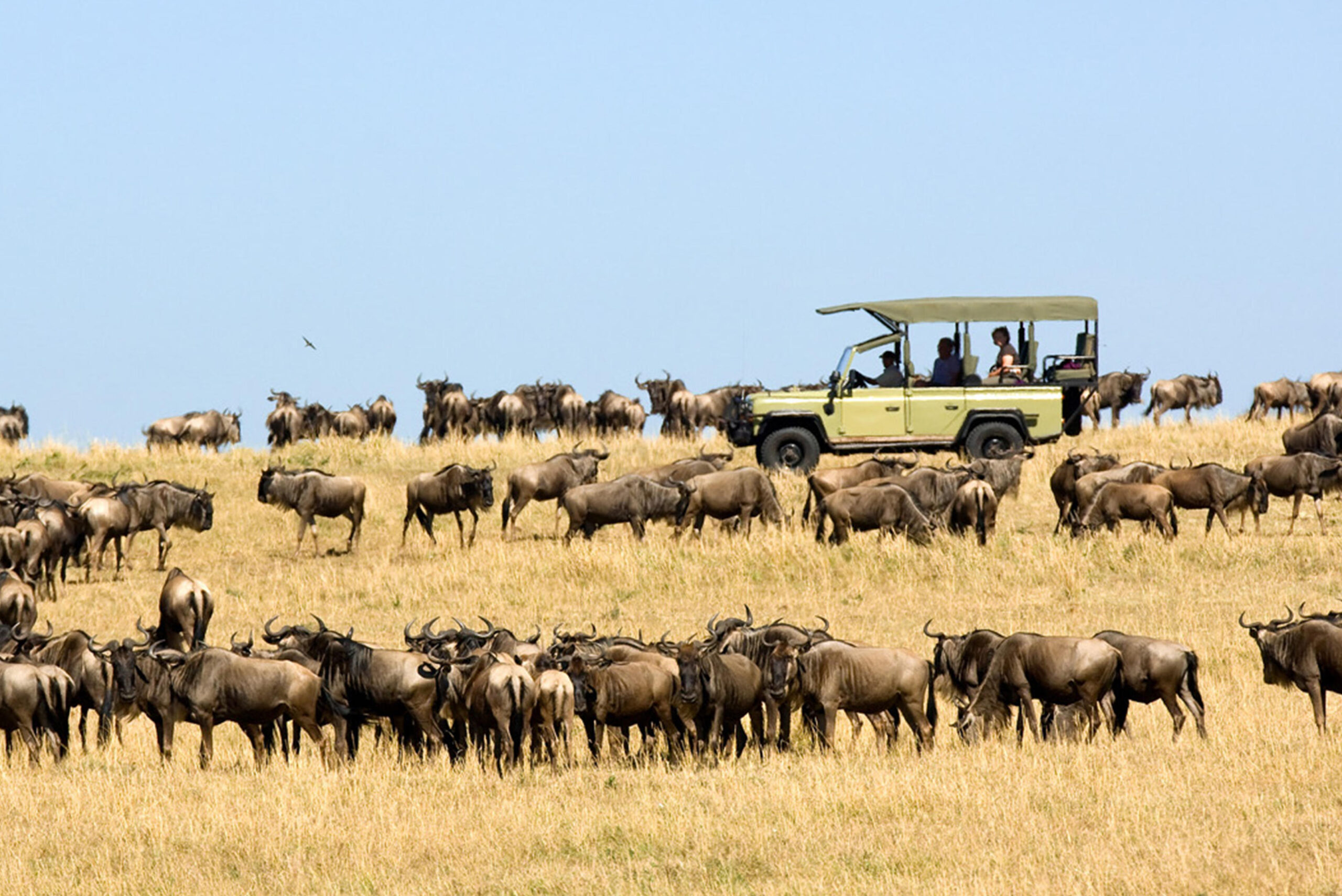
If you’re on a great wildebeest migration, then you are exhausted counting the millions of gnus on the move.
It’s evening after a bath or hot shower, and you need to put on that crisp white shirt.
Nothing is more satisfying than that; it makes you look bright, clean, and open-minded.
Don’t forget to have it while in Serengeti National Park in Tanzania.
The timeless safari-style fashion clothes
Yes, not only in New York should you wear that stylish outfit, but it’s even better here in the African jungle.
Shop around for safari fashions; there are thousands available, including jogger pants, shirts, and elegant shorts.
That enables you to turn on your evening vibe before heading to dinner while on safari. Can you imagine!
When the sun goes down, the safari jacket & fleece are what you’ll need.
If you will be in Tanzania or Kenya for a safari, the evenings can be chilly or cold.
Depending on the time of year, jackets or scarves can keep you warm in the weather.
You can bring warm clothes for dinner or for storytelling around the campfire.
Insect repellents and safari boots
If you’re in any park in Africa, you should never take it for granted; this is the wild land.
Insects such as tse-tse flies and mosquitoes are unavoidable, and snakes and scorpions can be found around camps, lodges, or hotels.
Using the best insect repellents protects you from that; you can use Permethrin or a DEET-based repellent.
The primary purpose of safari boots is to protect you from snakes and insects while walking.
Don’t be afraid to stay within the lodges or camps built inside the parks because of that.
Many areas with lodges and camps are treated to keep away snakes and other hazardous insects, such as scorpions.
But in case it happens accidentally, you’d better be on the safe side.
Pack a lightweight torch.
You may ask what it has to do with your evening stay. Yes, it is quite an essential item you’ll need during the evening.
“Remember to put a compact torch in your sachet while on safari”
This will help you to keep an eye out for insects and wildlife that may have wandered into the camp or lodge.
This can be in Ruaha or Ngorongoro Crater, or even in the Masai Mara in Kenya.
How to protect yourself from the sun while on safari
The sun is good on any trip in Africa, but all that glorious sunshine can ruin your relaxation due to sunburn.
Make sure you protect your skin with hats, sunscreen, and clothing with high SPF.
Whether you’re relaxing in Melia Serengeti Lodge, Ngorongoro Serena Lodge, or even on the beautiful island of Zanzibar.
Taking care of your skin while in Africa is essential to enjoying your lifetime safari.
Many places can get very hot with extreme sunshine, which can damage the skin.
Sunburns and long-term effects can occur while on safari.
Knowing what to pack helps protect your body and skin and enhances your relaxation by keeping you cool.
Now you have the idea of how the sun can ruin your safari, but with these sun protection essentials,
This will be safe from the sun in Tanzania, Kenya, or Rwanda.
1. Let your clothes do the work ( UPF50+)
Your choice of safari clothing is an effective way to protect against the African sun.
The long-sleeved shirts and zip-off trousers are the best fabrics to pack for your safari.
These fabrics wick moisture more effectively and keep you cooler than cotton and other fabrics.
Research for these brands specializes in safari clothing worldwide.
2. Safari Hats & sunscreen
The best safari hats make you feel good and stylish while on safari.
Wearing hats helps you keep the sun off your face and protects your skin from sunburn during the day.
In addition, sunscreen keeps your skin moisturized and protected from harmful UV rays.
You should focus on buying sunscreen that provides both UVA and UVB protection.
3. To the infinity pool and beyond
Most lodges have a pool or swimming area, and this is the perfect way to cool down between activities and enjoy the surrounding bush.
Don’t forget that a kikoy is a highly versatile item to pack for a safari – and will be right at home next to the lodge pool.)
What to wear on Zanzibar Island
The locals of Zanzibar and many parts of Africa are Muslim, and there is no flexibility in the dress code.
We recommend respecting their way of life with an open mind and heart.
Please dress modestly and conservatively when sightseeing in Stone Town or visiting anywhere outside the beach resorts in Zanzibar.
Women should not wear sleeveless or revealing tops, short skirts, thigh-high shorts, or bare midriffs (Capri trousers or at least knee-length shorts are acceptable).
Men should wear shirts, pants, or knee-length shorts.
There are some exceptions in private beaches owned by luxury hotels and lodges.
Few hotels offer adult-only services, such as the RIU Palace Hotel in Unguja, Zanzibar.
Refer to our guide for luxury hotels in Zanzibar.
Conclusion
As we wrap up, we are confident that you have gained the knowledge and understanding you need to wear on your next adventure safari, whether in Tanzania or Kenya.
If you still need more information about the subject, we suggest the Safari packing list for Tanzania & Kenya.
Are you ready to start planning?
You can proceed with booking by filling out the form below. Let’s make your adventure unforgettable!
Other Articles
Tanzania Walking Safari Cost: Complete Price Guide for 2026
Tanzania Luxury Safari Cost: Price Guide 2026
Affordable Tanzania Mid-Range Safari Cost: Your 2026 Budget Guide
Budget Safari Cost in Tanzania 2026: What You Need To Know
Top 5 Secret Spots in the Serengeti and Ngorongoro: Escape the Crowds in 2026
Tanzania Safari Cost 2026: Best Prices, Packages & Essential Tips
Tanzania Safari Cost-Complete Guide 2026
Why would you want a private safari?
Tanzania vs Kenya: Which offers the best safari?