Table of Contents
Zanzibar is a tropical paradise in East Africa. This beautiful island is situated 35km off the coast of Tanzania’s mainland.
With two main islands of Unguja and Pemba, this is a hidden gem beach destination in Africa. Offers a unique experience to anyone who dares to visit.
The fascinating history of the slave trade, cloves, the best beaches, and marine life are among the things you can experience in Zanzibar.
Enjoy the underwater adventure and the best short excursion around these two islands of Unguja and Pemba.
Zanzibar Island is very safe for tourists. Many people visit Zanzibar for scuba diving m snorkeling and safari blue exploration.
Zanzibar is an archipelago off the coast of Africa, easily accessible from Kenya, Uganda, Rwanda, and other parts of Africa.
In this article, we discuss 16 Things to know before visiting Zanzibar.
Let’s dive in to find the best idea for your epic beach holiday in Zanzibar.
16. When is the best time to visit Zanzibar?
As you plan your holiday in Zanzibar, the first question to ask is when is the best time to visit? Knowing the best time to visit a destination is the first step in planning a holiday.
When visiting Zanzibar, the best time to go is during the dry season.
The dry season runs from June to September and from mid-February through February.
The rainy season is from April to May. Planning your holiday during the dry season gives you the best chance to enjoy Zanzibar’s beautiful beaches and short excursions.
Bear in mind the temperature range from 28°C to 34°C throughout the year.
15. Do I need a visa for Zanzibar?
Depending on which country you are coming from. Some countries are exempt from visas.
Including Mozambique, South Africa, Kenya, Singapore, Malta, Malaysia, and many others.
However, if you fall outside of that category, a visa is required to enter Zanzibar or Tanzania.
The process to obtain a Visa for Tanzania is made easy for everyone. You can now apply online through Tanzania’s e-visa system.
You can apply and pay on your own, then wait a few days for your visa to be approved. It’s also possible to pay for your visa on arrival at the airport in Zanzibar.
Visas can be obtained through Tanzania’s e-visa system, where travelers can verify whether their country of origin is on the visa requirement list. E-visas must be booked in advance.
Ensure your passport is valid for at least 6 months beyond your date of arrival in Zanzibar.
14. How do I get to Zanzibar Island?
As in other parts of Africa, many flights land in Zanzibar. It can be either the main island, Unguja, or Pemba.
If you’re traveling on International flights, expect to arrive at Dar es Salaam International Airport.
From there, you can take a flight or ferry to Zanzibar. A flight to Zanzibar is around $50 or more, while a ferry is the budget option. Learn more about ferries to Zanzibar
13. How about costs in Zanzibar?
Zanzibar is a very popular beach holiday destination, so you should know that prices will vary to accommodate all types of tourists.
If you’re looking for luxury or budget hotels and lodges, there is always something for everyone.
Your holiday can be either too expensive or budget-friendly; what matters is the level of comfort you choose.
Bear in mind that the cost ranges from $35 to $1,200, and even more, per night.
If you stay in five-star luxury hotels in Zanzibar, expect to pay more than at backpacker hostels or lodges, whether in Stone Town or elsewhere in Zanzibar.
There are various excursions, including scuba diving, snorkeling, historical tours, spice tours, Prison Island, and Safari Blue.
These activities vary in price based on the time spent.
Meals and drinks are reasonably priced. Beer will cost no more than $2, while other beverages will cost less than $1.
Prices for marine and cultural foods vary by location and the quality of service.
12. Where are the best places to stay in Zanzibar?
Zanzibar Island offers the best accommodation ever in Tanzania. Some are located at the beach while others are in the middle of Stone Town.
These accommodations vary in price; you can either stay at a five-star hotel or a backpackers’ hostel in Zanzibar.
What matters is the budget and your preference.
Notable hotels and lodges on the Zanzibar Islands include Zanzibar Serena, Gran Melia Hotel Zanzibar, Fumba Beach Lodge, Amaan Bungalow Beach, Riu Palace Hotel, and others.
You can explore our list of the best places to stay in Zanzibar
11. What languages are spoken in Zanzibar Island
Thinking of the language spoken in Zanzibar? Worry not about that, this island is the melting pot of cultures, and many languages are spoken here.
Due to tourism, many people have learned multiple languages. Whether you speak Spanish, French, Dutch, Italian, German, Russian, Japanese, or Chinese you are covered.
The official languages are Swahili and English.
10. How about local cuisine and foods in Zanzibar?
As the name suggests, Zanzibar’s cuisine features a variety of local spices.
Zanzibar cuisine reflects the diverse cultural influences of Arabs, Indians, Portuguese, Chinese, British, and Swahili.
All these cultures have influenced the whole preparation and contents of the food available on the Island of Zanzibar.
Expect to enjoy exotic dishes with packed flavor. One of the most popular dishes is spice cakes, which are available in almost every town and village.
This cake is made from nutmeg, chocolate, cinnamon, and cloves.
Apart from spices, marine foods are the best foods you can enjoy here in Zanzibar.
While avoiding eating at all times, consider the place’s hygiene before consuming food on the street or in local restaurants.
9. What is the geography of Zanzibar?
The island of Zanzibar is a relatively low-lying island in Tanzania. Covered with mango trees, coconut trees, coastal ferns, bananas, and tropical flowers.
Providing this island with the best outlook, with more than 4,000 plant species.
It’s only 40 kilometers wide and 90 kilometers long, while surrounded by the Indian Ocean.
This ocean is very popular for snorkeling and scuba diving. The Island of Zanzibar offers the best spot for snorkeling, like Chumbe Island.
If you wish to go snorkeling, it can be arranged through travel agencies or hotels.
Northern Zanzibar
This part of Zanzibar is covered with the evergreen rainforest. It has a ridge that peaks at an elevation of 119 above sea level.
These areas have several streams and rivers due to their elevation.
Zanzibar has a variety of beaches across the archipelago, giving visitors the best opportunity to spot nesting turtles.
For places like the Nungwi area, where the volunteer project for sea turtle conservation is taking place.
The variety of coastal vegetation also provides a perfect habitat for a wealth of wildlife including Red- colobus monkeys, civets, mongoose m antelope lemures, and leopards.
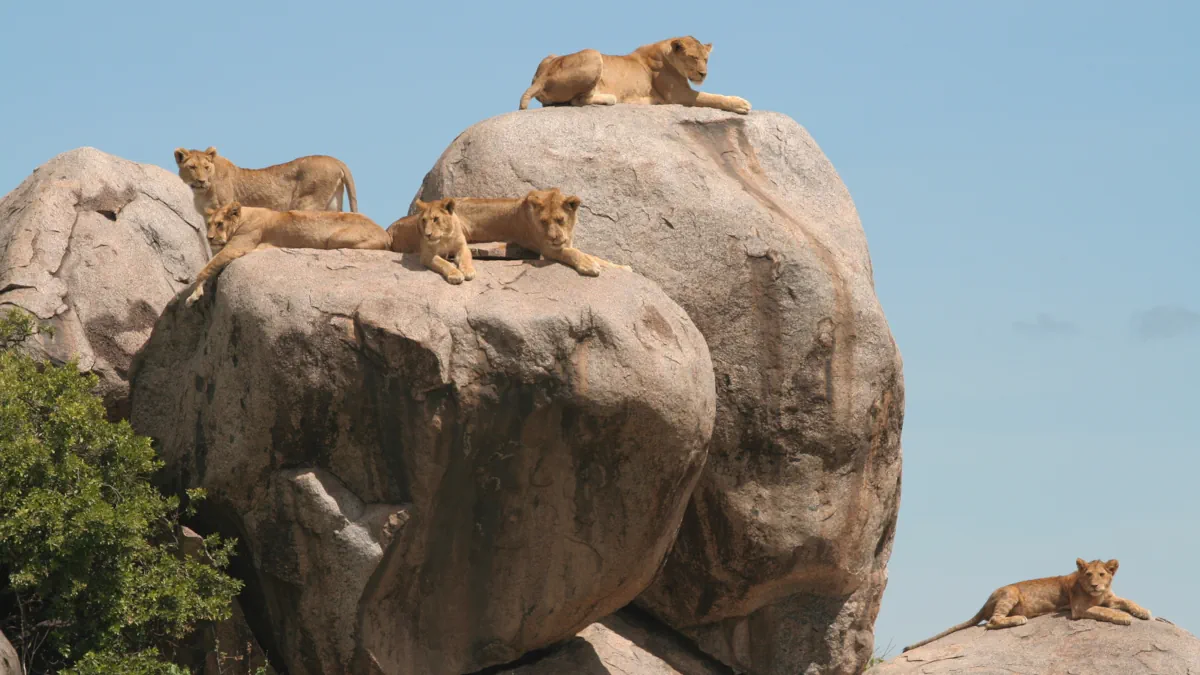
It’s not possible to see lions in Zanzibar, but maybe if you visit Tanzania’s Ngorongoro Crater.
More than 20 bat species and 30 snake species can be spotted in Zanzibar.
Don’t forget Zanzibar Island is home to colorful coral reefs, teeming with reef fish, sea horses, Mantis shrimp, crocodile fish, octopuses, and nudibranchs.
Turtles, humpback whales, and Bottlenose dolphins. You can easily spot it at Mnemba Atoll.
8. How about Zanzibar Beaches
The island of Zanzibar is well known for beach tourism. Many visitors come for the serene white-sand beaches of Africa.
They combine beach trips with cultural and historical tours in Stone Town or on Pemba Island.
Thinking of where to find the best beaches in Zanzibar?
Then visit the northeast of Zanzibar for pristine beaches, diving, and high luxury accommodations.
If you are interested in dolphin safaris, then visit the Pemba Islands, where you could combine your trip with a clove plantation and village visit.
Unguja is the most visited and can be easily accessed from Tanzania’s mainland by ferry.
You can decide to combine the Tanzania safari with a beach holiday for a unique experience on Tanzania’s Zanzibar Island.
Nungwi and Kendwa
These two beaches are sought-after destinations in Tanzania. These two places can be crowded during the high season.
Nungwi and Kendwa are beach villages located at the northern tip of Zanzibar.
These two locations are ideal for beach sports, including swimming at high and low tides.
Offshore, the coral reefs offer some of the best coral reefs with abundant marine life, making them popular for diving tours and boat trips in Zanzibar.
Thinking of the Zanzibar full moon party? If yes, then Kendwa Beach is home to the famous.
For those focusing on volunteer activities, Nugwi is the best place to volunteer.
There is an ongoing project for sea turtle conservation. The green and hawksbill turtles are conserved here and monitored by the Mnarani Marine Turtle Conservation Pond.
If you’re interested in volunteering, set a budget of around $560 per week
Jambiani Village
Jambiani is a tiny fishing village in Zanzibar. It is ideally located between the towns of Paje and Makunduchon on Zanzibar’s southeast coast.
Comprising a few small villages, it’s a quieter destination but has many restaurants, hotels, and guest houses.
The area is well known for its authentic Zanzibar feel, with dugout canoes still used for transport.
It’s also known for its local seaweed farming activities, and locals are only too happy to share their knowledge about this vital source of agriculture.
Michamvi Peninsula
The Michamvi Peninsula is the perfect destination for honeymooners.
Located on the southeast coast, Michamvi is a very remote area offering a unique, serene beach experience.
Hundreds of visitors go to Michamvi to witness Zanzibar’s best sunset viewpoints.
The other top attraction in this area is “The Rock Restaurant,” one of the most popular spots for visitors.
This restaurant is built upon an outcrop. You should take a boat to visit the Rock restaurant in Zanzibar.
7. Which is the capital city of Zanzibar?
The capital city of Zanzibar is a stone town. It is one of the old harbors in East Africa and a UNESCO World Heritage Site.
It has a unique architecture dating back to the 10th century. Stone Town has a long history of the slave trade up to the 19th century.
As of today, Stone Town remains with several ancient buildings, including mosques, churches, and a museum.
Moving around the streets, you will pass through the narrow streets, buzzing with night markets frequently visited by tourists.
The stone town offers the best luxury lodges for overnight stays and daytime relaxation.
6. What is the history of Zanzibar?
Zanzibar is one of the few places in Africa with a fascinating history dating back centuries.
Zanzibar was once a center of the slave trade and the spice trade. It was a stopover for long-distance traders from Iran, India, other parts of Africa, and the Arab world.
The island’s natural beauty attracted many people, and many mosques were built in Stone Town and along the Swahili coast. T
That is why Muslims dominate Zanzibar today. The island’s culture remained a mix of African, European, and Middle Eastern influences.
The Portuguese ruled this island from 1498 for almost 200 years. They introduced the cash crop trade.
But before that, Arabs had been in relationships with the people of Zanzibar since 700 AD as they sailed to the Gulf.
In 1698, the Portuguese fell, and the Sultanate of Oman took control of Zanzibar and diversified the cash-crop trade with Arab countries.
By the 1960s, Zanzibar had enjoyed a brief period of independence following the end of the protectorate in the 1890s.
However, there was a major upheaval between the Zanzibar Africans, who made up 56% of the population, and the Zanzibar Arabs, who made up 17%.
By 1964, the revolution took place in Zanzibar. This marked the end of the Sultanate in Zanzibar.
The revolution cost the lives of thousands of people, and others fled the island. After the revolution, Zanzibar became the People’s Republic of Zanzibar and Pemba.
It remained a semi-autonomous state until 26 April 1964, when it merged with Tanganyika to form the United Republic of Tanzania.
Read more about the history of Zanzibar.
5. What are the customs and traditions of Zanzibar?
Zanzibar Island is predominantly Muslim. Tourists visiting this island are advised to respect local customs and culture in public areas.
Wearing shorts or clothing that exposes most of the body is not acceptable.
However, public displays of affection, such as romantic displays, are not acceptable.
Generally, the people of Zanzibar are friendly and welcoming to visitors. They are humble and enjoy a slow-paced life on the island.
Tourism accounts for about 50% of this island’s economy, and the population is now over 1.2 million.
4. What are the famous spices of Zanzibar?
The Island of Zanzibar is nicknamed the Spice Island. This island is known as the largest producer and exporter of spices in East Africa.
For centuries ,Zanzibar has been trading spices. Zanzibar’s main spice exports include clove, chili, black pepper, nutmeg, cardamom, turmeric, and cinnamon.
Cloves are the most commonly produced spice. Other spices grown on the island of Zanzibar include vanilla, saffron, and lemongrass. While in Zanzibar, you can request a day trip for spice tours
3. What is the wildlife available in Zanzibar?
Zanzibar Island offers a complete package for visitors. Beyond history, wildlife is another attraction here.
It has different protected areas, including Jozani Chiwaka Bay National Park and marine parks.
We can group Zanzibar’s wildlife into three major categories, which include:
Marine Species
Those who venture beneath the surface to explore the underwater world will have their pick of around 500 fish species, turtles, octopuses, crabs, and starfish to observe.
And then there are the marine mammal stars of course – humpback and sperm whales, bottlenose, and spotted dolphins.
Wildlife – Mammals
The Zanzibar red colobus monkey is endemic to the island and one of 54 terrestrial mammal species found there.
Other species include 23 bat species, small antelopes such as the suni, and the bush-tailed mongoose.
Birds
There are around 240 species of birds in Zanzibar, including the Pemba Sunbird, African fish eagle, Fischer’s turaco, Roseate tern, and the Pemba scops owl.
2. What tropical diseases are to be found in Zanzibar?
The entire island of Zanzibar is prone to Malaria.
As in other tropical areas of Africa, mosquitoes can be a problem during the hot season, so visitors should take precautions.
Some visitors prefer to bring anti-malaria ointments or take some malaria pills.
You should consult your medical practitioner before taking these pills, including Doxycycline, Atovaquone/Proguanil, or Mefloquine.
Apart from tropical diseases, you can also check on CDC recommendations for diseases before visiting Tanzania’s Zanzibar Island.
1. What are the best Zanzibar holiday packages?
Best holiday packages for Zanzibar vary based on accommodation quality, number of days, and activities or excursions.
There are two ways to plan your trip to Zanzibar.
The first idea is to use local tour operators to organize your holiday in Zanzibar.
Tour operators can offer you an all-inclusive package based on your budget. It is a very safe, hassle-free travel plan.
The second option is to visit Zanzibar and arrange your own accommodation or vacation package.
Some visitors prefer to use local guides or beach boys. You should exercise caution when using this option, as many people have fallen victim to scammers and had their experience ruined.
You can check out Zanzibar Holiday Packages
Conclusion
As we drive this discussion home for 16 Things to know before visiting Zanzibar.
You may have questions or requests regarding the Zanzibar holiday. Don’t hesitate to contact us today.
Are you ready to start planning?
You can proceed with booking by filling out the form below. Let’s make your adventure unforgettable!