Ngorongoro Crater

Ngorongoro Conservation Area is a pioneering experiment in many land uses. The park is conserved for different purposes. It involves integrating the protection of wild nature with the protection of local people.

Where is Ngorongoro Crater?

The area is part of the Serengeti ecosystem. The northwest adjoins the Serengeti National Park. It is contiguous to the southern plains of Serengeti.
 
These plains also extend to the north into the unprotected Loliondo division. This area is kept open for wildlife and pastoralists, particularly the Maasai.
 
The south and west of the area are volcanic highlands, including the famous Ngorongoro Crater and the lesser-known Empakaai Crater.
 
The rim of the Rift Valley wall defines the southern and eastern boundaries. This wall plays a key role in preventing animal migration in this direction. This also prevents animal migration in these directions.

What are the Attractions in Ngorongoro?

The Ngorongoro Conservation Area (NCAA) is best known for the Ngorongoro Crater. It is the world’s largest inactive, intact, and unfilled volcanic caldera.

The crater of Ngorongoro

Ngorongoro Crater was formed by a large volcano that erupted and collapsed in on itself. About two to three million years ago, it was made 610 meters (2,000 feet) deep. And its floor covers 260 square kilometers (100 square miles).
 
Estimates of the original volcano’s height range from 4,500 to 5,800 meters (14,800 to 19,000 feet). It was higher than the peak of Mount Kilimanjaro which is 5895 meters.
 
The crater floor is 1,800 meters (5,900 feet) above sea level. The crater was named one of the Seven Natural Wonders of Africa by Seven Natural Wonders in 2012. The Ngorongoro volcano was active from about 2.45 to 2 million years ago.

Olmoti & Empakaai Crater

Other features created by this eruption include the Olmoti and Empakaai craters, though they were much smaller.

Why Ngorongoro Crater?

Natural Wonders of the world

Ngorongoro Crater is one of the Natural Wonders of the world. It’s an incredible natural sanctuary for large mammal species in the East African plain.

Home for Black Rhino

Ngorongoro Crater remains a safe place for the endangered Black Rhino. It is the only place in Tanzania where it is easy to see Rhinos.
Not only is Ngorongoro home to Black Rhino, but it is also home to predators, headed by lions and hyenas, which is fantastic.

Maasai People

Visit the Maasai people who migrated to Tanzania more than 300 years ago. Their unique nomadic lifestyle is exciting to learn about. Ngorongoro Crater is the only refuge for grazing and water for the Masai cattle.

Archeological sites

Ngorongoro acted as the platform for Archaeological research. This created a long sequence of evidence of human evolution and human-environment dynamics, including early hominid footprints dating back 3.6 million years.

High Density of Wildlife

The density of wildlife inhabiting the area. The annual migration of wildebeest, zebra, and other animals into the northern plains. It is a wonderful experience in Ngorongoro Crater.

Easy Access

Easy and fast to access year-round, the park is 177 km from Arusha.

Meaning of Ngorongoro 

The crater’s name has an onomatopoeic origin. The Maasai pastoralists named it after the sound produced by the cowbell (ngoro ngoro).
 
Based on fossil evidence found at the Olduvai Gorge. Various hominid species have occupied the area for 3 million years.
 
Hunter-gatherers were replaced by pastoralists a few thousand years ago. The Mbulu tribe arrived in the area about 2,000 years ago, and was joined by the Datooga around the year 1700. Both groups were driven from the area by the Maasai in the 1800s

Historical Events for Ngorongoro 

  • No Europeans are known to have set foot in the Ngorongoro Crater until 1892. Until Oscar Baumann visited it. Two German brothers (Adolph and Friedrich Siedentopf). Did farming in the crater until the outbreak of World War I

  • They lease the land from the administration of German East Africa. The brothers organized shooting parties to entertain their German friends. They also attempted to drive the wildebeest herds out of the crater.

  • In 1921, the first game-preservation ordinance was enacted—this restricted hunting to permit holders throughout Tanzania.

  • In 1928, hunting was prohibited. This includes all land within the crater rim, except the former Siedentopf farms.

  • The National Park Ordinance of 1948. (implemented in 1951) Created the Serengeti National Park (SNP). This caused problems with the Maasai and other tribes.
  • In 1959, the Ngorongoro Conservation Area Ordinance was enacted. That separated the conservation area from the national park.
  • Maasai pastoralists living in Serengeti National Park were relocated to Ngorongoro Conservation Area. Increasing the population of Maasai and livestock living in the Crater

  • In the year 1976. The Game Park Laws established the Ngorongoro Conservation Area Authority. (miscellaneous amendments) Act, 1976. This occupies the majority of the Ngorongoro Conservation Area, including the Crater.

  • And in 1979. The area became a UNESCO World Heritage Site. The Wildlife Conservation Act of 2009 further restricted the use of Ngorongoro Crater. And created a legal framework to disenfranchise and displace traditional pastoralists.

  • The restriction on land use created tension between the Maasai and conservation authorities. International Union for Conservation of Nature (IUCN). Is working on solutions to ease conflict. And improve collaborative conservation efforts with local communities.
Coexistence between humans and wildlife is a distinctive feature in Tanzania. Ngorongoro is the only place on Earth that practices this form of conservation.
 
Land use is regulated to prevent adverse effects on wildlife populations. For example, cultivation is prohibited at all but at subsistence levels

Wildlife in Ngorongoro Crater 

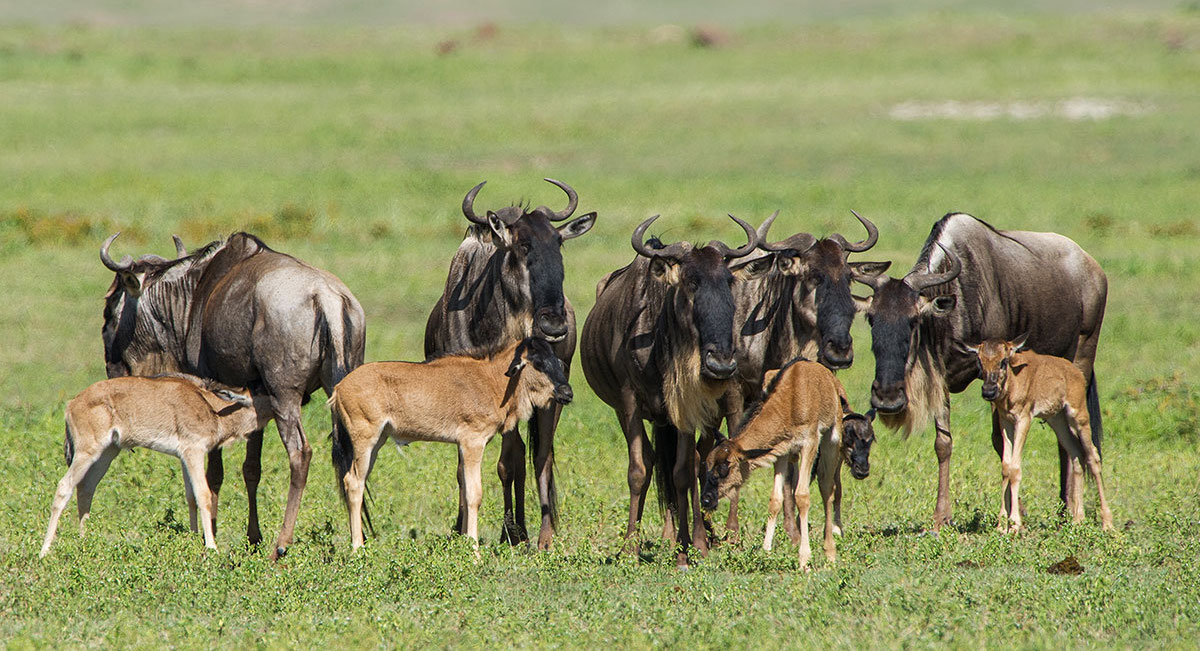
Ngorongoro Conservation Area is home to the largest ungulate herds in the world, including gnu (wildebeests), plains zebras, and Thomson’s and Grant’s gazelles.

Predatory animals include lions, spotted hyenas, leopards, and cheetahs. The endangered African hunting dogs are available.
 
Notable among more than 400 species of birds. These are flamingos, silvery-cheeked hornbills, superb starlings, bronze, and tacazze sunbirds.
 
Ngorongoro Crater is the best park in Tanzania to see the endangered Black Rhino. Their small population is thriving in this idyllic and protected environment. It is currently one of the few areas where they continue to breed in the wild.
 
The chance to encounter all the Big Five is so high and fabulous, including black-maned lions. Many flamingos are also attracted to the soda waters of Lake Magadi. 

Ngorongoro Accommodations

Ngorongoro Tours & Safaris
  • From

    7 Days Tanzania Camping Safari

  • From $6,830

    14 Days, 13 Nights

    14 Days Tanzania Guide Safari

    Tarangire ,Serengeti , Ngorongoro Crater, Zanzibar

  • From

    11 Days Tanzania Honeymoon Safari

  • From

    10 Days Rwanda Experience Safari

  • From

    12 Days East Africa Budget Safari

  • From

    3 Days Nairobi to Serengeti Safari
Meet Elibariki,

Your Tanzania Safari Specialist.

(Call or WhatsApp)
+255 742 696 430

Meet Elibariki,

Your Tanzania Safari Specialist.

(Call or WhatsApp)
+255 742 696 430

General Travel Information

Our team carefully researched and focused on trips that attract people with the same interests and naturally get on well with each other through their shared interests.

Once you confirm your booking on a tour, you will be sent further practical information – packing tips, detailed itineraries, including advice on health, passport, and visa requirements, and minimum and maximum numbers of guests on tours.

Memorable meals are a hallmark of an excellent holiday. With the support of the best cooks, the quality of food and drink service is guaranteed. Depending on the service level or tour type you have chosen, a pre-discussion with your tour planner is a win-win for an enjoyable trip. Our cook accompanies other tours, and other services are included with our accommodation partners, including hotels, private camps, and luxury lodges.

The answer is absolute yes! The areas where safaris are organized are safe and free of political chaos. We conduct safaris in politically stable regions to ensure our clients’ safety and enjoyment.

Our Professional Safari Guides are well-trained about wild animal behaviors, and they have enough experience to lead our clients in the wilderness. Our vehicles are 4×4 Toyota Land Cruisers and Land Rovers with a hatchback roof to maximize visibility of the game.

African safaris offer unlimited sightseeing; millions of animals, birds, and plant life are the defining features of the African savanna. You roam across the countryside in search of Elephants, Lions, Rhinos, Cape buffalo, and Leopards (the so-called “Big Five”). On any given day, you will encounter Blue Wildebeests, Zebras, a large variety of antelope species, Gazelles, Giraffes, Baboons, and Hippos.

The birdlife is fantastic – in some areas, up to 400 bird species have been identified! Think of the majestic Baobab tree (some tribes believe that the tree was indeed planted upside-down!), and there are hundreds of varieties of thorn trees!

You will also see the acacia-dotted landscape, endless plains, majestic mountains, and the most beautiful sunsets and sunrises imaginable! Think of a late afternoon thunderstorm, short but violent, and then the beautiful rainbow.

Tanzania destinations are accessible year-round, but we recommend scheduling your safari during the dry season (July to October and December through February) for the best sightings, as grasses and bush are at their least dense. The green session includes March through June. Discuss with us for the best option if you have also a plan to coincides with the Wildebeest Migration in Serengeti National Park.

(We suggest you remember) insect repellent (the best way to prevent malaria and other insect-borne diseases), sunscreen, cap or hat, sunglasses, binoculars, detergent powder if you want to wash some clothes yourself, hand-wipes small flashlight, aspirin, diarrhea medicine, rain jacket, poncho, or collapsible umbrella, plastic bags (for wet clothes, swimsuit and for keeping dust away from camera equipment), Kleenex/toilet tissue a neck chain for eyeglasses if you take them off to use binoculars and cameras, any medical prescription you need, masking tape or labels for marking exposed films cans, film, extra camera batteries.

Although more than 200 languages and dialects are spoken across Africa, this is not a problem, as English is widely spoken in East and Southern Africa. In addition to English, all our professional guides are multilingual, so we have you covered.

African safaris offer unlimited sightseeing; millions of animals, birds, and plant life are the defining features of the African savanna. You roam across the countryside in search of Elephants, Lions, Rhinos, Cape buffalo, and Leopards (the so-called “Big Five”). On any given day, you will encounter Blue Wildebeests, Zebras, a large variety of antelope species, Gazelles, Giraffes, Baboons, and Hippos.

The birdlife is fantastic – in some areas, up to 400 bird species have been identified! Think of the majestic Baobab tree (some tribes believe that the tree was indeed planted upside-down!), and there are hundreds of varieties of thorn trees!

You will also see the acacia-dotted landscape, endless plains, majestic mountains, and the most beautiful sunsets and sunrises imaginable! Think of a late afternoon thunderstorm, short but violent, and then the beautiful rainbow.

Frequently Asked Questions

We are committed to ensuring you experience the luxury of genuinely memorable travel. On every trip, we aim to create a ‘charmed space’ within which you can relax, absorb fresh insights, be stimulated and charmed by new encounters – and have fun!

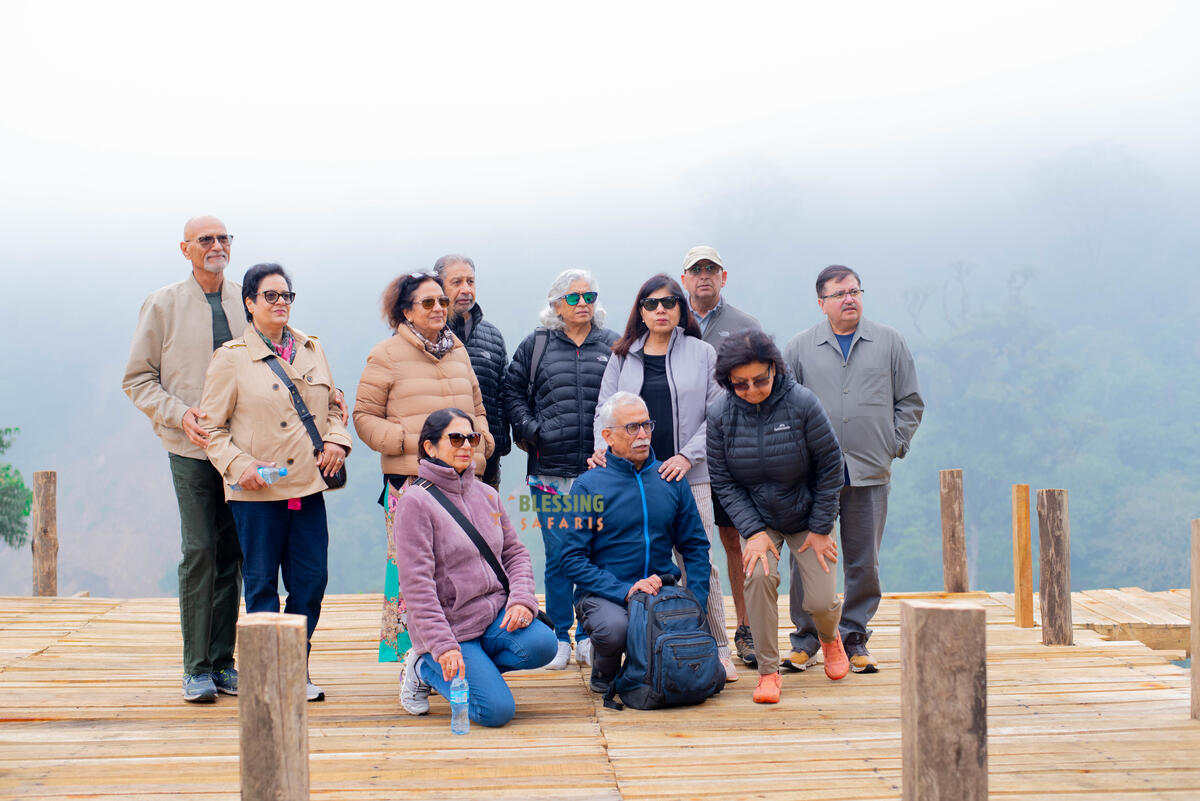
Whether traveling alone or with friends, Blessing Safaris guests often mention how particularly agreeable they find their traveling companions. Our groups are deliberately small, comprising 2 to 7 guests, especially for safari.

Our team carefully researched and focused on trips that attract people with the same interests and naturally get on well with each other through their shared interests.

Once you confirm your booking on a tour, you will be sent further practical information – packing tips, detailed itineraries, including advice on health, passport, and visa requirements, and minimum and maximum numbers of guests on tours.

Memorable meals are a hallmark of an excellent holiday. With the support of the best cooks, the quality of food and drink service is guaranteed. Depending on the service level or tour type you have chosen, a pre-discussion with your tour planner is a win-win for an enjoyable trip. Our cook accompanies other tours, and other services are included with our accommodation partners, including hotels, private camps, and luxury lodges.

Please help us help you by organizing even better tours and saving money. If you contact us in advance, you will save significantly on price, as you have the best time to negotiate and customize the tour with a safari planner.

Why not? We offer private tours for individuals, families, and groups. Whether you’re celebrating a special anniversary or planning a family reunion, we can discuss your needs. We can create a special itinerary away from traffic, travel in style,e with the itinerary shaped explicitly to your requirements.

The answer is absolutely yes! The areas where safaris are organized are safe and free of political chaos. We conduct safaris in politically stable regions to ensure our clients’ safety and enjoyment.

Our Professional Safari Guides are well-trained about wild animal behaviors, and they have enough experience to lead our clients in the wilderness. Our vehicles are 4×4 Toyota Land Cruisers and Land Rovers with a hatchback roof to maximize visibility of the game.

African safaris offer unlimited sightseeing; millions of animals, birds, and plant life are the defining features of the African savanna. You roam across the countryside in search of Elephants, Lions, Rhinos, Cape buffalo, and Leopards (the so-called “Big Five”).

On any given day, you will encounter Blue Wildebeests, Zebras, a large variety of antelope species, Gazelles, Giraffes, Baboons, and Hippos. The birdlife is fantastic – in some areas, up to 400 bird species have been identified!

Think of the majestic Baobab tree (some tribes believe that the tree was indeed planted upside-down!), and there are hundreds of varieties of thorn trees!

You will also see the acacia-dotted landscape, endless plains, majestic mountains, and the most beautiful sunsets and sunrises imaginable! Think of a late afternoon thunderstorm, short but violent, and then the beautiful rainbow.

This aspect is much overstated. You will rarely see a snake, but if you do, it will most likely be from the safety of your safari vehicle. Tents and lodges all have bug screens fitted to windows and doors.

In most areas where bugs or mosquitoes are prevalent, rooms and tents are also equipped with mosquito nets, adding to the idealistic ambiance. Bear in mind that malaria is a threat in most wildlife areas, and it is necessary to consult your doctor for advice before embarking on your safari.

Tanzania destinations are accessible year-round, but we recommend scheduling your safari during the dry season (July to October and December through February) for the best sightings, as grasses and bush are at their least dense. The green session includes March through June. Discuss with us for the best option if you also have a plan to coincide with the Wildebeest Migration in Serengeti National Park

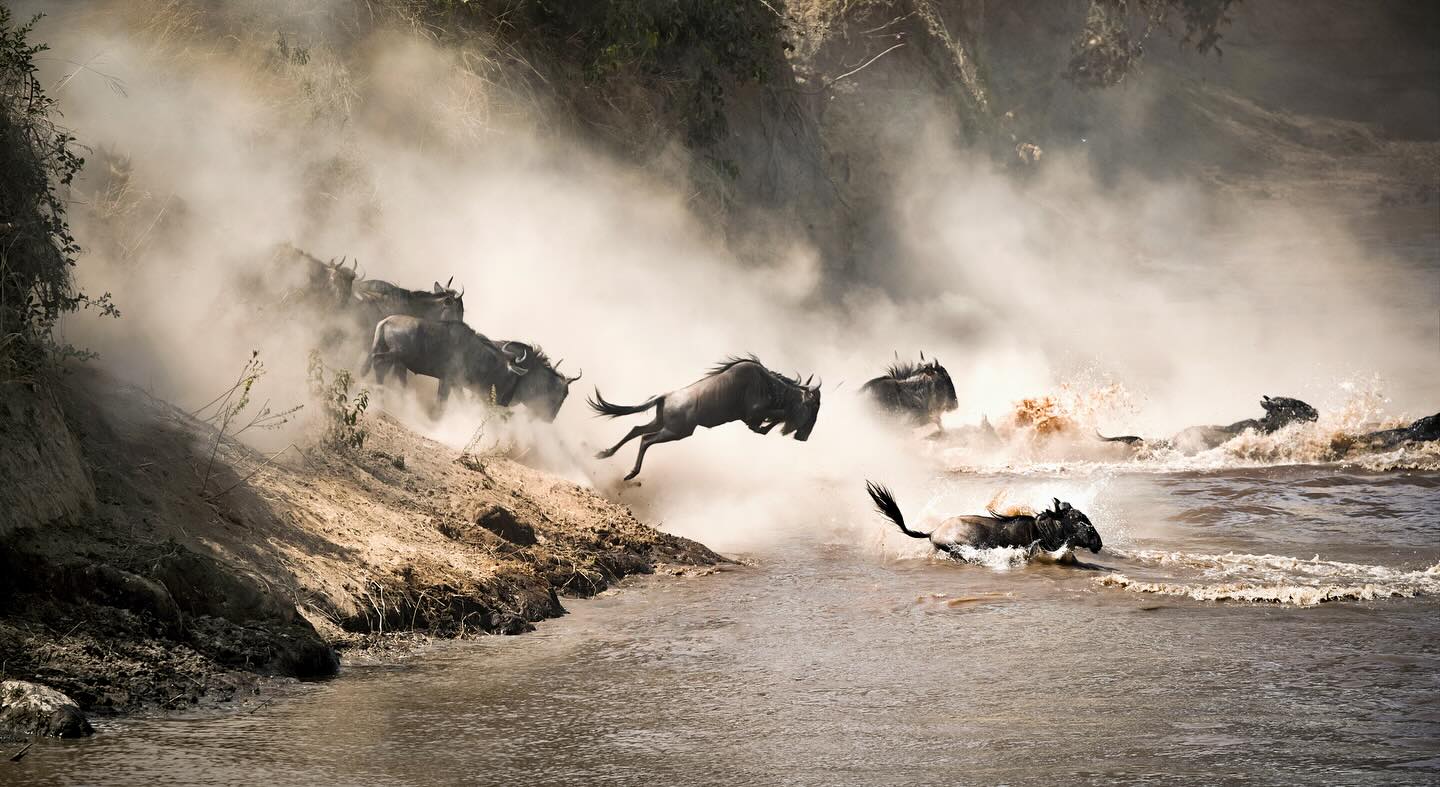
Note: the migration is a natural process, and timing varies month by month andyear by year. Fortunately, it won’t happen in one day; it takes time to complete. We update most of our clients once the migration begins, so if your primary goal is to witness the migration, please get in touch with us in advance so we can do our best to accommodate you. Please note that most travelers do not see the wildebeest crossing in the Mara, as the timing and duration vary widely each year. The best probable months are July, August, and September.

Around the turn of the century (until the ’30s and ’40s), mobile tenting was the only option, and “camp as you go” was the standard practice. Over the years, the luxury associated with traditional mobile tenting safaris has increased. By the same token, one can understand that the cost of having a “luxury hotel” following one around in Africa is expensive. However, most people settle for permanent tented camps.

Because they are “permanent,” they can be equipped with flush toilets and traditional bathroom fixtures and conveniences. Don’t be misled by the terminology – a permanent tented camp offers the comfort of a 5-star hotel, with the romance and adventure of being surrounded by the sights and sounds of Africa.

(We suggest you remember) insect repellent (the best way to prevent malaria and other insect-borne diseases), sunscreen, cap or hat, sunglasses, binoculars, detergent powder if you want to wash some clothes yourself, hand-wipes small flashlight, aspirin, diarrhea medicine, rain jacket, poncho or collapsible umbrella, plastic bags (for wet clothes, swimsuit and for keeping dust away from camera equipment), Kleenex/toilet tissue a neck chain for eyeglasses if you take them off to use binoculars and cameras, any medical prescription you need, masking tape or labels for marking exposed films cans, film, extra camera batteries.

Although more than 200 languages and dialects are spoken across Africa, this is not a problem, as English is widely spoken in East and Southern Africa. Apart from English, all our professional guides are multilingual, so we get you covered

Enquire Now

CAPTCHA image

This helps us prevent spam, thank you.