The Southern Icefield, Kilimanjaro
The Southern Icefield is one of Mount Kilimanjaro’s most prominent and rapidly disappearing features. Once a key part of the mountain’s ice cap, it formed over millennia from accumulated snow. When first studied in 1912, it was part of a continuous ice cover at the summit. Today, the remaining glaciers are both visually striking and a clear indicator of the accelerating effects of climate change.
The Southern Icefield is one of three major icefields that once covered Kilimanjaro’s summit, along with the Northern and Eastern Icefields. In 1912, these formed a single, expansive ice cap visible from afar. Today, the Southern Icefield is the largest remaining ice body, but it continues to shrink rapidly.
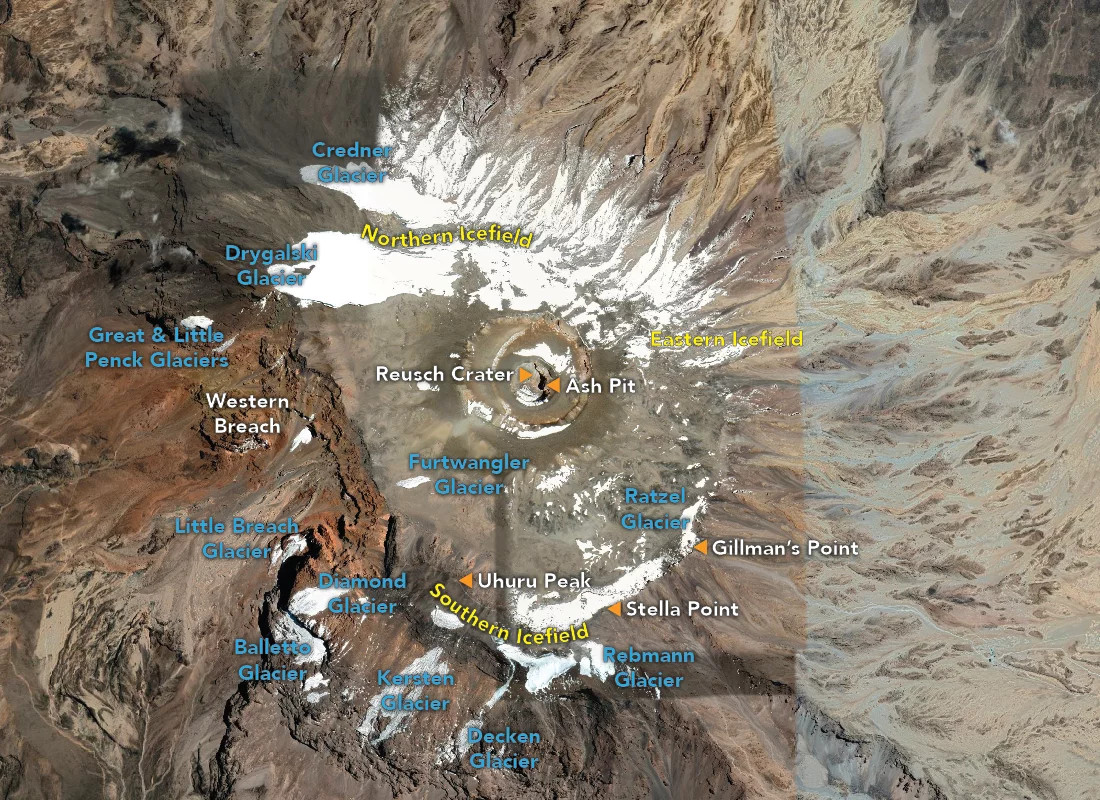
Location of the Southern Icefield
Geographic Position
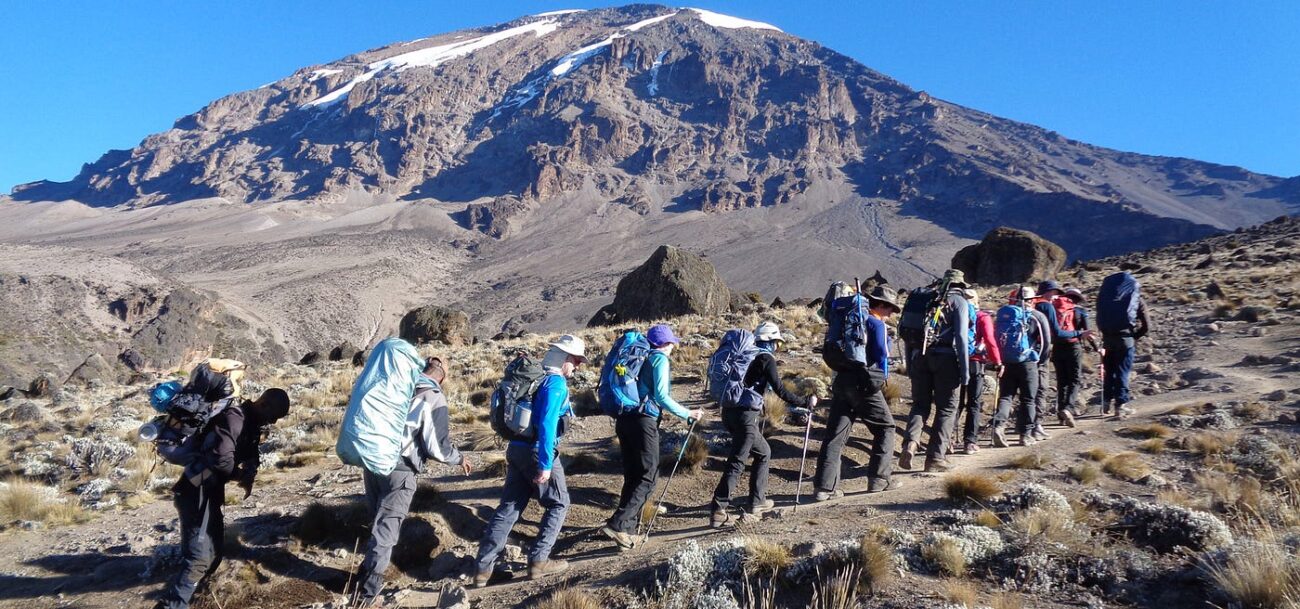
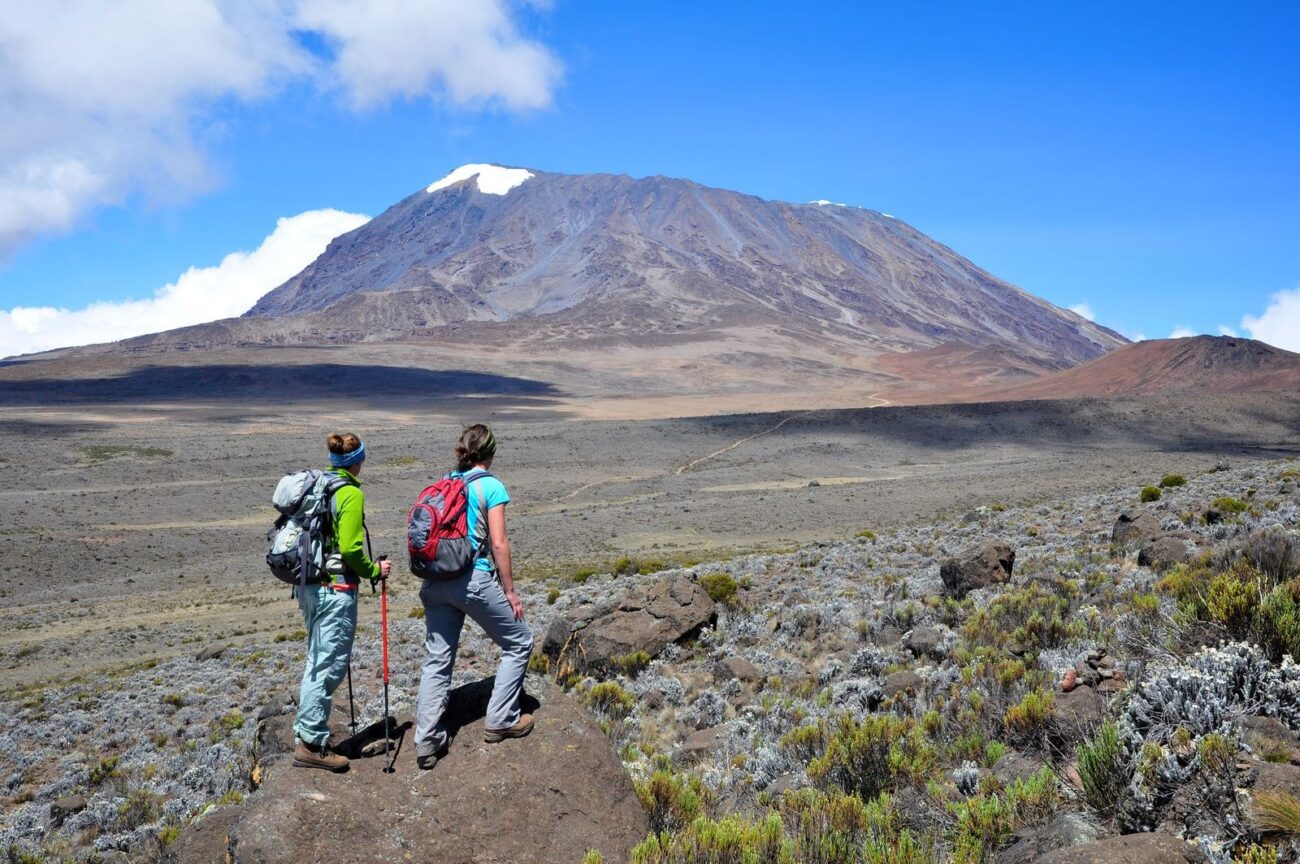
The Southern Icefield is located on the southern slopes of Kibo Peak, Kilimanjaro’s highest volcanic cone. It is visible from the southern circuit routes, especially the Machame and Lemosho routes, as well as from Karanga Valley and Barranco Camp. The icefield sits below the trails leading to Uhuru Peak, providing climbers with impressive views during the final ascent.
The Ice Wall and Views
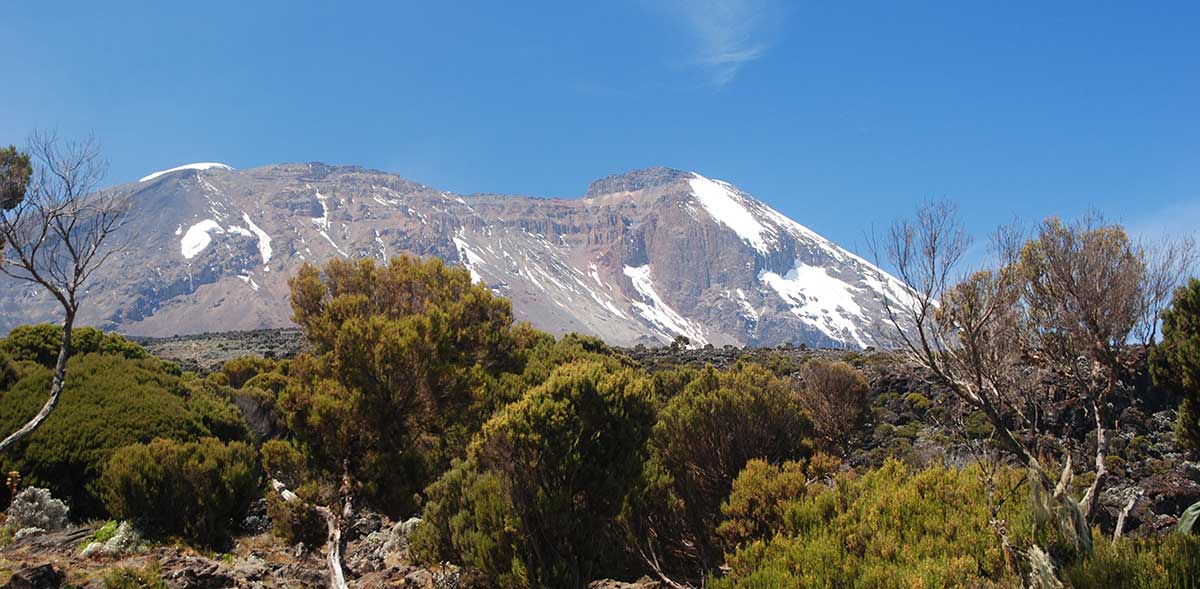
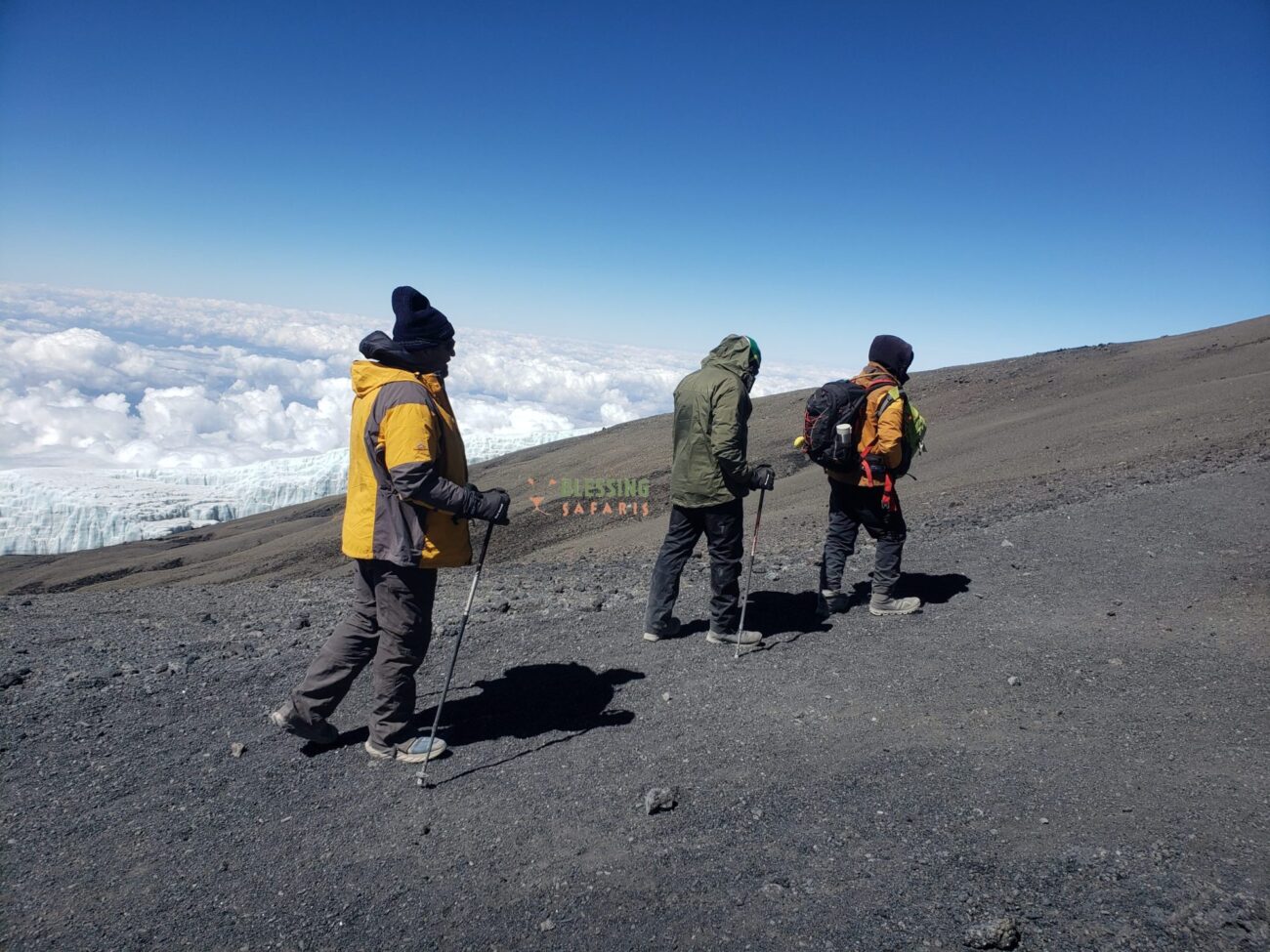
The ice wall of the Southern Icefield provides panoramic mountain views, with Mount Meru in Arusha visible in the distance. The contrast between the white ice and dark volcanic rock creates a dramatic landscape that leaves a lasting impression on climbers.
Connection to Other Ice Bodies
Kibo’s crater rim currently descends to the Southern Icefield glaciers, which include the remaining parts of the ancient Southern Ice Field, the Kersten and Decken Glaciers on the south side, and the Rebmann Glacier to a lesser extent. The Credner Glacier persists on the northwest face. The ice near the crater rim is no longer connected to other glaciers, and smaller ice masses on the slopes are now isolated remnants.
The Glaciers of the Southern Icefield
Heim Glacier
Heim Glacier was once a popular glacier climbing destination before it disappeared by 1996. Its loss marked one of the first significant glacial disappearances on Kilimanjaro, signaling the changes ahead. The glacier was named after Swiss geologist Albert Heim.
Kersten Glacier
Kersten Glacier is one of the ice streams from the Southern Icefield. Since 2011, it has diminished by approximately 54%, highlighting the rapid pace of glacial retreat. Located on the northeastern flank, it offers climbers a unique view of Kilimanjaro’s icy summit.
Decken Glacier
Decken Glacier, named for explorer Baron Carl Claus von der Decken, is located on Kilimanjaro’s southern slopes. Like other Southern Icefield glaciers, it has experienced significant retreat.
Rebmann Glacier
Rebmann Glacier is one of the few remaining active glaciers on Kilimanjaro, located at about 5,700 meters on the southeastern slopes. Named after Johannes Rebmann, the German missionary explorer who first documented Kilimanjaro’s snow and glaciers in 1848, it has diminished significantly over the past century.
Credner Glacier
Credner Glacier remains on the northwest face of the Southern Icefield, though it has also experienced significant retreat.
Little Penck Glacier
Little Penck Glacier is a remnant ice mass on Kilimanjaro’s west side, representing the shrinking remains of a once much larger glacier system.
Great Barranco Glacier
Great Barranco Glacier is on the southwest edge of the Southern Icefield and has experienced significant retreat.
Furtwängler Glacier
For many decades, the Furtwängler Glacier was the only ice body inside the crater. By 2007, it had split into two pieces, illustrating the rapid changes on the mountain.
The Rapid Retreat of the Southern Icefield
Historical Shrinkage
The Southern Icefield has retreated dramatically over the past century. When first examined in 1912, Kilimanjaro’s icefields formed a vast, connected body of glacial ice. Today, the Southern Icefield is only a fraction of its original size.
Thinning Rates
The Southern Icefield has thinned rapidly in recent years. From 2000 to 2007:
- Northern Icefield: Thinned by approximately 1.9 meters (3.6%)
- Southern Icefield: Thinned by approximately 5.1 meters (24%)
This significant difference in thinning rates highlights the Southern Icefield’s vulnerability compared to other ice bodies on the mountain. The loss involves not only surface area but also thinning and increased fragmentation.
Sideways Retreat
The three remaining ice fields on Kilimanjaro’s plateau and slopes are shrinking sideways and thinning rapidly. Glaciers are retreating from all sides, and the ice near the crater rim is no longer connected to other glaciers. The remaining ice masses are increasingly isolated.
The Furtwängler Glacier Division
By 2007, the Furtwängler Glacier, which had been the only ice body inside the crater for many decades, had split into two pieces. This division demonstrates the rapid degradation and fragmentation of the once-continuous ice cover.
Global Warming and the Southern Icefield
The Impact of Rising Temperatures
Global warming is accelerating the retreat of the Southern Icefield. Rising temperatures cause faster melting and more rapid glacier retreat. Kilimanjaro’s equatorial location makes its glaciers especially vulnerable, as intense sunlight increases melting.
Future Predictions
Scientists predict that if current climate conditions persist or worsen, the ice fields at Kilimanjaro’s summit and sides will likely diminish further or disappear entirely within years. The Southern Icefield may vanish by 2030 or 2040, making now the last chance to witness this remarkable formation.
The Broader Context
The loss of the Southern Icefield is part of a global trend, with glaciers melting from the Himalayas to the Andes and Alps. Kilimanjaro’s disappearing glaciers symbolize the impacts of climate change and underscore the need to reduce greenhouse gas emissions.
Frequently Asked Questions About the Southern Icefield
What Is the Southern Icefield?
The Southern Icefield is a rapidly shrinking glacial system on Mount Kilimanjaro’s southern slopes. It contains the remains of the ancient Southern Ice Field, including the Kersten, Decken, and Rebmann Glaciers. It was once part of a uniform, connected ice cap that covered the mountain’s summit.
Where Is the Southern Icefield Located?
The Southern Icefield is situated on the southern slopes of Kibo Peak, beneath the trails that approach Uhuru Peak. It is visible from the southern circuit routes, including the Machame and Lemosho routes, as well as from Karanga Valley and Barranco Camp.
What Glaciers Are in the Southern Icefield?
The Southern Icefield includes the Kersten Glacier, Decken Glacier, Rebmann Glacier, Credner Glacier, and remnants of the Heim Glacier. It also includes the Little Penck Glacier and Great Barranco Glacier on the southwest edge.
How Fast Is the Southern Icefield Shrinking?
The Southern Icefield is shrinking rapidly. From 2000 to 2007, it thinned by approximately 5.1 meters (24%), a dramatic rate of loss. The glaciers are also retreating sideways and becoming increasingly fragmented.
What Is the History of the Southern Icefield?
When first scientifically examined in 1912, the Southern Icefield formed part of a uniform, connected, vast ice field covering Kilimanjaro’s summit. Since then, the ice has retreated dramatically, with the ice near the crater rim no longer linked to further glaciers.
What Is the Furtwängler Glacier?
The Furtwängler Glacier was the sole ice body inside Kibo Crater for numerous decades. By 2007, it had divided into two pieces, illustrating the rapid changes occurring on Kilimanjaro.
Is the Southern Icefield Affected by Global Warming?
Yes. Global warming is accelerating the retreat of the Southern Icefield. Rising temperatures cause faster melting, and the equatorial location makes the glaciers particularly vulnerable. The Southern Icefield may disappear within several decades.
What Is the View Like from the Southern Icefield?
The ice wall of the Southern Icefield offers a panoramic and beautiful view of the mountain, with Mount Meru in Arusha visible from a distance. The contrast between the gleaming white ice and dark volcanic rock creates a dramatic landscape.
What Are the Remaining Ice Masses on Kilimanjaro?
Remaining ice masses include the Kersten, Decken, and Rebmann Glaciers on the south side; the Credner Glacier on the northwest lateral face; the Little Penck remnant on the west side; and the Heim and Great Barranco Glaciers on the southwest edge. The ice near the crater rim is no longer linked to these masses.
How Many Icefields Are on Kilimanjaro?
Kilimanjaro originally had three major icefields: the Southern Icefield, the Northern Icefield, and the Eastern Icefield. These formed a uniform, connected ice cap when first examined in 1912. Today, the remaining ice is increasingly fragmented.
What Is the Impact of the Southern Icefield’s Retreat?
The retreat of the Southern Icefield has significant impacts: it reduces the mountain’s visual appeal, affects scientific research, impacts local communities dependent on tourism, and serves as a powerful symbol of climate change.
Will the Southern Icefield Disappear?
Scientists predict that if current climatological conditions stay consistent or become even worse, the ice fields at the summit of Mount Kilimanjaro and on its sides will likely diminish more or even disappear entirely within several years. The Southern Icefield may disappear by 2030 or 2050.
Book Your Kilimanjaro Trek Now
The Southern Icefield offers a rare opportunity to witness Kilimanjaro’s glacial heritage before it disappears. Seeing the ice wall and surrounding glaciers is among the most memorable moments of any Kilimanjaro climb.
Our expert team creates personalized Kilimanjaro itineraries, enabling you to experience the remaining glaciers and support mountain conservation. We offer experienced guides, quality equipment, and comprehensive support throughout your journey.
Contact us to plan your Kilimanjaro climb and experience Africa’s highest peak before its remaining ice disappears. Book Your Trek Now
Mount Kilimanjaro Tour Packages
From$ 2,080
8 Days, 7 Nights
6 Days Umbwe Route
Mt. Kilimanjaro
From$2,080
8 Days, 7 Nights
6 Days Rongai Route
Mt. Kilimanjaro
From$1,845
8 Days, 7 Nights
6 Days Marangu Route
Mt. Kilimanjaro
From$2,080
8 Days , 7 Nights
6 Days Machame Route
Mt. Kilimanjaro