Kibo Peak Kilimanjaro
Kibo Peak is the highest point on Mount Kilimanjaro and the African continent, attracting thousands of climbers to Tanzania each year.
Situated in the mountain’s arctic zone, this dormant volcanic cone rises to 5,895 meters (19,341 feet), making it the tallest of Kilimanjaro’s three peaks and the highest summit in Africa.
Kibo is the youngest and most prominent of Kilimanjaro’s three volcanic cones, known for its conical shape and large summit crater.
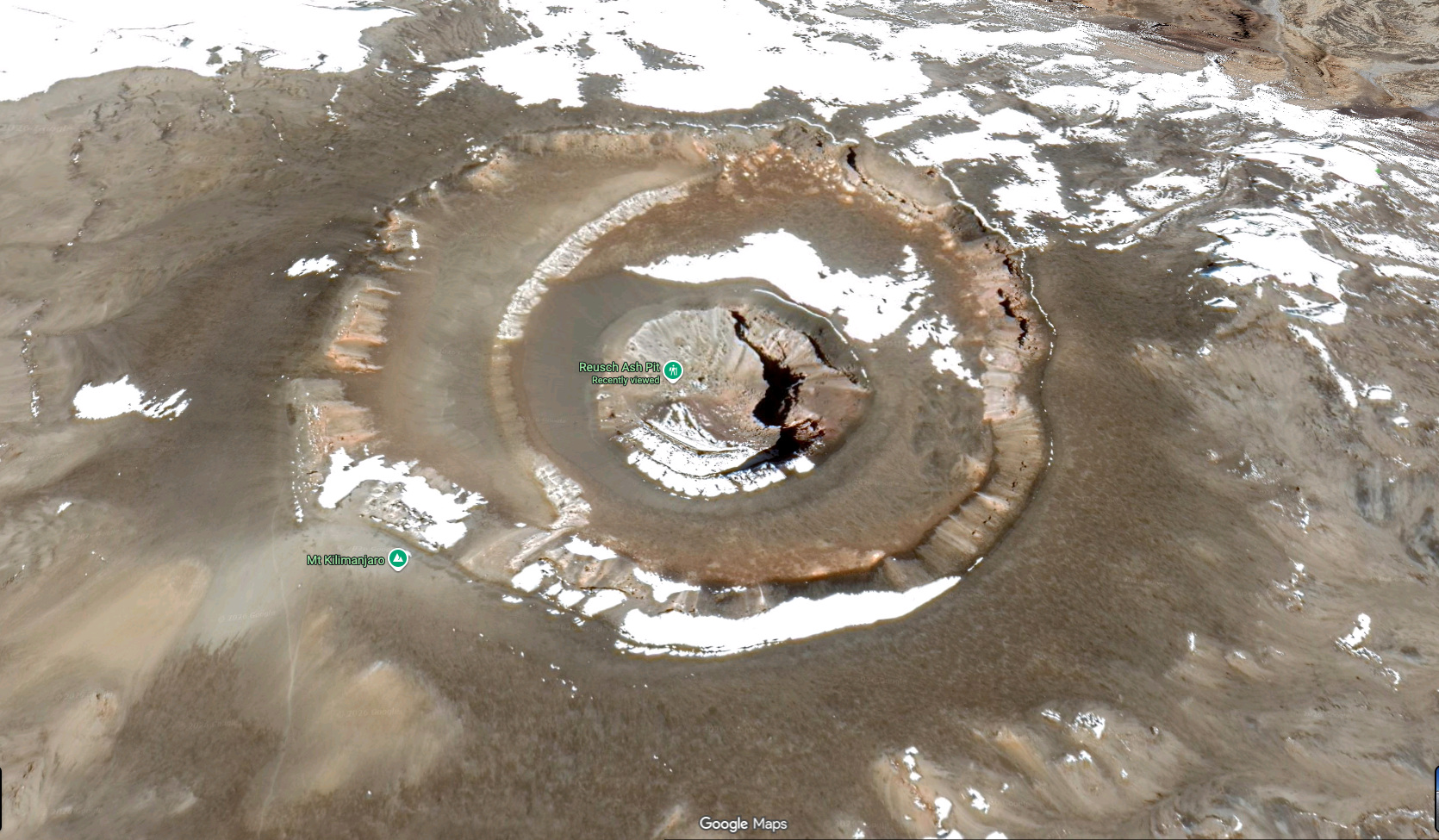
The crater, about 2.5 kilometers wide, contains the Reusch Crater, the Ash Pit, and glacial remnants that have long attracted explorers and scientists.
The enduring ice cap is an iconic symbol of Africa’s highest point, though its future is threatened by climate change.
For most climbers, Kibo Peak is the primary objective on Mount Kilimanjaro. Uhuru Peak, the highest point on Kibo, awaits those who complete the challenging trek through varied ecological zones.
Reaching the summit requires endurance, determination, and acclimatization, and rewards climbers with exceptional views and a strong sense of accomplishment.
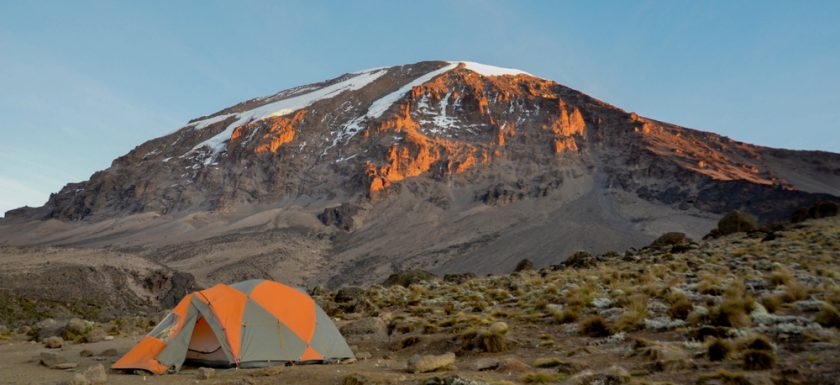
The Volcanic Cones of Kilimanjaro
Kibo (5,895 meters / 19,341 feet)
Kibo is the highest and youngest of Kilimanjaro’s three volcanic cones. It is a dormant volcano, not currently erupting but potentially active in the future. The last major eruption was about 360,000 years ago, with minor activity, such as gas emissions and small collapses, occurring around 200 years ago.
Mawenzi (5,149 meters / 16,893 feet)
Mawenzi is the second-highest cone, with a jagged, eroded peak. Unlike Kibo, Mawenzi is extinct and will not erupt again. Its dramatic spires dominate the eastern side and are visible from much of the southern circuit.
Shira (3,962 meters / 13,000 feet)
Shira is the oldest of the three cones and is now largely collapsed, forming a broad plateau on the western side of the mountain. This ancient caldera, which erupted over 500,000 years ago, is now a popular feature on the Lemosho and Shira routes.
Kibo’s Location and Relationship to Other Peaks
Kibo occupies the central position on Mount Kilimanjaro, with Mawenzi to the east and Shira to the west. This arrangement gives Kilimanjaro its distinctive profile—a massive volcanic massif with three distinct peaks stretching across the landscape. The mountain’s coordinates are approximately 3°04′33″S latitude and 37°21′12″E longitude.
An 11-kilometer (7-mile) saddle connects Kibo to Mawenzi at about 4,500 meters (15,000 feet) above sea level. This high-altitude ridge forms a dramatic desert landscape, contrasting Mawenzi’s jagged spires with Kibo’s smooth, snow-capped dome.
While Mawenzi and Shira are both extinct, Kibo remains dormant. Volcanic gas still escapes into the crater, a reminder of the fiery forces that created this mountain. These gas emissions have caused collapses and landslides over time, with the largest event forming what is now called the Western Breach—a significant geographical feature that some climbing routes traverse.
Kibo’s Glaciers and Ice Fields
One of Kibo’s most distinctive features is its year-round ice cap, which covers the summit and surrounds the crater rim. Several named glaciers and ice fields cling to the mountain’s upper slopes:
- Furtwangler Glacier: Named after one of the mountain’s early explorers, this is one of the most recognizable glaciers on Kibo’s summit.
- Northern Ice Field: A vast expanse of ice on the crater rim, visible from the northern approaches.
- Southern Ice Field: Visible from the southern slopes, including the Barranco and Barafu camps.
These glaciers have been iconic features of Kilimanjaro for millennia, but they have suffered severe retreat due to climate change. Scientists estimate that the mountain’s ice cover has shrunk by approximately 80% since 1912. Predictions suggest that the glaciers could disappear entirely by 2030 or 2060, making the opportunity to witness them in person increasingly urgent.
Climbing Kibo Peak
Routes and Access
Kibo Peak is accessible via several routes, each offering a unique experience:
- Marangu Route: The only route with hut accommodation, approaching from the southeast.
- Machame Route: The most popular route, offering diverse scenery and good acclimatization.
- Lemosho Route: The most scenic route, crossing the Shira Plateau before joining the southern circuit.
- Rongai Route: The northern approach, offering solitude and drier conditions.
- Umbwe Route: The shortest and steepest route, for experienced climbers only.
- Northern Circuit: The longest route, offering the highest summit success rate.
- Western Breach: A special-permission route requiring technical skills.
The Final Ascent
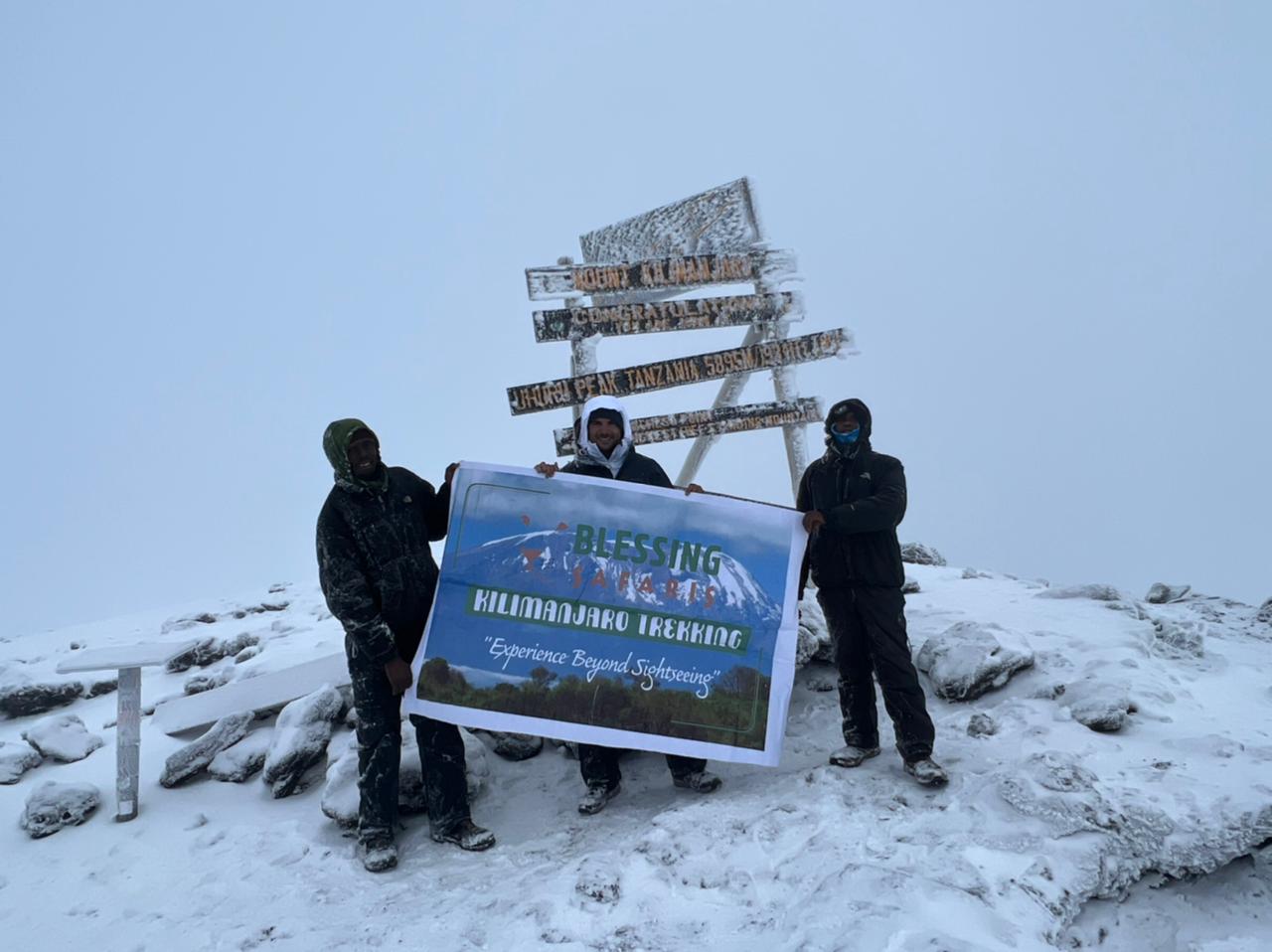
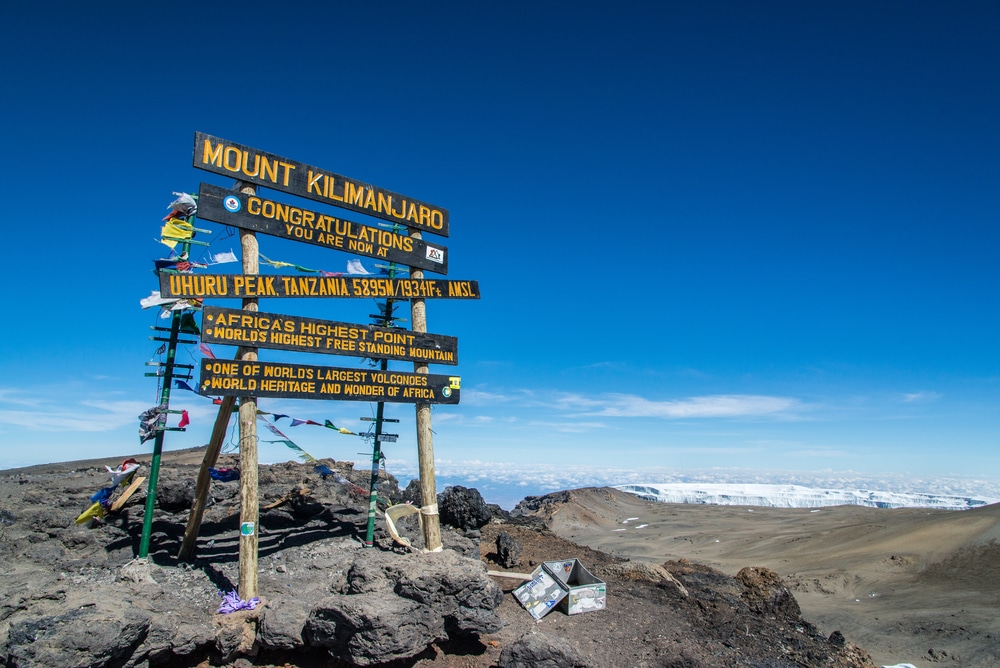
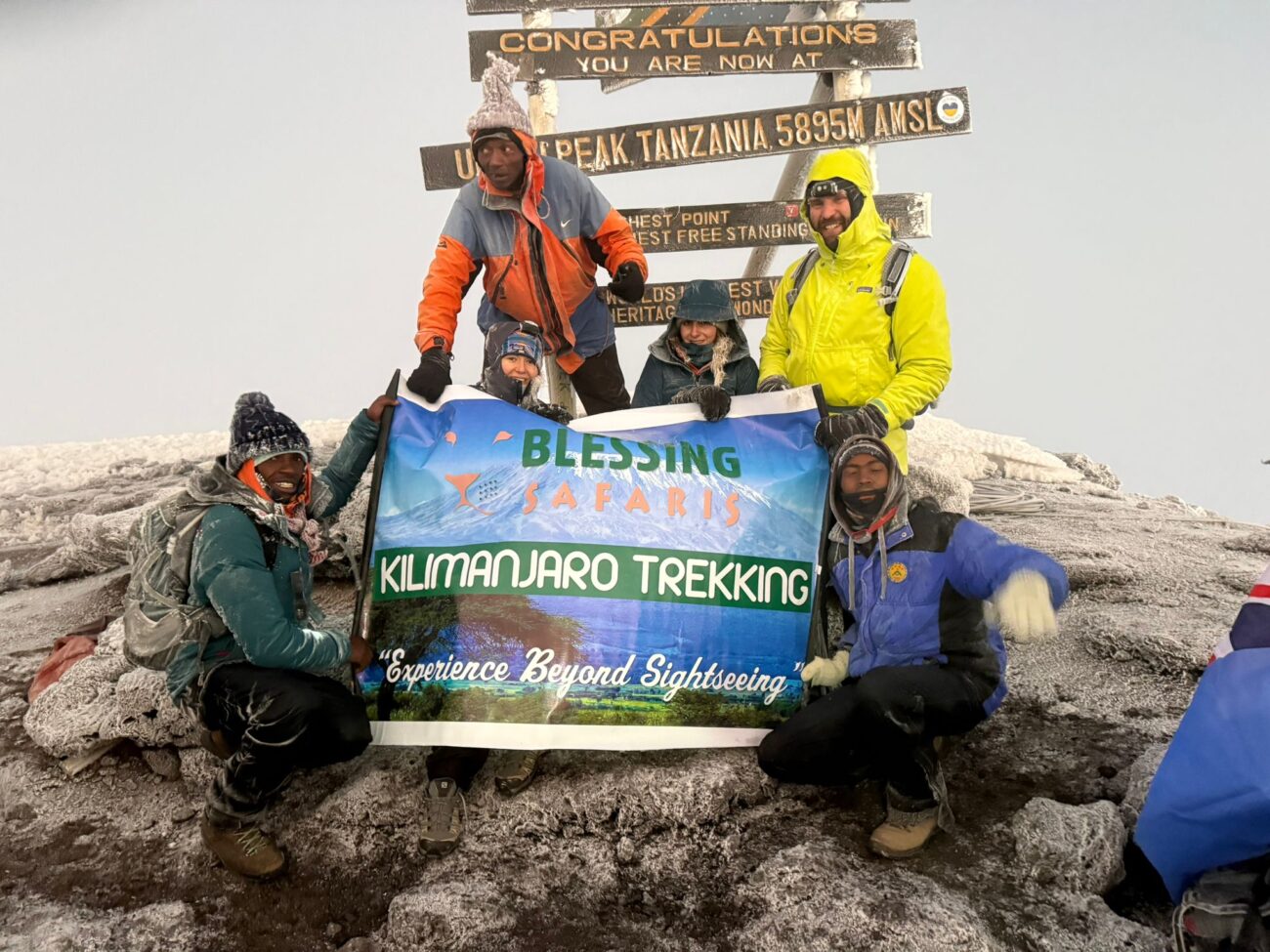
The final climb to Kibo’s summit typically begins at midnight from one of the high-altitude camps. Climbers ascend to the crater rim, passing through steep scree slopes before reaching Gilman’s Point (5,685 meters) on the crater rim. From Gilman’s Point, the trail follows the rim to Uhuru Peak (5,895 meters), the highest point on Kibo and all of Africa.
The ascent from Gilman’s Point to
Uhuru Peak is relatively easy compared to the steep climb to the rim. However, the high altitude, extreme cold, and fatigue make this final section demanding. Most climbers spend only 15 to 30 minutes at the summit before beginning the long descent.
Physical and Technical Requirements
Climbing Kibo Peak does not require technical mountaineering skills or specialized equipment like ropes or ice axes. The main challenges are altitude acclimatization, physical endurance, and mental determination. Climbers must be prepared for:
- Extreme cold: Temperatures can drop to -20°F (-29°C) at the summit
- Thin air: Oxygen levels are approximately 50% of sea level
- Steep terrain: The final ascent involves steep scree slopes
- Long hours: Summit night typically involves 6-8 hours of climbing
Weather Considerations
The weather on Kibo is highly variable and can change rapidly. The summit zone experiences arctic conditions with strong winds, snow, and ice. Climbers should be prepared for these conditions regardless of the season, with proper clothing and gear essential for safety and comfort.
Wildlife and Vegetation on Kibo
Due to Kibo’s extreme altitude, there is no wildlife or vegetation on the summit. The arctic zone above 5,000 meters cannot support plant or animal life. However, the lower slopes are home to diverse flora and fauna, including:
- Black-and-white colobus monkeys: Found in the montane forests
- Blue monkeys: Common in the forested zones
- Tree hyrax: Small mammals found above the treeline
- Grey duikers: Antelope species seen at higher elevations
- Giant groundsels: Unique plants in the heath and moorland zone
- Lobelias: Striking plants with tall flower spikes
Interesting Facts About Kibo Peak
The First Ascent
German geographer Hans Meyer and Austrian mountaineer Ludwig Purtscheller made the first documented ascent of Kibo’s summit in 1889. Their expedition was guided by Mzee Johannes Kinyala Lauwo, a local Chagga guide who is also credited as the first person to climb Kilimanjaro. Meyer named the summit “Kaiser Wilhelm Peak” in honor of the German Emperor, a name that remained until 1964, when it was changed to Uhuru Peak.
Dormant Volcanic Activity
Kibo is classified as a dormant volcano. While its last major eruption occurred around 360,000 years ago, the most recent volcanic activity—gas emissions and minor collapses—happened about 200 years ago. The mountain’s crater still emits gas, and the Western Breach is the largest collapse feature caused by these emissions. Despite its dormancy, scientists continue to monitor Kibo for signs of future activity.
The Saddle and Its Significance
The 11-kilometer saddle between Kibo and Mawenzi is a remarkable feature that creates a high-altitude desert plateau. This barren landscape, with its volcanic rocks and stark beauty, is crossed by climbers on several routes. The saddle offers unique views of both cones and is a reminder of the volcanic forces that shaped this mountain.
Kibo Peak FAQs
What Is Kibo Peak?
Kibo Peak is the highest summit on Mount Kilimanjaro, standing at 5,895 meters (19,341 feet) above sea level. It is the tallest of the mountain’s three volcanic cones and the highest point in Africa.
Is Kibo Peak the Same as Uhuru Peak?
Uhuru Peak is the highest point on Kibo’s crater rim. In other words, Uhuru Peak sits on Kibo Peak. All climbers aiming for the highest summit are targeting Uhuru Peak, which is part of the Kibo volcanic cone.
Can You Climb Kibo Peak Without Technical Gear?
Yes. Climbing Kibo Peak does not require technical mountaineering skills or specialized equipment like ropes or ice axes. The routes are non-technical, though climbers must be prepared for the challenges of high altitude and extreme cold.
What Is the Elevation of Kibo Peak?
Kibo Peak stands at 5,895 meters (19,341 feet) above sea level, making it the highest point in Africa and the world’s tallest freestanding mountain.
How Long Does It Take to Climb Kibo Peak?
The time varies by route. Most climbs take 5 to 9 days from trailhead to summit and back. The final ascent from the last camp to the summit typically takes 6 to 8 hours.
What Routes Go to Kibo Peak?
Seven main routes lead to Kibo’s summit: Marangu, Machame, Lemosho, Rongai, Umbwe, Shira, and Northern Circuit. The Western Breach route also accesses the summit but requires special permits and technical skills.
Is Kibo Volcano Active?
Kibo is classified as dormant, meaning it is not currently erupting but could potentially become active again. The last major eruption occurred about 360,000 years ago, with minor activity around 200 years ago.
What Is the Weather Like at Kibo Peak?
Kibo’s summit experiences arctic conditions with temperatures ranging from 20°F (-7°C) to -20°F (-29°C). Strong winds, snow, and ice are common. Conditions can change rapidly, requiring proper preparation and gear.
What Wildlife Can Be Found on Kibo Peak?
Due to the extreme altitude, no wildlife exists on the summit of Kibo. The lower slopes, however, support elephants, buffalo, leopards, monkeys, hyrax, duikers, and various bird species.
Why Is Kibo’s Name Important?
Kibo is the highest of Kilimanjaro’s three volcanic cones. Its summit, Uhuru Peak, is a symbol of Tanzania’s independence—”Uhuru” means “freedom” in Swahili. The mountain has been culturally and historically significant for centuries, from ancient references to colonial exploration to modern conservation efforts.
Plan Your Mount Kilimanjaro Trek
Kibo Peak represents the ultimate challenge for climbers seeking to stand on Africa’s highest point. Whether you choose the popular Machame Route, the scenic Lemosho Route, or the remote Northern Circuit, the rewards of reaching Uhuru Peak are immeasurable.
Our expert team designs personalized Kilimanjaro itineraries focused on your safety, comfort, and summit success. We provide experienced guides, quality equipment, and comprehensive support throughout your journey.
Contact us to discuss your Kibo Peak climb, customize your itinerary, or combine your trek with a Tanzanian safari. Africa’s highest summit awaits. Let us help you reach the top.
BOOK YOUR TRIP NOW