Table of Contents
How Hard is Kilimanjaro?
How hard is Kilimanjaro? Every year, thousands of people dream of climbing Mount Kilimanjaro, Africa’s highest and most famous mountain.
But before they start planning, almost everyone asks the same question how hard is Kilimanjaro? Is climbing Kilimanjaro really that hard?
The answer is both yes and no. Here’s why.
Over the years, guides have helped all kinds of people reach the summit. Seventy-year-olds have stepped onto the crater rim for the first time.
Five-year-olds have achieved what many adults only dream about. Climbers with amputations and spinal injuries have shown that physical limits don’t decide what’s possible.
These stories might make it seem like almost anyone can reach the top, and in some ways, that’s true. You don’t need to be superhuman or have special genes.
What you really need is the drive to push past your comfort zone and a real respect for the mountain.
But here’s the truth. Even top athletes—marathon runners and Ironman competitors—have said that climbing Kilimanjaro was the hardest thing they’ve ever done.
That says a lot. The mountain doesn’t care how fit you are. What matters is your mental strength, your endurance, and your willingness to keep going when you want to quit.
Understanding the Real Challenge of Climbing Kilimanjaro
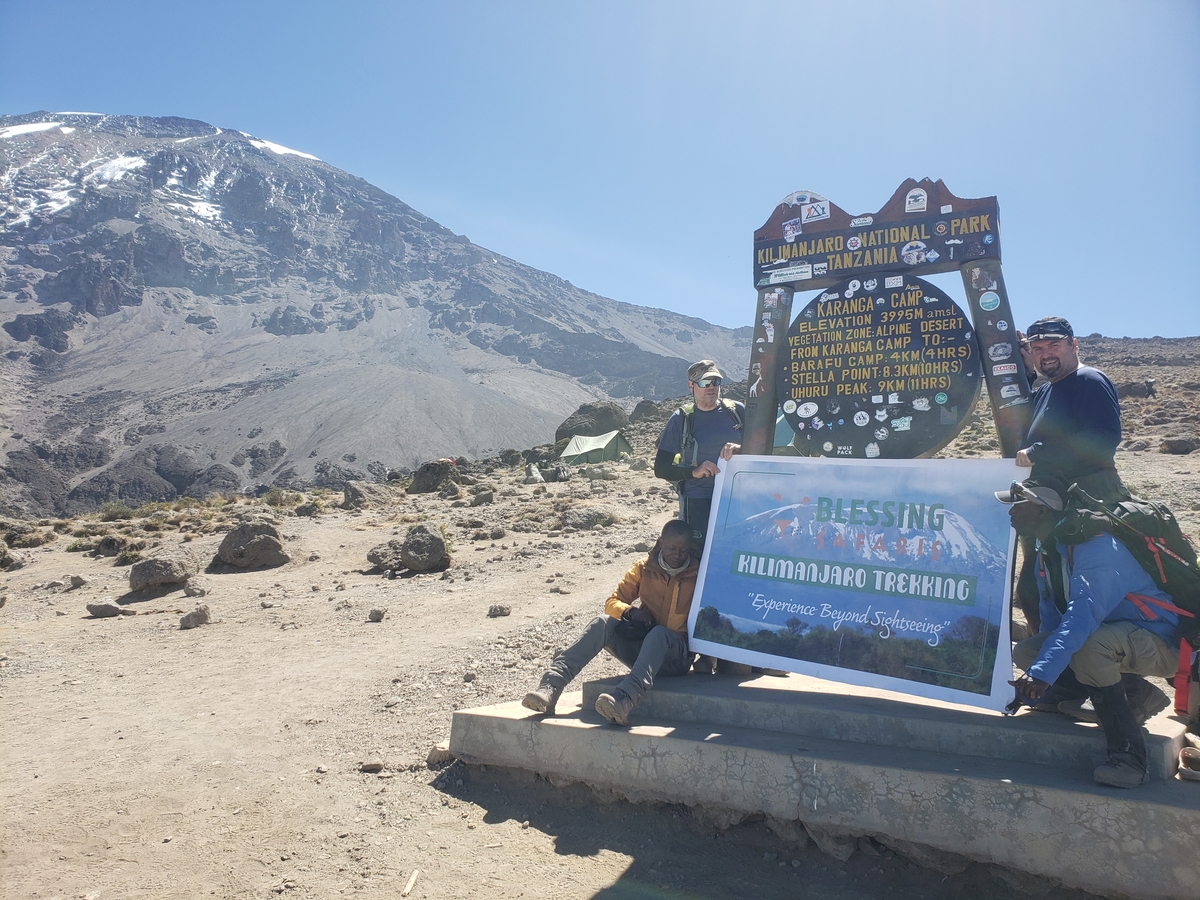
The Silent Enemy: Altitude
At the start of your climb, your guide’s slow pace might seem unnecessary. The walking feels easy, the slopes are gentle—usually about 10%—and the trails are simple, not technical. You might even question why Kilimanjaro has such a tough reputation.
Then you cross the 3,000-meter mark, and everything changes. Between 3,000 and 4,000 meters, the mountain begins to reveal its true challenge. The air gets thinner, and your body has to work harder to do simple things.
You’ll feel your strength fade and your energy drop. Even tying your boots or walking a few extra steps can get harder. Your coordination and balance might not feel the same.
This is what altitude does, and it’s the biggest challenge on Kilimanjaro. Your body is working against less oxygen, and no training can fully prepare you for it.
The mountain doesn’t care about your gym stats. What matters is how your body handles the thin air. Learn more about altitude sickness.
The “Pole Pole” Philosophy
If you climb Kilimanjaro, you’ll hear the words “pole pole” all the time. In Swahili, it means “slowly, slowly,” and it’s not just advice—it’s the key to reaching the top.
Tanzanian guides have spent years on the mountain, carrying heavy loads and watching what happens when people ignore the mountain’s lessons.
They’ve seen fit, confident trekkers rush ahead, only to get sick from the altitude later. They know that patience—not speed—is what gets you to the top.
When your guide tells you to slow down, they’re not trying to frustrate you. They’re giving you the single most important piece of advice you’ll receive on the entire journey.
Walking slowly allows your body time to adapt to the decreasing oxygen levels.
It gives your red blood cells a chance to multiply, your breathing a chance to steady, and your heart rate a chance to normalize.
Rush, and your body simply won’t have time to adjust. The result? Headaches, nausea, exhaustion, and ultimately, turning back before reaching the summit.
The Final Push: The Last 500 Meters
Imagine this: you’ve trained for months. You’ve followed your guide’s instructions.
Picture this: you’ve trained for months, listened to your guide, eaten well, stayed hydrated, and rested when needed.
You’ve made it through the hardest days, and now you’re almost at your goal. You’re so close you can feel it. Klimanjaro delivers its knockout punch.
The air is so thin that taking more than a few steps at a time becomes a monumental effort. Your lungs burn.
Your legs feel like lead. Your mind starts playing games on you, murmuring doubts and telling you to give up.
You move in short bursts—ten steps, then a rest. Another ten steps, another break.
Time seems to drag on, and the summit can feel like it’s getting farther away instead of closer.
At this point, it’s not about fitness anymore—you’ve already shown you have that. Now, it’s about grit and determination.
It’s about refusing to give up. This is a real test of your mental strength, and it’s tough. Here’s the thing: everyone who reaches the top has to go through this.
Every single person who stands on Uhuru Peak has faced that moment of doubt and chosen to push through it.
The struggle is part of the experience, and it’s what makes the achievement so meaningful.
Is Climbing Kilimanjaro Worth It?
So why put yourself through all of this? Why endure the physical exhaustion, the emotional ride, and the periods of doubt? Because the payoff is significant.
Climbers who push through the struggle and reach the reward do so because the reward is worth it. The experience was life-changing.
It’s not only about checking a box on a bucket list or getting a certificate. It’s about discovering something inside yourself that you didn’t know existed.
Standing on the roof of Africa, watching the sunrise, I see the sky turn yellow. Standing on top of Africa, watching the sunrise paint the sky, feeling the cold wind, and knowing you made it—that feeling changes you. It gives you a new sense of what you can do.
It shows you can handle tough times, overcome challenges, and achieve things you once thought impossible. changes their lives. They return home with a renewed sense of confidence, a greater appreciation for their own strength, and a strong reminder that they can accomplish anything they set their minds to.
That’s the real reward. That’s why people keep coming back to this mountain, year after year. That’s the real reward. That’s why people return to this mountain year after year, and even across generations. The climb is tough, but the reward truly changes lives.
You don’t have to be an elite athlete, but you do need good fitness and strong legs. Start training 3-4 months in advance by hiking, walking, and climbing stairs regularly. Kilimanjaro is more about endurance than speed.
Frequently Asked Questions (FAQs)
How fit do I need to be to climb Kilimanjaro?
What is the success rate for climbing Kilimanjaro?
Can a beginner climb Kilimanjaro?
Which route has the highest success rate?
What is the main reason people fail to submit?
Is Kilimanjaro harder than Everest Base Camp?
Do I need oxygen to climb Kilimanjaro?
How expensive is a Kilimanjaro climb?
What’s the minimum age to climb Kilimanjaro?
How long does it take to climb Kilimanjaro?
Final Thoughts: Is Climbing Kilimanjaro Right for You?
Climbing Kilimanjaro is hard and most rewarding adventures you can try. Don’t underestimate it—the altitude, weather, and physical effort are real challenges. But you don’t have to be an elite athlete or expert to make it.
What you really need is a willingness to step out of your comfort zone, trust your guides, and keep going when things get hard. You’ll need patience, resilience, a sense of humor, and respect for the mountain. Most of all, you need the determination to earn that summit view.
If you have those qualities, then yes—climbing Kilimanjaro is possible for you. The mountain has welcomed people of all ages and fitness levels, from the young to the old, the fit to the not-so-fit, and both experienced and first-time climbers. Everyone left with something special.
So, is it hard? Yes. It’s one of the hardest things you’ll ever do. But that’s exactly why it’s worth it. The hardest things in life are often the ones that change us most.
Standing on Kilimanjaro’s summit, looking out over Africa, and knowing you pushed past your limits—that’s something no one can ever take from you. It’s a memory you’ll keep for life.
So start training. Start dreaming. Start planning. And when you finally reach that summit, take a moment to look back at how far you’ve come. So start training, start dreaming, and start planning.
When you finally reach the summit, take a moment to see how far you’ve come—not just on the mountain, but in yourself.
Are you ready to climb Mount Kilimanjaro? If yes, book one of these packages
8 Days Lemosho route climbing package 2026 /2027
7 Days Machame climbing package 2026/ 2027
6 Days Marangu climbing package 2026/2027
We are your perfect guide wherever your heart leads you—Tanzania, and beyond. You can proceed with booking your Kilimanjaro trip.
Must Read Articles
A beginner’s guide to Mount Kilimanjaro
Which is Harder: Kilimanjaro or Everest Base Camp?
Rescue and evacuation on Mount Kilimanjaro (5,895 m)
Best Time to Climb Mount Kilimanjaro 2026: Your Ultimate Seasonal Guide
10 Things You Should Know Before Climbing Mount Kilimanjaro
Do you need Diamox to climb Kilimanjaro?
How much does it cost to climb Mount Kilimanjaro?
Best Time to Climb Mount Kilimanjaro 2026: Your Ultimate Seasonal Guide