Rebmann Glacier Kilimanjaro
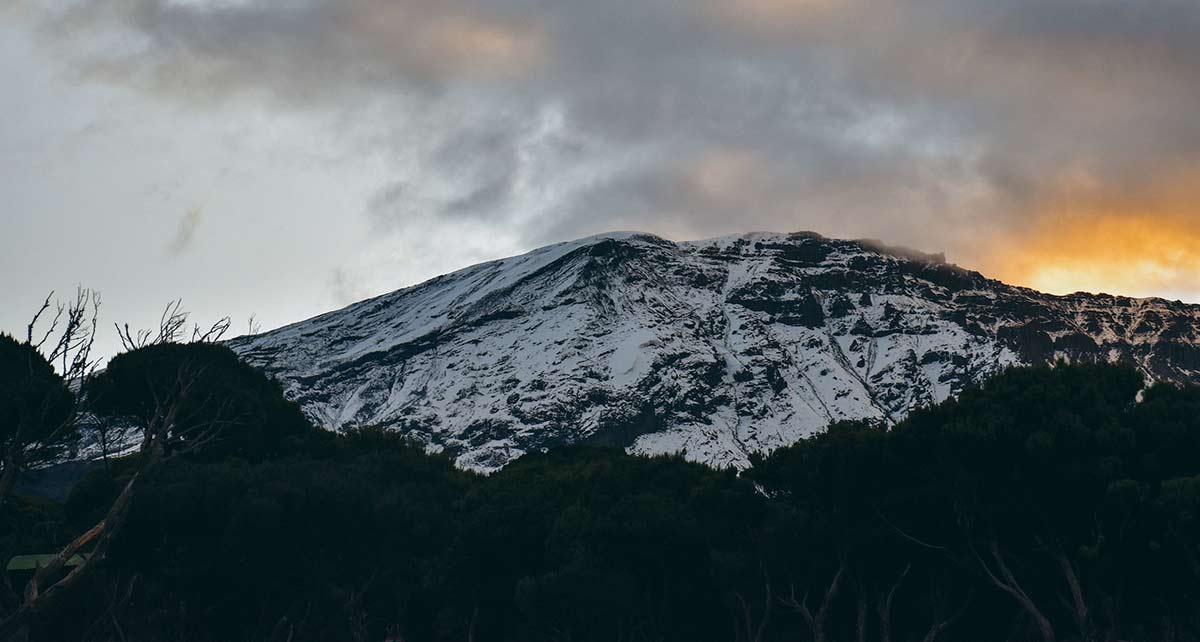
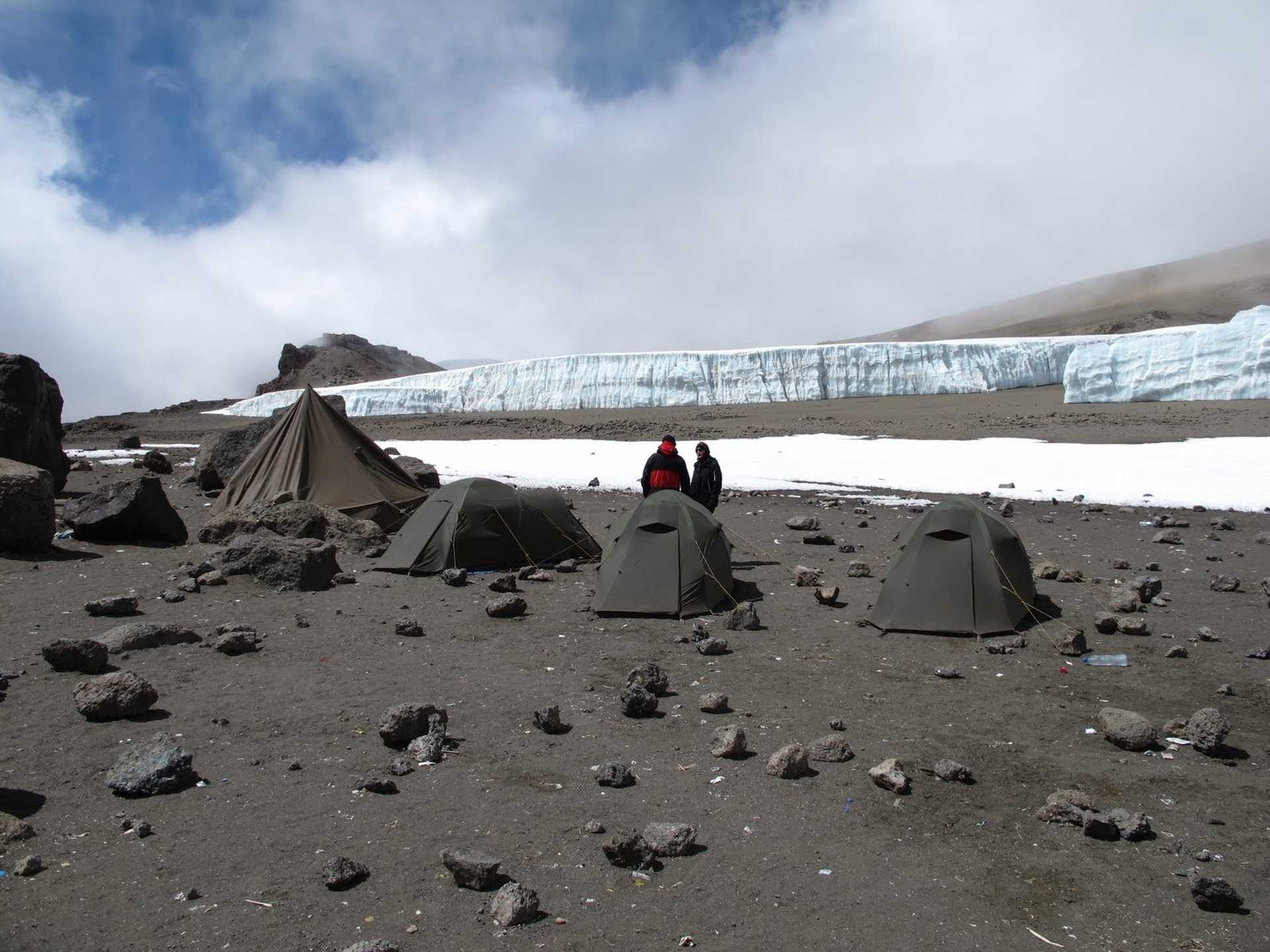
Rebmann Glacier is one of the few remaining active glaciers on Mount Kilimanjaro, serving as a reminder of the vast icefields that once covered Africa’s highest peak. Located at about 5,700 meters on Kibo’s southeastern slopes, it is a small remnant of the mountain’s former icecap. The glacier is named for Johannes Rebmann, the German missionary explorer who first documented Kilimanjaro’s snow and glaciers in 1848, reshaping global perceptions of equatorial Africa.
The glacier is more than an ice formation; it serves as a climate record, a landmark for climbers, and a symbol of environmental change. Following the breakup of Kilimanjaro’s icefields, most glaciers have disappeared. Rebmann Glacier has persisted, but has diminished significantly. Between 1912 and 2000, Mount Kilimanjaro lost about 82% of its glacial ice, with Rebmann Glacier among the most affected.
For climbers ascending to Uhuru Peak, Rebmann Glacier is a striking landmark. The route to Stella Point passes between the Rebmann and Ratzel glaciers across challenging scree terrain, creating a dramatic and memorable experience.
Location of Rebmann Glacier
Geographic Position
Rebmann Glacier is situated to the southeast of Kibo Peak, Mount Kilimanjaro’s primary summit region where Uhuru Peak is located. Its position on the southeastern slopes places it within the Southern Icefield, a collection of glaciers that once formed a continuous ice cover over Kibo’s southern side. The glacier descends from the crater rim at approximately 5,700 meters, clinging to the steep slopes above the Karanga Valley.
The Southern Icefield Context
Rebmann Glacier is among the few glaciers still descending from Kibo’s southern crater rim. Alongside Kersten and Decken glaciers, it forms part of the rapidly shrinking Southern Icefield. These glaciers, sloped at 30 to 40 degrees, are best viewed from the southern circuit routes, especially Machame and Lemosho.
Trekking Perspectives
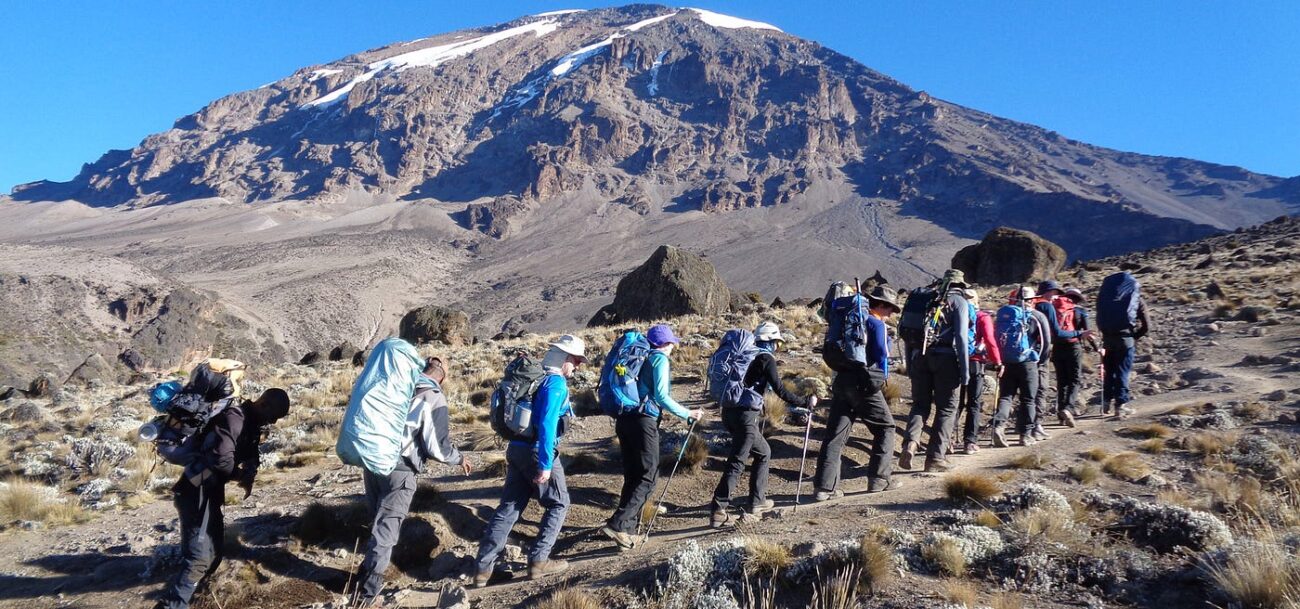
Climbers on the Rongai or Marangu routes can view Rebmann Glacier from several high-altitude vantage points. Its southeastern position offers a striking sight near the summit and a unique view of Kilimanjaro’s remaining ice.
The History of Rebmann Glacier
Discovery by Johannes Rebmann
Johannes Rebmann, a German missionary and explorer, is the glacier’s namesake. In 1848, he became the first European to report snow and glaciers on Mount Kilimanjaro, challenging the belief that snow could not exist near the equator.
In April 1848, Rebmann and his guide Bwana Kheri stood on the vast East African steppe within sight of the peak. He writes in his journal that he could just make out “a stunning white on the mountains of Jagga.” When he asked his guide to describe what he was seeing, “he did not know but assumed it to be coldness,” the guide said. Rebmann realized right then and there that the legend was genuine—on the equator of Africa, snowfields actually existed.
Rebmann’s findings were published in the Church Missionary Intelligencer in April 1849. Although not fully accepted for twelve years, they remain the earliest verified account of Mount Kilimanjaro and its glaciers.
Early Exploration
Hans Meyer conducted the first detailed observations of Kilimanjaro’s glaciers in the late 1880s. While many studies have documented their decline, few have produced precise maps. Early research relied on terrestrial photogrammetry and ground-based observations by explorers such as Meyer (1891, 1900), Jaeger (1909), and Klute (1914, 1920, 1921).
Recently, remote sensing using aerial photography and satellite data has become the primary method for tracking Kilimanjaro’s glacial retreat.
The Rapid Retreat of Rebmann Glacier
Historical Shrinkage
Between 1912 and 2000, Mount Kilimanjaro lost about 82% of its glacial ice. Rebmann Glacier has experienced significant reductions in both surface area and thickness during this period.
Current Status
Today, Rebmann Glacier is a remnant of its former size. The continuous ice cover has fragmented into isolated patches, and the glacier’s snout has mostly vanished. Recent studies show the Southern Icefield has lost about 59% of its area, with Kersten and Rebmann Glaciers experiencing similar declines since 2011.
Predictions for the Future
Scientists predict that if current trends continue, Kilimanjaro’s glaciers, including Rebmann Glacier, could disappear by 2030 or 2040. Climate change is accelerating the melting, and these equatorial glaciers are especially vulnerable. Loss of the ice in the coming decades now appears inevitable.
The Climbing Experience
The Route to Stella Point
During the final ascent to Mount Kilimanjaro’s summit, climbers pass between the Rebmann and Ratzel glaciers en route to Stella Point (5,685 meters). This scree-filled section is considered one of the most challenging parts of the climb.
The route between the glaciers, with ice formations on either side, creates a dramatic experience. Navigating the loose scree beneath the imposing glaciers highlights both the mountain’s power and its fragility.
Views and Perspectives
The summit push offers the closest and most impressive views of Kibo’s glaciers. From this vantage point:
- To the left: The Diamond Glacier “drips” over the rock, situated on top of the cliff of the Western Breach, with gigantic icicle tendrils stretching down to the Balletto Glacier on the shelf below.
- To the right: The Heim, Kersten, and Decken glaciers sag over their uneven granite substrate.
Rebmann Glacier, on the southeastern flank, provides climbers with a unique perspective on Kilimanjaro’s glacial landscape during the final ascent.
Other Related Glaciers
Ratzel Glacier (5,607 meters)
Ratzel Glacier is a remnant of the Southern Icefield on Kibo Peak’s southern side, north of Gilman’s Point. Its remaining section is visible on the southern crater rim, now isolated from the main icefield.
Hans Meyer named the glacier after a geography professor from Leipzig. During their first summit attempt, Meyer and Purtscheller spent hours chiseling a ladder into the Ratzel Glacier’s vertical ice cliff, each step requiring about twenty ice axe strikes. The effort at high altitude and a 35-degree angle was considerable.
Kersten Glacier
Kersten Glacier, also part of the Southern Icefield, has diminished by about 54% since 2011, underscoring the rapid glacial retreat. Located on the northeastern flank, it is visible from several high-altitude points during the ascent, offering climbers a view of Kilimanjaro’s remaining ice.
Decken Glacier
Decken Glacier, named for explorer Baron Carl Claus von der Decken, is located on Kilimanjaro’s southern slopes. Like other Southern Icefield glaciers, it has experienced significant retreat.
Heim Glacier
Heim Glacier was once a popular glacier climbing destination but disappeared by 1996. Its loss underscores the rapid changes occurring on Kilimanjaro.
Other African Glaciers
The Disappearing Glaciers of Africa
Only four African nations have glaciers: Tanzania (Mount Kilimanjaro), Kenya (Mount Kenya), Uganda (Rwenzori Mountains), and the Democratic Republic of the Congo (Rwenzori Mountains). These glaciers are found only on the highest mountains in these nations.
UN reports warn that climate change is causing East Africa’s last glaciers to retreat rapidly. As the planet warms, millions may be affected by increased flooding and extreme heat.
Observations Before They Vanish
Experienced climbers note the significant reduction in snow on Mount Kilimanjaro compared to previous decades. About 85% of the snowfall since 1912 has disappeared. The glaciers may vanish entirely by 2030 or 2040, making now the last chance to see them in person.
Frequently Asked Questions About Rebmann Glacier
What Is Rebmann Glacier?
Rebmann Glacier is one of the few remaining active glaciers on Mount Kilimanjaro, located at approximately 5,700 meters on the southeastern slopes of Kibo Peak. It was named after Johannes Rebmann, the German missionary explorer who first documented Kilimanjaro’s snow and glaciers in 1848.
Where Is Rebmann Glacier Located?
Rebmann Glacier is situated to the southeast of Kibo Peak, within the Southern Icefield. Its position on the southeastern slopes makes it visible to climbers on the Rongai and Marangu routes, and it forms part of the dramatic landscape climbers traverse on their final push to the summit.
How Was Rebmann Glacier Formed?
Rebmann Glacier was formed over millennia through the accumulation and compression of snow at high altitude. It is a remnant of the massive icecap that once covered Kilimanjaro’s summit, with the current glacier forming part of the Southern Icefield.
Why Is It Called Rebmann Glacier?
The glacier is named after Johannes Rebmann, a German missionary explorer who, in 1848, became the first European to document the existence of snow and glaciers on Mount Kilimanjaro. His discovery challenged European beliefs and provided the first verified account of Africa’s highest peak.
How Has Rebmann Glacier Changed Over Time?
Rebmann Glacier has diminished significantly over the past century. Between 1912 and 2000, Mount Kilimanjaro lost approximately 82% of its glacial ice. Like other glaciers on the mountain, Rebmann Glacier has experienced dramatic retreat, with its surface area and thickness reducing significantly.
Will Rebmann Glacier Disappear?
Scientists predict that Rebmann Glacier, along with Kilimanjaro’s remaining glaciers, could disappear entirely by 2030 or 2040 if current rates of retreat continue. Climate change, driven by global warming, is accelerating the melting process.
Can I See Rebmann Glacier During My Climb?
Yes. Climbers making their final push to Uhuru Peak traverse between the Rebmann and Ratzel glaciers to Stella Point. The glacier is visible from various high-altitude vantage points, offering a spectacular sight as you near the summit.
What Is the Southern Icefield?
The Southern Icefield is a collection of glaciers on Kilimanjaro’s southern slopes, including Rebmann Glacier, Kersten Glacier, Decken Glacier, and others. It was once a continuous expanse of ice but is now reduced to isolated remnants. The icefield has lost approximately 59% of its area in recent years.
What Is the Ratzel Glacier?
Ratzel Glacier is a remnant of the Southern Icefield located on the southern side of Kibo Peak, north of Gilman’s Point. Hans Meyer named it in honor of a geography professor in Leipzig. Meyer and Purtscheller famously chiseled a ladder out of its vertical ice cliff during their first summit attempt.
What Other Glaciers Are on Kilimanjaro?
Other glaciers on Kilimanjaro include the Furtwängler Glacier, Ratzel Glacier, Kersten Glacier, Decken Glacier, Heim Glacier, and remnants of the Northern Icefield. Most of these have experienced significant retreat, with some, like Heim Glacier, having disappeared entirely.
How Many Glaciers Are in Africa?
Only three African nations have glaciers: Tanzania (Mount Kilimanjaro), Kenya (Mount Kenya), and Uganda (Rwenzori Mountains). The Democratic Republic of the Congo also shares the Rwenzori glaciers with Uganda. These glaciers are found only on the highest mountains in these nations.
What Is Johannes Rebmann’s Legacy?
Johannes Rebmann’s legacy is his discovery and documentation of Mount Kilimanjaro and its glaciers in 1848. His findings, though initially doubted, provided the first verified account of Africa’s highest peak. The Rebmann Glacier serves as a lasting memorial to his contributions to African exploration.
Plan Your Kilimanjaro Climb Trip
Rebmann Glacier offers a rare opportunity to witness Kilimanjaro’s glacial heritage before it disappears. Traversing between the glaciers during the final ascent to Uhuru Peak is among the most memorable moments of the climb.
Our team creates personalized Kilimanjaro itineraries, enabling you to experience the remaining glaciers and support mountain conservation. We offer experienced guides, quality equipment, and comprehensive support throughout your journey.
Contact us to plan your Kilimanjaro climb and experience Africa’s highest peak before its remaining glaciers disappear.
Mount Kilimanjaro Tour Packages
Nothing Found