Furtwängler Glacier Kilimanjaro
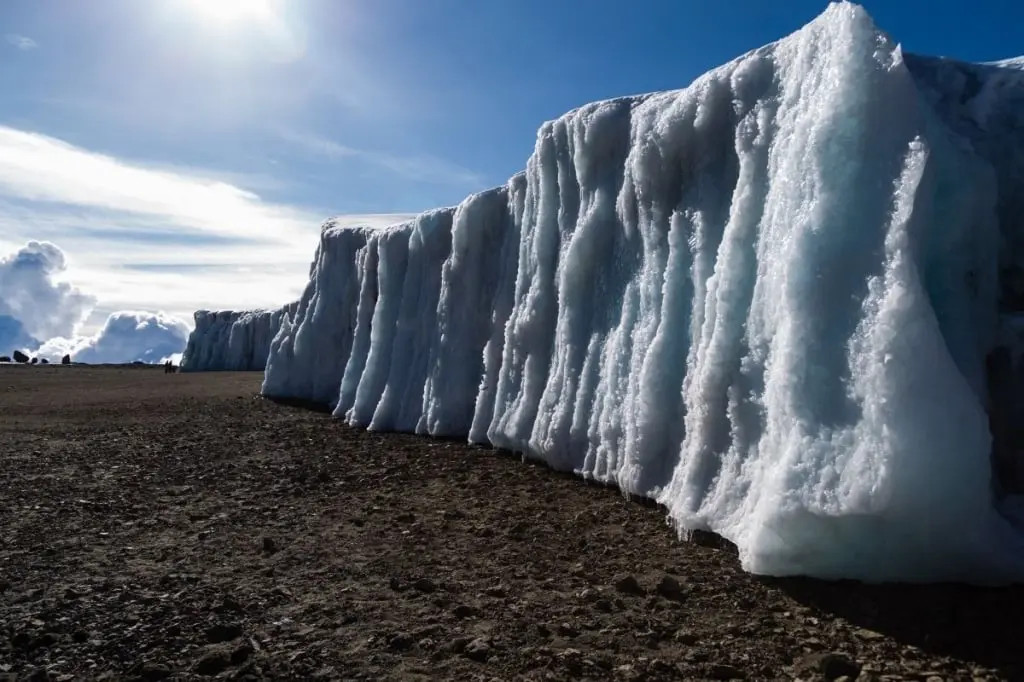
The Furtwängler Glacier is one of Mount Kilimanjaro’s most striking and threatened natural features. This large ice formation, located at the summit of Africa’s highest peak, endures intense equatorial sunlight year-round.
Named for Walter Furtwängler, a member of the fourth successful ascent of Kilimanjaro in 1912, the glacier is among the mountain’s largest remaining ice bodies. It symbolizes both natural beauty and environmental urgency.
Climbers approaching Uhuru Peak encounter the Furtwängler Glacier on the southern side of Kibo Crater, between Stella Point and the summit. Its shimmering surface, illuminated by sunrise, offers a striking view and highlights the unique experience of seeing ice at the equator.
The Furtwängler Glacier is more than a scenic landmark; it is a vital record of climate change and a warning for the planet’s future. Since its discovery in 1912, the glacier has retreated by about 85% through 2000. Scientists estimate that by 2030 or 2040, the glacier and all of Kilimanjaro’s ice could disappear entirely.
The Furtwängler Glacier is one of Mount Kilimanjaro’s most striking and threatened natural features. This large ice formation, located at the summit of Africa’s highest peak, endures intense equatorial sunlight year-round
Location of the Furtwängler Glacier
The Furtwängler Glacier is situated on the Kibo Crater within Kibo Peak, at the very summit of Mount Kilimanjaro. As climbers make their way from Stella Point toward Uhuru Peak during the early morning hours, they encounter the glacier on the southern side of the Kilimanjaro Crater.
Located at about 5,760 meters (18,900 feet) above sea level, the glacier endures extreme cold and thin air. Despite these harsh conditions, it has survived for centuries, though it is now rapidly disappearing.
The Furtwängler Glacier is one of several glaciers on Kilimanjaro, including the Credner Glacier, Northern Ice Field, and Southern Ice Field. These glaciers once formed a prominent ice cap, but today, only a few remain.
Furtwängler Glacier on Map
The History of the Furtwängler Glacier
Discovery of Furtwängler Glacier 1912
The Furtwängler Glacier was named for Walter Furtwängler, who, with Siegfried König, was part of the fourth successful Kilimanjaro ascent in 1912. Their achievement is closely linked to this iconic glacier.
Geologically, the glacier is relatively young, having existed continuously since around 1650 CE. Its formation coincided with the Maunder Minimum and cooler global temperatures, but recent warming has reversed this trend.
Scientific Research
Since its discovery, the Furtwängler Glacier has been extensively studied. Ice cores from the glacier provide valuable data on climate patterns, volcanic eruptions, droughts, and temperature changes over the past millennium.
The Rapid Retreat of the Furtwängler Glacier
Historical Shrinkage since 1912- 2000
The retreat of the Furtwängler Glacier is a well-documented example of climate change. Key data include:
- 1912–1953: The glacier’s surface area shrank by approximately 1% each year
- 1953–1989: The rate of shrinkage remained relatively stable
- 1989–2007: The rate increased to approximately 2.5% per year
- 1912–2000: The glacier had shrunk by approximately 85% overall
- 2000–2009: An additional 26% of the remaining ice cover disappeared
- 2018: The glacier was reduced to merely 11,000 square meters (120,000 square feet)
The 2006 Discovery
In 2006, researchers discovered a large hole in the center of the Furtwängler Glacier, extending about 6 meters (20 feet) down to the underlying rock. This division highlighted the glacier’s rapid degradation.
Projected Extinction
If current trends continue, scientists predict the Furtwängler Glacier and all of Kilimanjaro’s glaciers could disappear by 2030 or 2040. This is supported by data on accelerating ice loss and thinning.
Why the Furtwängler Glacier Matters
Scientific Significance
The Furtwängler Glacier is a scientific treasure trove. The ice cores extracted from it contain a detailed record of past climate conditions, including:
- Atmospheric composition over the past millennium
- Evidence of volcanic eruptions and their impact on the climate
- Drought patterns and their effects on regional ecosystems
- Temperature fluctuations throughout the Little Ice Age
This data is invaluable for understanding the natural variability of the climate and distinguishing it from human-caused changes.
Tourist Attraction
Kilimanjaro’s glaciers attract visitors worldwide who come to see ice at the equator. The Furtwängler Glacier is among the most photographed features, contrasting sharply with the surrounding volcanic rock.
The loss of these glaciers would significantly alter the Kilimanjaro experience, reduce the mountain’s appeal, and impact the livelihoods of many in the tourism sector.
Symbol of Climate Change
The Furtwängler Glacier is a powerful symbol of climate change. Its rapid retreat demonstrates the effects of rising global temperatures, serving as a warning and emphasizing the urgent need to reduce greenhouse gas emissions.
What Can Be Done to Save the Glaciers?
Environmental Protection
While the damage cannot be reversed, we can slow glacial retreat by protecting and conserving the environment. Recognizing climate change as a major threat is the first step.
Key actions include:
- Reducing emissions: Transitioning to renewable energy sources and reducing reliance on fossil fuels
- Promoting sustainability: Adopting sustainable practices in daily life and business.
- Raising awareness: Educating others about the impacts of climate change and the importance of action.
Tanzania’s Conservation Efforts
The Tanzanian government has implemented measures to protect the environment and slow glacial retreat:
- Banning plastic bags: The government has banned single-use plastic bags to reduce pollution and protect the environment.
- Promoting green treks: Encouraging environmentally friendly tours and sustainable tourism practices.
- Using recyclable bottles: Encouraging the use of recyclable water bottles on the mountain.
- Recycling and solar power: Promoting recycling and the use of solar power on the mountain
Individual Actions
Each visitor to Kilimanjaro can help protect the environment:
- Use recyclable water bottles: Avoid single-use plastic bottles.
- Recycle trash: Ensure all waste is properly disposed of or recycled.
- Support sustainable operators: Choose tour operators committed to environmental protection.
- Practice leave-no-trace principles: Minimize your impact on the environment.
Furtwängler Glacier FAQ
What Is the Furtwängler Glacier?
The Furtwängler Glacier is one of the largest glaciers on Mount Kilimanjaro, located on the Kibo Crater near the summit. It is named after Walter Furtwängler, who climbed Kilimanjaro in 1912.
Where Is the Furtwängler Glacier Located?
The glacier is situated on the southern side of Kibo Crater, on the approach to Uhuru Peak from Stella Point, at approximately 5,760 meters (18,900 feet) above sea level.
How Fast Is the Furtwängler Glacier Shrinking?
The glacier has shrunk by approximately 85% since 1912. From 1989 to 2007, it shrank at a rate of 2.5% per year. From 2000 to 2009, 26% of the remaining ice disappeared.
When Will the Furtwängler Glacier Disappear?
Scientists predict that the Furtwängler Glacier and all of Kilimanjaro’s glaciers could disappear entirely by 2030 or 2040 if current rates of retreat continue.
Why Is the Furtwängler Glacier Important?
The glacier is important for scientific research, providing ice cores that reveal past climate conditions. It is also a major tourist attraction and a powerful symbol of climate change.
What Is the Furtwängler Glacier’s History?
The glacier has existed continuously since approximately 1650 CE, coinciding with the Maunder Minimum (Little Ice Age). It was discovered in 1912 and named after Walter Furtwängler.
What Does the Furtwängler Glacier Look Like?
The glacier is a large mass of ice on the crater rim, characterized by its shimmering white surface and dramatic crevasses. In 2006, a large hole was discovered in the middle of the glacier.
Are There Other Glaciers on Kilimanjaro?
Yes. The Furtwängler Glacier is one of several glaciers, along with the Credner Glacier, the Northern Ice Field, and the Southern Ice Field. These glaciers have shrunk significantly over the past century.
What Can Be Done to Save the Glaciers?
We can slow the process by reducing greenhouse gas emissions, protecting the environment, and promoting sustainable practices. Tanzania has banned plastic bags and encourages green treks.
Can I See the Furtwängler Glacier During My Climb?
Yes. Climbers on southern routes encounter the Furtwängler Glacier during the approach to Uhuru Peak, particularly on the section from Stella Point to the summit.
Plan Your Furtwängler Glacier Adventure Today
The Furtwängler Glacier is one of Mount Kilimanjaro‘s most remarkable features, highlighting the mountain’s beauty and the urgent need for climate action. Although its future is uncertain, seeing it in person remains an unforgettable experience.
Our team creates personalized Kilimanjaro itineraries so you can experience the Furtwängler Glacier and other summit features. We offer experienced guides, quality equipment, and full support throughout your journey.
Contact us to discuss your Kilimanjaro climb and glacier experience. Africa’s highest peak and its vanishing glacier await; let us help you experience them before they are gone. Book Your Trek Now
Mount Kilimanjaro Climbing Packages
Nothing Found