
Arusha National Park
Arusha National Park is one of Tanzania’s most accessible parks, located a short drive from Arusha and Moshi. Its convenient location makes it ideal for day trips and a fitting start or end to any Tanzanian itinerary. Spanning just over 200 square miles, the park offers diverse landscapes, abundant wildlife, and activities that rival larger destinations. Despite its appeal, it remains one of the most underrated parks on Tanzania’s northern safari circuit. For travelers seeking an authentic safari experience without the crowds of the Serengeti or Ngorongoro Crater, Arusha National Park is a hidden gem.
Arusha National Park stands out for its remarkable variety of landscapes, including grasslands, dense rainforest, acacia forests, and alpine flora on Mount Meru’s upper slopes. This diversity creates a dynamic setting for every game drive. The park supports a high density of wildlife and hosts the world’s largest giraffe population, along with some of Tanzania’s highest animal concentrations. Visitors may encounter Cape buffalo, elephants, hippos, and zebra, with occasional sightings of lions and leopards, making it a rewarding destination for wildlife enthusiasts.
Beyond game drives, Arusha National Park offers activities not commonly found in other Tanzanian parks, such as kayaking, trekking Mount Meru, and walking safaris. It is one of the few national parks in Tanzania that permit walking safaris, offering a more intimate, immersive experience with nature. Authorities have also recently introduced walking safaris in other northern circuit parks, including Tarangire National Park, Lake Manyara, and select areas on the edge of Serengeti National Park.
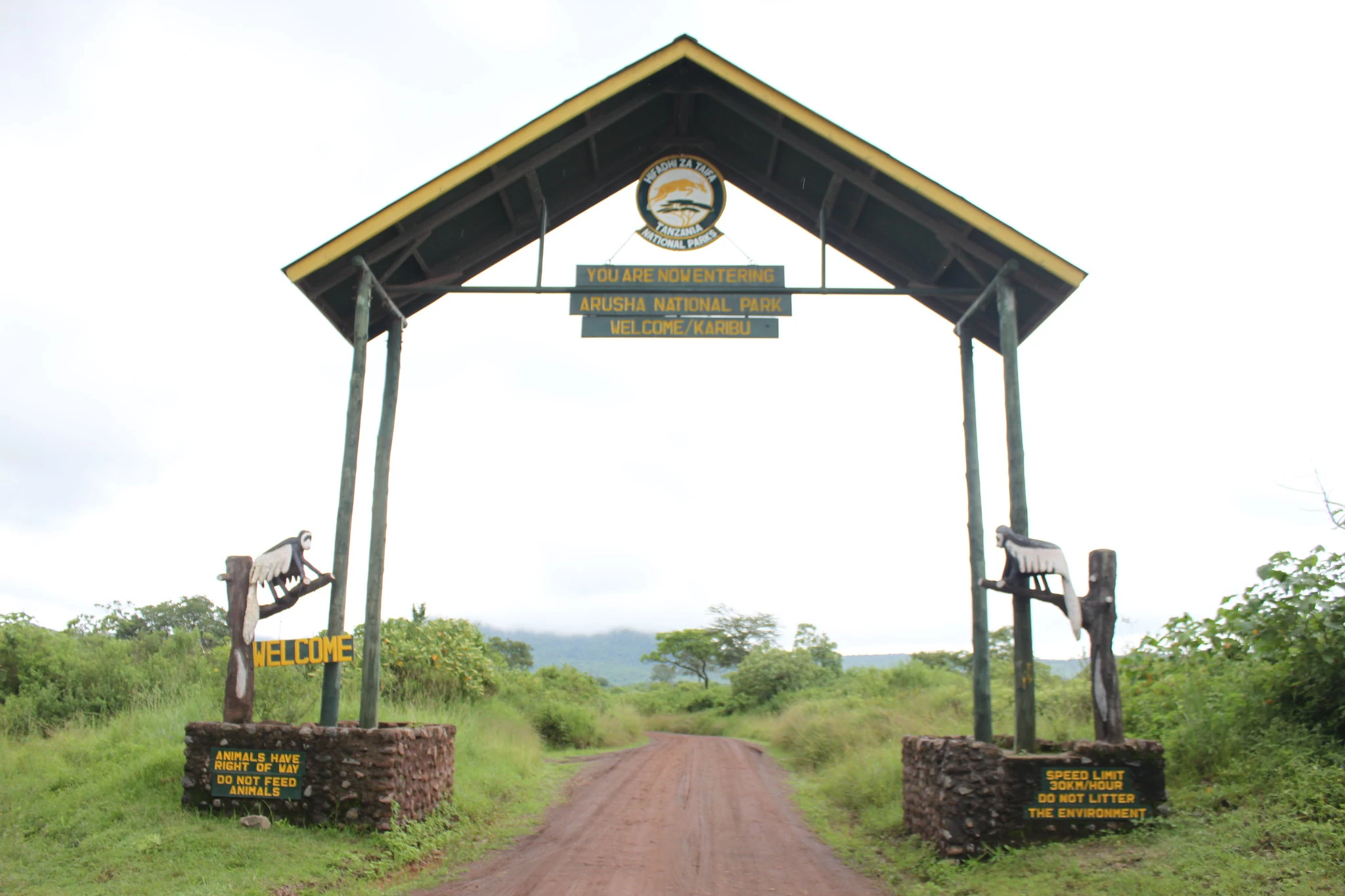
Location and Accessibility
Because of its proximity to Arusha and Moshi and its modest size, Arusha National Park can usually be toured in a single day and makes a terrific stand-alone trip. It also pairs well with longer northern safari itineraries, such as the Ngorongoro Conservation Area and Serengeti National Park, making it an ideal addition to a broader Tanzanian adventure. Located at the foot of Mount Meru, the park is ideal for a quick safari after hiking the mountain’s high slopes, giving climbers a chance to relax and enjoy wildlife before returning home.
The park’s accessibility is one of its greatest strengths. Visitors can reach it easily from Arusha or Moshi, and it is also convenient for those arriving at Kilimanjaro International Airport. This ease of access makes Arusha National Park an ideal first or last stop on a Tanzanian itinerary, allowing travelers to experience a genuine safari without committing to the longer journeys required for the Serengeti or Ngorongoro
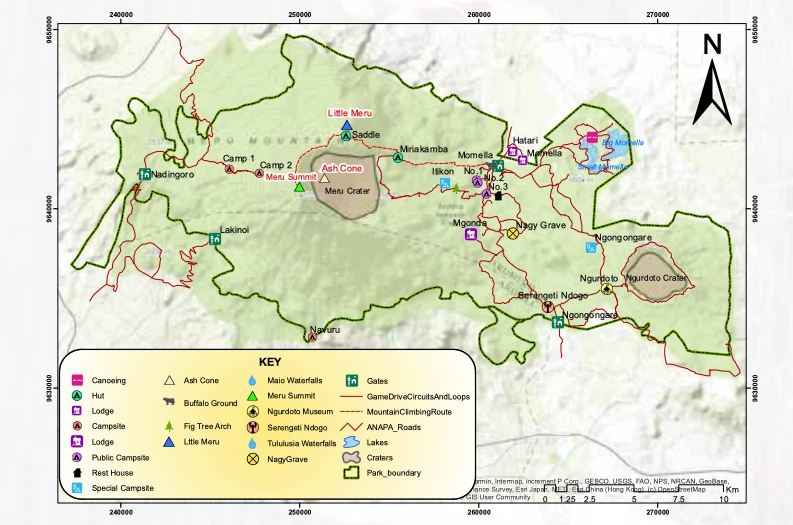
Arusha National Park Map
Wildlife in Arusha National Park
Visitors often skip Arusha National Park because they worry they will not see enough animals. However, the park offers much more, with a wonderful blend of flora and fauna and diverse landscapes. During a wildlife drive in the “little Serengeti,” you are likely to see tranquil herds of buffalo, timid bushbucks on the woodland’s outskirts, and warthogs and zebras. The park is also home to the world’s largest giraffe population, making it a unique destination for spotting these elegant animals.
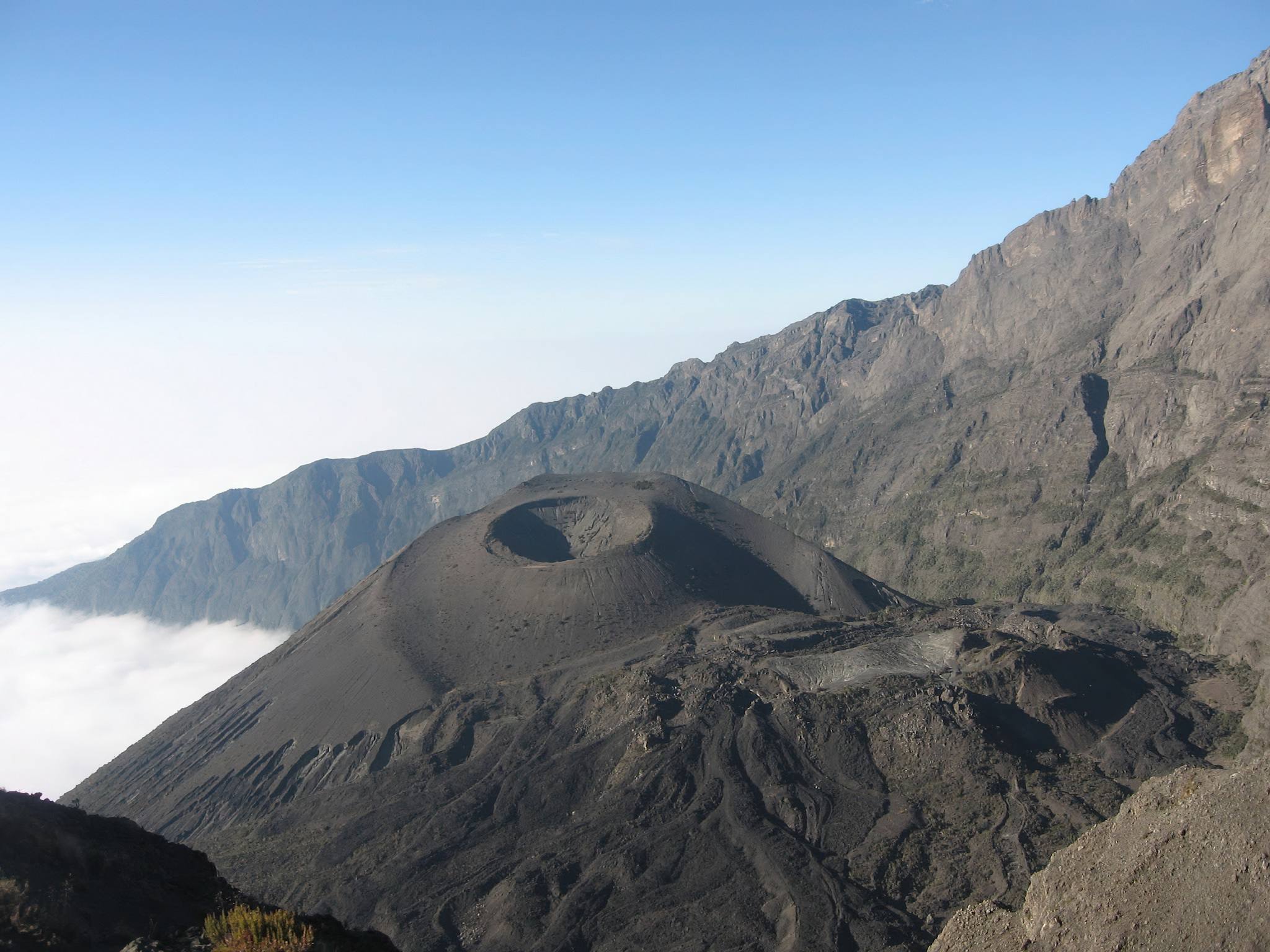
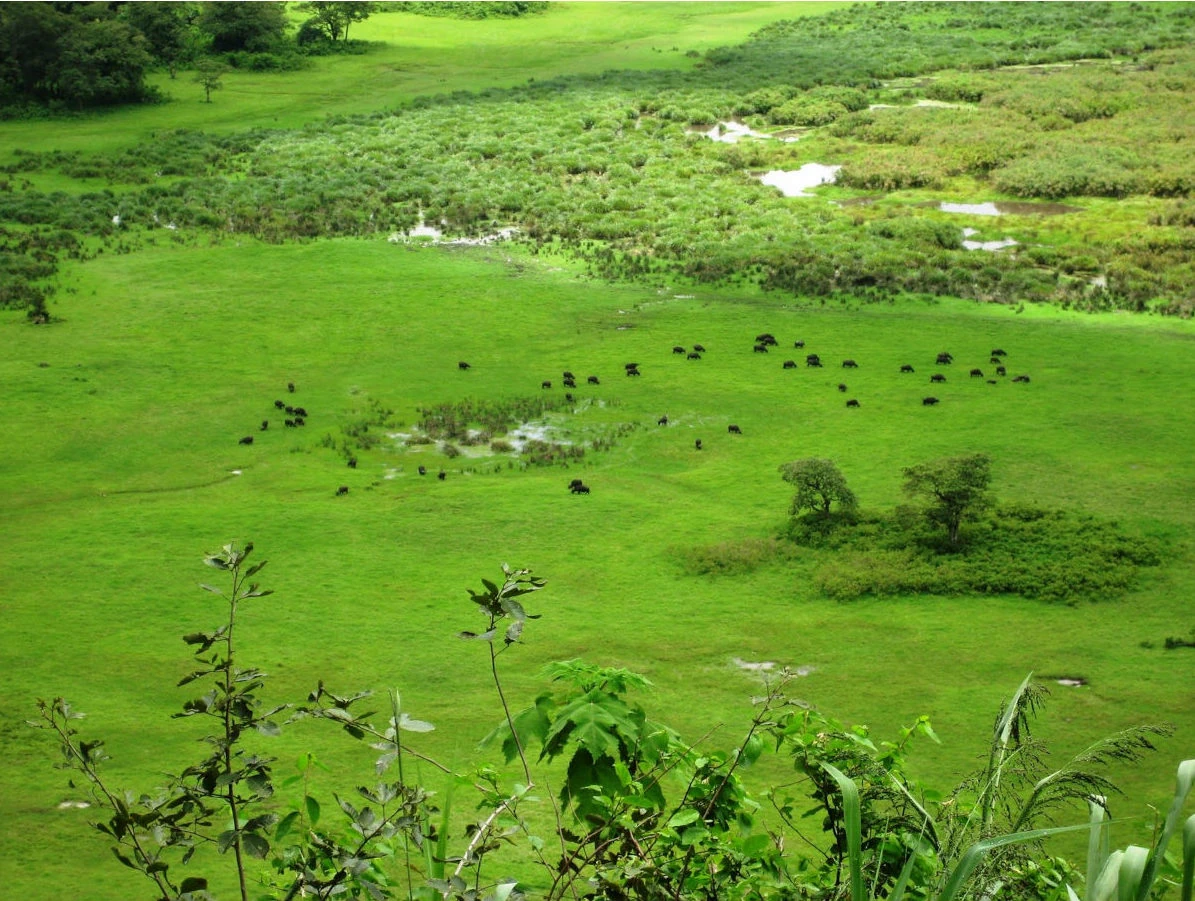
As you approach the Ngurdoto Crater, you will soon find yourself in a beautiful rainforest, where you may see the sporty black-and-white colobus monkey and the graceful mitis monkey. The Ngurdoto Crater is a smaller variant of the Ngorongoro Crater, with a diameter of around 3 kilometers. If you’re lucky, you can even spot buffalo in the wetlands on the crater floor, adding to the sense of discovery that makes Arusha National Park so rewarding.
The park’s varied habitats support a remarkable diversity of species, including Cape buffalo, elephants, hippos, zebras, warthogs, bushbucks, giraffes, colobus monkeys, mitis monkeys, and a wide variety of birds. With nearly 400 bird species recorded in the park, Arusha National Park is also a paradise for birdwatchers, offering year-round opportunities to spot resident and migratory species.
Safari in Arusha National Park
A safari in Arusha National Park offers a unique experience that combines the thrill of wildlife viewing with diverse landscapes and the flexibility of a shorter itinerary. The park’s compact size means you can see a lot in a single day, making it ideal for travelers with limited time or those who want to add a safari to a Kilimanjaro climb or Mount Meru trek. Game drives take you through grassland, rainforest, and acacia woodland, with Mount Meru rising dramatically above the plains.
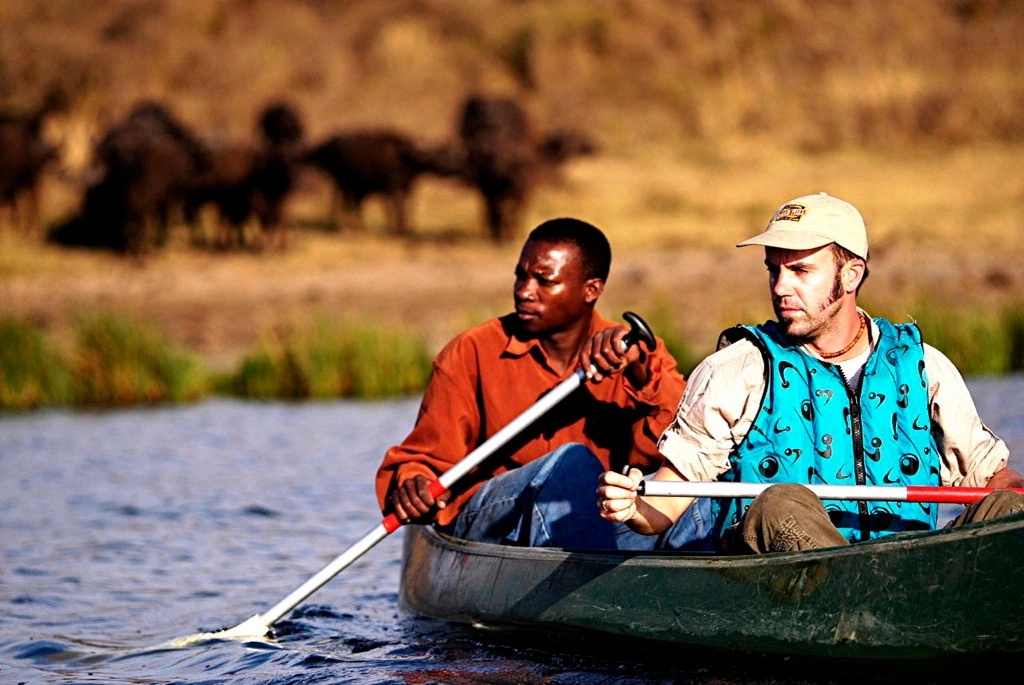
For those seeking a more active experience, walking safaris let you explore the park on foot with an armed ranger. This intimate safari lets you appreciate the bush’s smaller details—tracks, plants, insects, and birds—that you often miss from a vehicle. Kayaking is another popular activity, offering a unique perspective on the park’s lakes and waterways, while trekking Mount Meru offers a challenging high-altitude adventure for those seeking a demanding experience.
The Ngurdoto Crater
The Ngurdoto Crater is one of Arusha National Park’s highlights, a smaller variant of the Ngorongoro Crater with a diameter of about 3 kilometers. The crater is surrounded by beautiful rainforest, home to black-and-white colobus monkeys and mitis monkeys, and its wetlands often attract buffaloes and other wildlife. Visitors can view the crater from designated viewpoints along the rim, which offer spectacular panoramas of the crater floor and surrounding forest. The Ngurdoto Crater is a must-see for anyone visiting the park, offering a glimpse of Tanzania’s volcanic heritage in a compact, accessible setting.
Book Your Arusha National Park Safari with Blessing Safaris
Arusha National Park is one of Tanzania’s most accessible and rewarding destinations, offering diverse wildlife, landscapes, and activities ideal for day trips or longer itineraries. At Blessing Safaris, we provide safe, comfortable, and memorable experiences. Our team consists of local experts with in-depth knowledge of every trail and viewpoint in the parks we serve.
We prioritize ethical tourism, fair treatment of our staff, and high-quality equipment, meals, and support. With thousands of successful safaris and treks, and an outstanding safety record, Blessing Safaris is a trusted choice for travelers worldwide. Choose the operator that puts your safety, comfort, and experience first. Book your Arusha National Park safari with Blessing Safaris and let us help you create lasting memories.
Frequently Asked Questions About Arusha National Park
What Is Arusha National Park?
Arusha National Park is one of Tanzania’s most accessible parks, located just a short drive between Arusha and Moshi. Covering just over 200 square miles, the park is known for its diverse landforms, from extensive grassland and rainforest to acacia forests and alpine flora on Mount Meru’s upper slopes. It is home to the world’s biggest giraffe population and contains some of Tanzania’s highest animal concentrations. Game drives, kayaking, trekking Mount Meru, and walking safaris are popular activities, making it a superb day trip destination and a great start or end to any Tanzanian itinerary.
Where Is Arusha National Park Located?
Arusha National Park is located in northern Tanzania, just a short drive between Arusha and Moshi, at the foot of Mount Meru. Its proximity to these towns and Kilimanjaro International Airport makes it one of Tanzania’s most accessible parks. Because of its location and modest size, you can usually tour the park in a single day, making it a terrific stand-alone trip. It also pairs well with longer northern safari itineraries, such as the Ngorongoro Conservation Area and Serengeti National Park, making it an ideal addition to a broader Tanzanian adventure.
What Animals Can I See in Arusha National Park?
On a game drive in Arusha National Park, you may see plenty of Cape buffalo, elephants, hippos, and zebras, along with the occasional lion and leopard. The park is home to the world’s largest giraffe population, along with warthogs, bushbucks, black-and-white colobus monkeys, and mitis monkeys. As you approach the Ngurdoto Crater, you may see buffalo in the wetlands at the crater’s bottom. With nearly 400 bird species recorded, the park is also a paradise for birdwatchers, offering opportunities to spot both resident and migratory species.
What Activities Can I Do in Arusha National Park?
Game drives, kayaking, trekking Mount Meru, and walking safaris are all popular activities in Arusha National Park. It is one of Tanzania’s few national parks where you can go on a walking safari with an armed ranger, letting you explore the park on foot and appreciate the bush’s smaller details. Kayaking offers a unique perspective on the park’s lakes and waterways, while trekking Mount Meru provides a challenging high-altitude adventure. Game drives take you through grassland, rainforest, and acacia woodland, with Mount Meru rising dramatically above the plains.
What Is the Ngurdoto Crater?
The Ngurdoto Crater is a highlight of Arusha National Park, a smaller variant of the Ngorongoro Crater with a diameter of around 3 kilometers. The crater is surrounded by beautiful rainforest, home to black-and-white colobus monkeys and mitis monkeys, and its wetlands often attract buffaloes and other wildlife. Visitors can view the crater from designated viewpoints along the rim, which offer spectacular panoramas of the crater floor and surrounding forest. The Ngurdoto Crater is a must-see for anyone visiting the park, offering a glimpse of Tanzania’s volcanic heritage in a compact, accessible setting.
Can I Do a Walking Safari in Arusha National Park?
Yes, walking safaris are among the most popular activities in Arusha National Park, and it is one of the few national parks in Tanzania where you can go on a walking safari. Walking safaris offer a great alternative to the traditional safari experience, letting visitors connect with nature in a more intimate, immersive way. With an armed ranger, you can explore the park on foot and learn about the smaller details of the bush—tracks, plants, insects, and birds—that you often miss from a vehicle. National park authorities have recently allowed walking safaris in other parks on the northern safari circuit, including Tarangire National Park, Lake Manyara, and some fringe concessions on the Serengeti National Park’s edge.
How Big Is Arusha National Park?
Arusha National Park covers a small area of 322 km2, making it one of Tanzania’s smaller parks. Despite its modest size, the park has a high species density and a diverse range of landforms, from extensive grassland and rainforest to acacia forests and alpine flora on Mount Meru’s upper peaks. Its compact size makes it easy to tour in a single day, while its diversity ensures visitors see a great deal.
Is Arusha National Park Worth Visiting?
Yes, Arusha National Park is definitely worth visiting, especially for travelers seeking an accessible safari experience without the crowds of the Serengeti or Ngorongoro Crater. Visitors often overlook this park, worried they won’t see enough animals, but it offers plenty and dazzles with a wonderful blend of flora and fauna and diverse landscapes. It makes a superb day trip and a great start or end to any Tanzanian itinerary, and it is especially suitable for a quick safari after hiking Mount Meru.
How Far Is Arusha National Park from Arusha and Moshi?
Arusha National Park is located between Arusha and Moshi, near Kilimanjaro International Airport, making it one of Tanzania’s most accessible parks. It is ideal for day trips or as a convenient first or last stop on a Tanzanian itinerary. Visitors can experience an authentic safari without the longer travel times needed for the Serengeti or Ngorongoro.
What Is the Best Time to Visit Arusha National Park?
The best time to visit Arusha National Park is during the dry seasons, from June to October and December to February, when clear weather makes wildlife easier to spot. During the rainy months of March to May and November, the park is lush and green, though trails may be muddy and some roads may be challenging. The park remains accessible year-round, and each season provides unique scenery and wildlife experiences.
Can I Combine Arusha National Park with Mount Meru or Kilimanjaro?
Arusha National Park, located at the base of Mount Meru near Kilimanjaro, is a convenient addition to a trekking itinerary. Many climbers visit after hiking Mount Meru or Mount Kilimanjaro to relax on a safari before departure. The park’s accessibility and compact size let visitors enjoy wildlife and scenery without the physical demands of another climb.
What Is the “Little Serengeti” in Arusha National Park?
The “Little Serengeti” is a nickname for one of the grassland areas within Arusha National Park, where visitors are likely to see tranquil herds of buffalo, timid bushbucks on the woodland’s outskirts, and warthogs and zebras. The area’s open plains and abundant wildlife create a safari experience that resembles the famous Serengeti, but on a much smaller and more accessible scale. It’s a highlight of a game drive in Arusha National Park.
How Many Bird Species Are in Arusha National Park?
Arusha National Park hosts nearly 400 bird species, offering exceptional birdwatching opportunities. Its varied habitats, including grassland, rainforest, acacia forests, and alpine zones, support resident and migratory birds. Visitors can see species ranging from sunbirds and turacos to eagles and hornbills, making the park an outstanding birding destination.
What Is the Difference Between Arusha National Park and Other Tanzanian Parks?
Arusha National Park is smaller and more accessible than Tanzania’s larger parks, making it well-suited for day trips and short visits. Unlike the Serengeti and Ngorongoro Crater, which require extended travel and several days to explore, Arusha can be experienced in a single day. It is also one of the few parks in Tanzania that offers walking safaris, along with a diverse range of wildlife, landscapes, and activities such as kayaking and trekking Mount Meru.
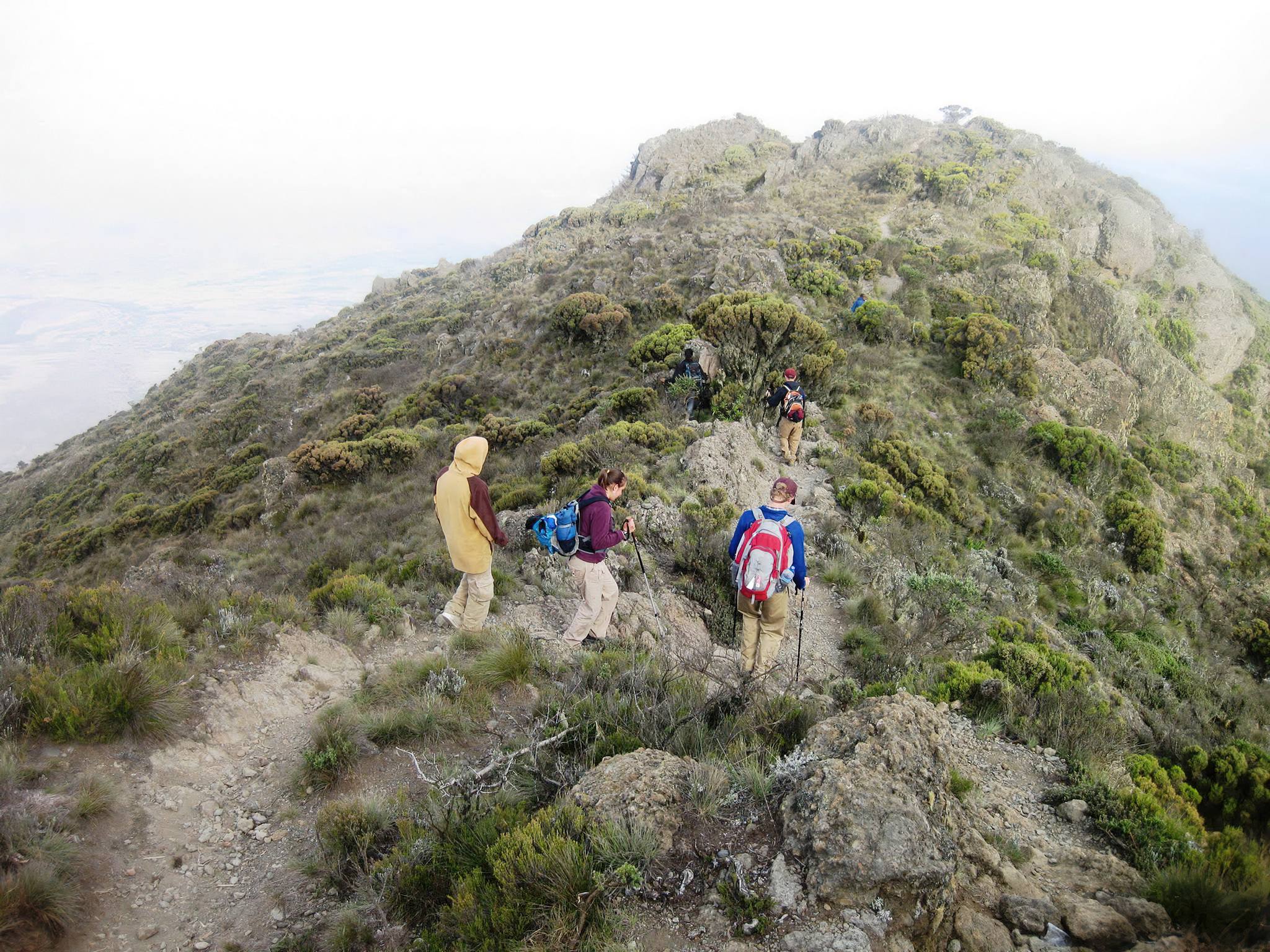
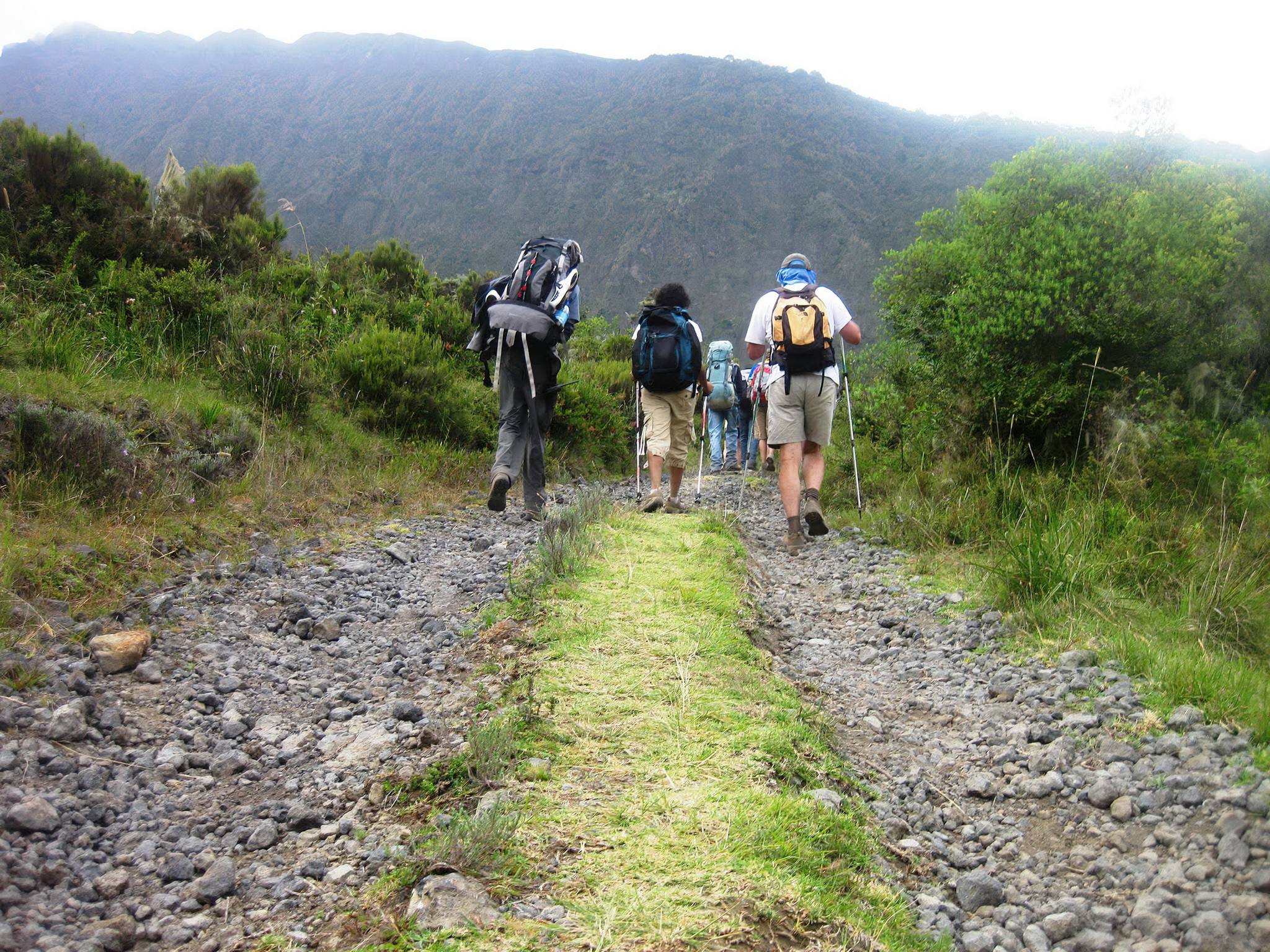
Arusha National Park Photos
You May Also Like
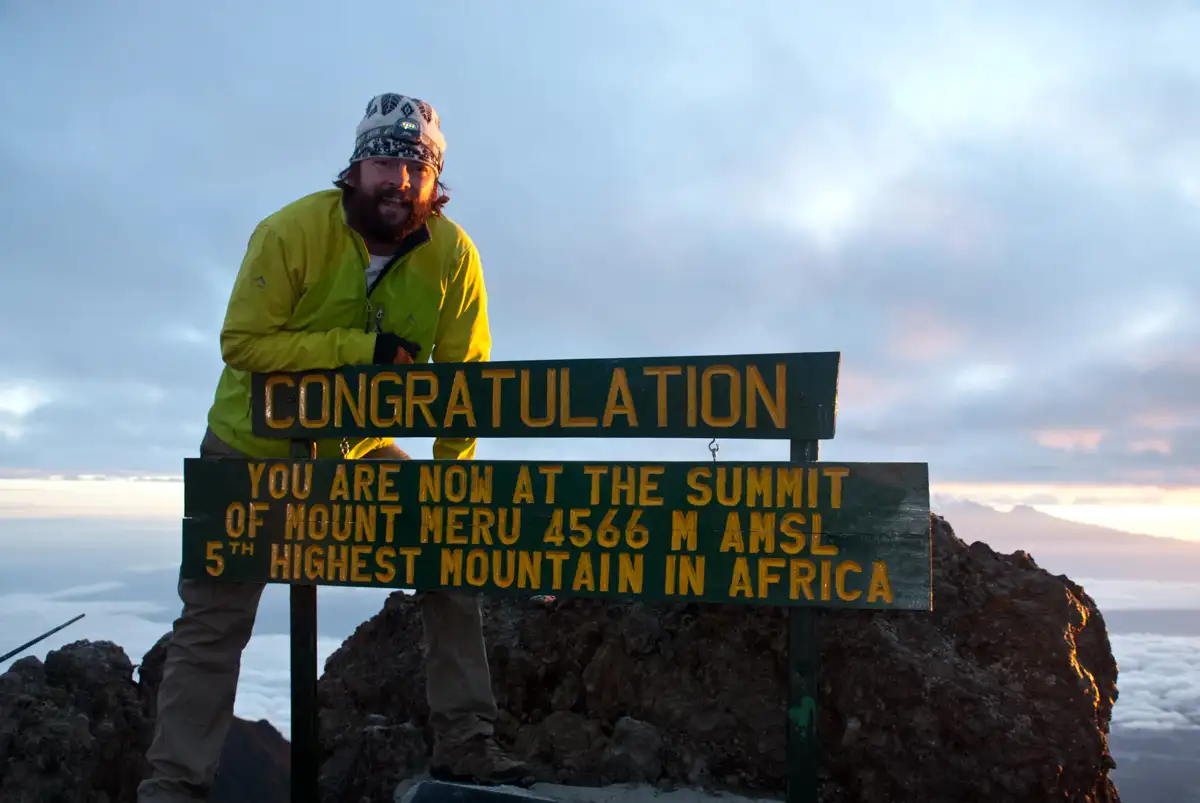
Mount Meru, Tanzania’s second-highest mountain at 4,566 meters, is Africa’s fifth-highest peak. Situated in Arusha National Park, this dormant volcano offers dramatic scenery, abundant wildlife, and a greater sense of solitude than Kilimanjaro
This group of shallow alkaline lakes, fed by underground springs, is among the park’s most scenic and wildlife-rich areas. Each of the seven lakes—Big Momela, Small Momela, El Kekhotoito, Kusare, Rishateni, Lekandiro, and Tulusia
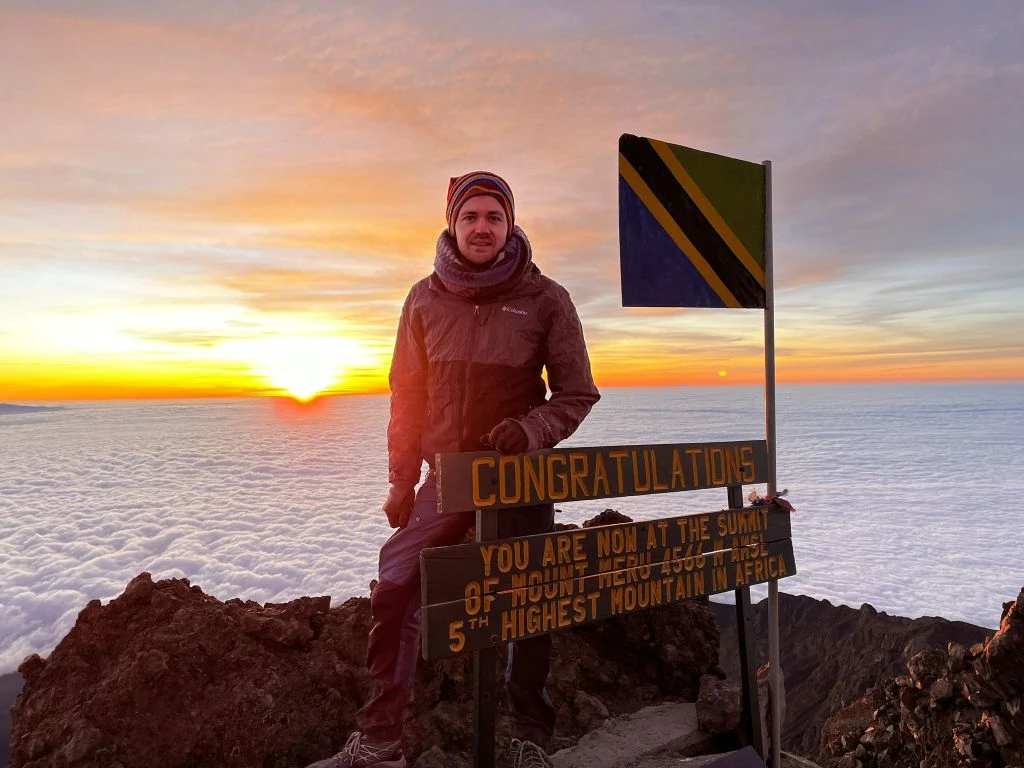
The Mount Meru 4 Day Hike follows the Momella Route to the summit at 4,566 meters. Many climbers use Mount Meru for acclimatization before attempting Kilimanjaro