Zebra Rocks Kilimanjaro
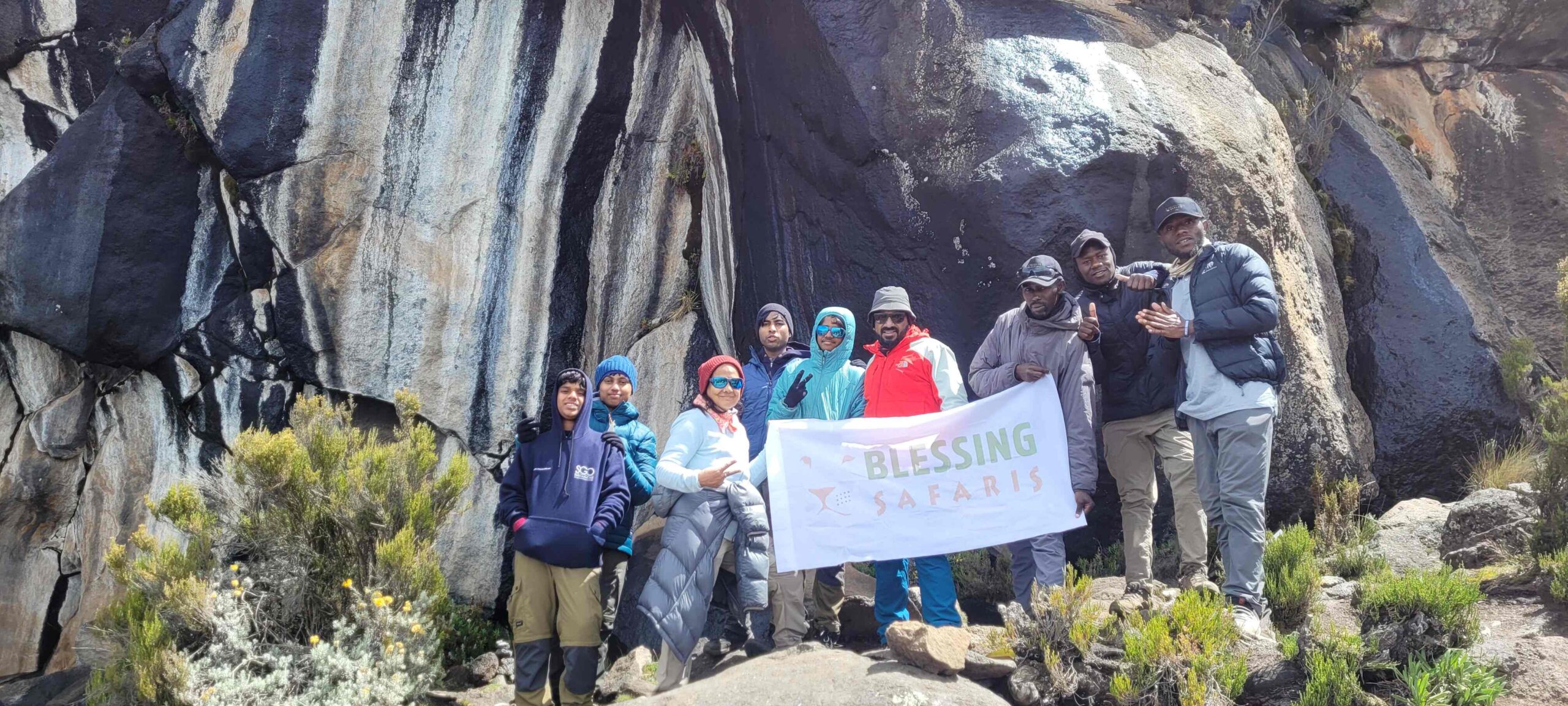
Zebra Rocks are among Mount Kilimanjaro’s most distinctive landmarks, featuring dark and whitish-cream stripes that closely resemble zebra patterns. Located at approximately 4,010 meters on the northeastern slopes, they serve as a key acclimatization point for climbers on the Marangu Route, helping trekkers prepare for high-altitude conditions.
The hike to Zebra Rocks is an essential part of the 6-day Marangu Route, serving as a vital acclimatization exercise on the third day. Climbers ascend to the rocks to experience higher altitude, then return to Horombo Huts to sleep at a lower elevation. This “climb high, sleep low” strategy is widely recognized for reducing altitude sickness and improving summit success.
Zebra Rocks formed when mineral-rich rainwater flowed down from the lava cliff above, depositing layers that created the distinctive dark and light stripes. This geological process has produced a natural landmark that is both visually striking and a memorable milestone on the way to Uhuru Peak.
Location of Zebra Rocks
Geographic Position
Zebra Rocks are situated at approximately 4,010 meters (13,156 feet) on the northeastern slopes of Mount Kilimanjaro. The formation is located near the border between the moorland and alpine desert regions, where the landscape transitions from hardy vegetation to the stark, barren terrain characteristic of higher elevations. This position on the leeward side of Mount Kilimanjaro means the area is fairly dry compared to other parts of the mountain, though it does receive some rainfall.
Zebra Rocks Kilimanjaro on Map
Distance from Horombo Huts
Zebra Rocks are about a 30-minute walk from Horombo Huts. The trail leads toward the Mawenzi campsite, east of Mawenzi Peak, and briefly diverges from the main route before returning to the campsite.
Elevation
The rocks sit at approximately 4,010 meters (13,156 feet), representing a significant altitude gain from the Horombo Huts at 3,720 meters (12,205 feet). This elevation gain of approximately 290 meters makes the hike an effective acclimatization exercise, exposing climbers to higher altitudes before they return to sleep at a lower elevation.
Formation of Zebra Rocks
The Geological Process
The formation of Zebra Rocks is a testament to the geological forces that have shaped Mount Kilimanjaro over millennia. The distinctive stripes were created when rainwater rich in minerals flowed down from the lava cliff above the rocks. As the water cascaded over the rocks, it deposited mineral layers that gradually built up over time.
The Stripe Pattern
The alternating dark and whitish-cream stripes that characterize Zebra Rocks were formed through the deposition of different minerals. The dark stripes are believed to be caused by iron oxides and other dark minerals, while the lighter stripes are formed from calcium carbonate and other light-colored minerals. The result is a striking pattern that closely resembles the markings of a zebra.
The Leeward Side Location
Zebra Rocks’ location on the leeward side of Mount Kilimanjaro has contributed to their preservation. The area receives less rainfall than the windward side, reducing erosion and helping to maintain the distinctive stripe patterns. The relatively dry conditions, combined with the rocks’ mineral composition, have allowed the stripes to remain visible for centuries.
Zebra Rocks and Acclimatization
The Importance of Acclimatization
Acclimatization is one of the most critical factors in a successful Kilimanjaro summit attempt. As climbers ascend to higher altitudes, the air becomes thinner, and the body must adapt to reduced oxygen levels. This adaptation process takes time, and climbers who ascend too quickly are at risk of altitude sickness, which can range from mild headaches to life-threatening conditions.
The Climb High, Sleep Low Principle
The hike to Zebra Rocks exemplifies the “climb high, sleep low” principle, which is widely recognized as the most effective acclimatization strategy. Climbers ascend to the rocks at 4,010 meters, exposing their bodies to higher altitudes, before descending to sleep at the Horombo Huts at 3,720 meters. This exposure stimulates the body to produce more red blood cells and adapt to the thin air, while the lower sleeping altitude allows for better rest and recovery.
The 6-Day Marangu Route
The 6-day Marangu Route itinerary includes a dedicated acclimatization day on the third day, during which climbers hike to Zebra Rocks. This extra day is crucial for improving summit success rates, as it allows climbers to adapt gradually to the altitude. The hike to Zebra Rocks is typically completed in the morning, with climbers returning to Horombo Huts for lunch and rest.
The 5-Day Marangu Route
Unfortunately, the 5-day Marangu Route climb excludes this extra acclimatization day. Climbers on the 5-day itinerary proceed straight to the Horombo Huts campsite on the third day, without the acclimatization hike to Zebra Rocks. This abbreviated schedule significantly increases the risk of altitude sickness and reduces summit success rates, which is why the 6-day itinerary is strongly recommended.
Wildlife at Zebra Rocks
Small Mammals
Despite the high altitude and relatively dry conditions, the area around Zebra Rocks supports several small animals. Rodents are commonly seen, particularly in areas where vegetation provides cover. These small mammals have adapted to the harsh conditions and play an important role in the local ecosystem.
Birdlife
Bird enthusiasts will find several species in the area, including white-necked ravens and other high-altitude birds. The relative dryness of the leeward side makes it less hospitable to some bird species than the windward slopes, but dedicated birdwatchers may still spot interesting species.
Adaptation to Altitude
The wildlife found at Zebra Rocks has adapted to the challenging conditions of high altitude. The thin air, cold temperatures, and limited water availability create a harsh environment, but species such as the white-necked raven have thrived here. These birds are often seen soaring above the rocks, their dark forms contrasting with the sky.
Hiking to Zebra Rocks
What to Expect
The hike to Zebra Rocks typically takes approximately 30 minutes from Horombo Huts. The trail ascends through the moorland zone, with the vegetation gradually thinning as climbers gain altitude. The path becomes rockier and more exposed, offering spectacular views of the surrounding landscape.
The Ascent
Climbers can expect:
- Steady ascent: The trail gains approximately 290 meters in elevation
- Rocky terrain: The path becomes increasingly rocky as climbers near the rocks
- Changing vegetation: The landscape transitions from moorland to alpine desert
- Spectacular views: Panoramic views of Mawenzi Peak and the surrounding landscape
The Return
After reaching Zebra Rocks, climbers return to Horombo Huts along the same trail. The descent typically takes less time than the ascent, allowing climbers to rest and recover before the evening meal. The return to lower altitude provides an opportunity for the body to rest and consolidate the acclimatization gains from the hike.
Tips for the Hike
- Start early: Begin the hike in the morning to allow time for rest in the afternoon.
- Pace yourself: Walk slowly and steadily to minimize fatigue.
- Stay hydrated: Drink water before, during, and after the hike.
- Layer clothing: The temperature can vary significantly
- Follow your guide: Guides know the best route and pace for acclimatization.
Frequently Asked Questions About Zebra Rocks
What Are Zebra Rocks on Kilimanjaro?
Zebra Rocks are a distinctive rock formation on Mount Kilimanjaro. Layer clothing: Temperatures can vary significantly. Stripes that resemble zebra markings. Located at approximately 4,010 meters (13,156 feet), they serve as a crucial acclimatization point for climbers on the Marangu Route.
Where Are Zebra Rocks Located?
Zebra Rocks are located approximately half an hour on foot from the Horombo Huts campsite, on the trail toward the Mawenzi campsite. They sit near the border between the moorland and alpine desert regions on the leeward side of Mount Kilimanjaro.
How Were Zebra Rocks Formed?
Zebra Rocks were formed by rainwater rich in minerals flowing down from the lava cliff above. The water deposited mineral layers on the rocks below, creating alternating dark and light stripes through the accumulation of different minerals over time.
Why Are Zebra Rocks Important for Acclimatization?
The hike to Zebra Rocks allows climbers to practice the “climb high, sleep low” principle, ascending to higher altitudes before returning to sleep at a lower elevation. This exposure stimulates acclimatization and reduces the risk of altitude sickness.
Which Route Uses Zebra Rocks for Acclimatization?
Zebra Rocks are primarily used by climbers on the 6-day Marangu Route. The third-day hike to the rocks provides essential acclimatization before the summit push. The 5-day Marangu Route excludes this extra acclimatization day.
What Is the Elevation of Zebra Rocks?
Zebra Rocks sit at approximately 4,010 meters (13,156 feet) above sea level. The hike from Horombo Huts (3,720 meters) involves an elevation gain of approximately 290 meters.
How Long Does It Take to Hike to Zebra Rocks?
The hike from Horombo Huts to Zebra Rocks typically takes about 30 minutes on foot. The return hike to the campsite follows the same trail and takes approximately the same amount of time.
What Wildlife Can Be Seen at Zebra Rocks?
Zebra Rocks are home to small animals such as rodents and various bird species, including white-necked ravens. The area’s location on the leeward side of the mountain makes it relatively dry compared to other parts of Kilimanjaro.
What Is the Climb High, Sleep Low Principle?
The “climb high, sleep low” principle involves ascending to higher altitudes during the day to stimulate acclimatization, then descending to sleep at a lower altitude for better rest and recovery. The hike to Zebra Rocks is a classic example of this principle.
Why Is the 6-Day Marangu Route Recommended?
The 6-day Marangu Route includes a dedicated acclimatization day with a hike to Zebra Rocks, significantly improving summit success rates. The 5-day route omits this crucial acclimatization, increasing the risk of altitude sickness.
What Should I Bring to Zebra Rocks?
Essential items include water, snacks, warm layers, sunscreen, a hat, and a camera for the spectacular views. Trekking poles can be helpful for the rocky terrain, and sturdy hiking boots are essential.
Is the Hike to Zebra Rocks Difficult?
The hike to Zebra Rocks is moderate in difficulty. The trail involves steady ascent over rocky terrain, but the relatively short distance makes it accessible for most climbers with a reasonable level of fitness.
Do You Plan to See Zebra Rocks on Kilimanjaro?
Zebra Rocks represent more than just a stunning geological formation—they are a crucial stepping stone on the journey to Uhuru Peak. The acclimatization hike to this distinctive landmark is essential for climbers following the Marangu Route, providing the altitude exposure needed to adapt to Kilimanjaro’s thin air.
Our expert team designs personalized Kilimanjaro itineraries that include the Zebra Rocks acclimatization hike and other essential acclimatization features. We provide experienced guides, quality equipment, and comprehensive support throughout your journey.
Contact us to discuss your Kilimanjaro climb and experience the wonders of Zebra Rocks. Africa’s highest peak awaits—let us help you reach the summit. Book Your Kilimanjaro Trip Now
Mount Kilimanjaro Tour Packages
Nothing Found