Rongai Route Mount Kilimanjaro
The Rongai Route provides a unique Kilimanjaro climbing experience, approaching the peak from the northeast along the Tanzania-Kenya border. As the only trail ascending from the northern slopes, it offers an unspoiled wilderness not found on the busier southern routes.
The Rongai Route stands out for its remoteness. As one of Kilimanjaro’s least-visited trails, it offers a peaceful, uncrowded experience. Trekkers often enjoy hours or days of solitude, which is uncommon on busier routes such as Machame or Marangu.
The northern approach of the Rongai Route offers distinct advantages. Its position in the mountain’s rain shadow makes it the driest route, ideal during rainy seasons when other trails are difficult to use. The gradual ascent also makes it one of the easier routes.
The route merges with the
Marangu Route near
Kibo Camp for the final ascent to
Uhuru Peak. Before this point, trekkers experience days of solitude and pristine wilderness. This blend of accessibility and seclusion makes the Rongai Route an excellent choice for a unique Kilimanjaro adventure.
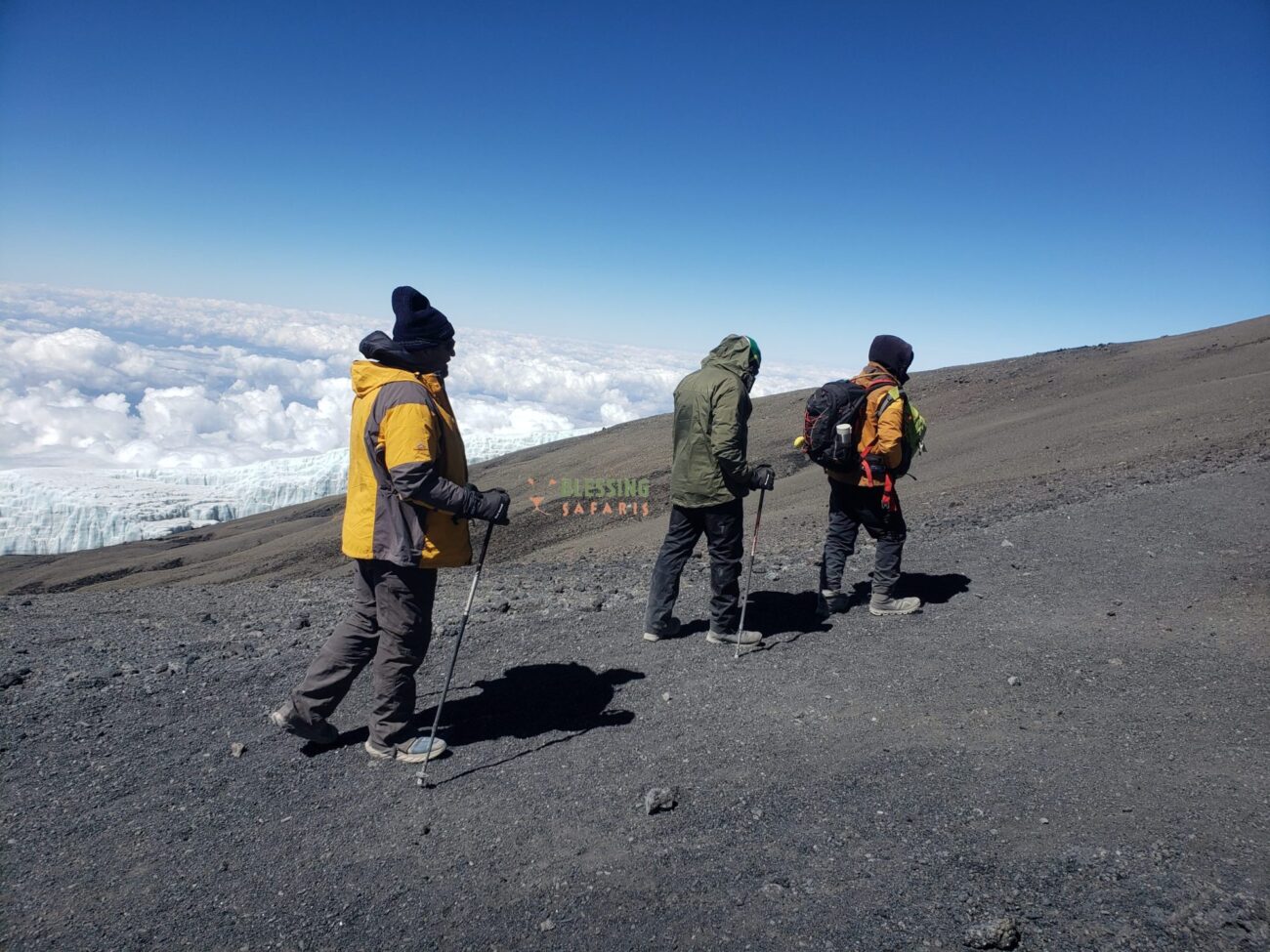
Why Choose the Rongai Route for Your Kilimanjaro Climb
The Rongai Route offers distinct advantages over other Kilimanjaro trails. Its northern approach reveals mountain perspectives not visible from southern routes.
Uncrowded Wilderness Experience
The Rongai Route is one of Kilimanjaro’s quietest trails, providing a true wilderness experience. During the initial days, you will encounter minimal foot traffic, allowing for a more personal connection with the landscape.
This solitude benefits photographers, nature enthusiasts, and those seeking a contemplative experience. Fewer crowds allow for undistracted appreciation of the scenery, and wildlife sightings are more frequent in these undisturbed areas.
Drier Conditions
The Rongai Route’s northern location offers a weather advantage. The rain shadow effect keeps this side much drier than the southern approaches, making it an excellent choice during the rainy seasons, especially in April and May when other trails are muddy and difficult.
Trekkers on the Rongai Route usually experience clearer skies and more stable conditions, enhancing visibility and comfort. This advantage has increased the route’s popularity during wetter months.
Gradual, Steady Ascent
The Rongai Route features a steady, gradual ascent with manageable daily stages. This allows effective acclimatization without extreme elevation gains, making it accessible for first-time high-altitude trekkers.
Manageable daily distances allow for sufficient rest and recovery, reducing fatigue and enhancing the experience. The final pre-summit day is intentionally short, giving trekkers time to rest and prepare for summit night.
Wildlife Viewing Opportunities
The Rongai Route offers some of the best wildlife viewing opportunities on Kilimanjaro, particularly during the first days in the rainforest zone. The northern approach passes through pristine habitat where animals remain less disturbed by human activity.
Trekkers often spot:
- Black-and-white colobus monkeys in the forest canopy
- Various bird species, including turacos and sunbirds
- Small antelope species in the lower elevations
- Occasional signs of larger wildlife
These wildlife encounters add an extra dimension to the Kilimanjaro climbing experience, reminding trekkers that this mountain supports rich ecosystems alongside its dramatic landscapes.
Rongai Route Scenery and Landscapes
The Rongai Route offers unique perspectives on Kilimanjaro that aren’t visible from other trails. The northern approach reveals the mountain from angles that most climbers never see, providing a fresh perspective on this iconic peak.
Early Stages: Rainforest to Heath
The route begins with a drive to Nale Moru village, passing through coffee plantations and rural settlements before reaching the trailhead. The initial path leads through dry rainforest, which quickly transitions into the heather zone as you gain elevation. This forest is lighter and drier than the dense rainforest on the southern slopes, offering more open views.
The heath zone features distinctive vegetation including giant heather, wildflowers, and the iconic senecio plants (giant groundsels) that characterize Kilimanjaro’s middle elevations. The views toward the Kenyan plains create a sense of space and distance that’s unique to this northern approach.
The Saddle and Summit Approach
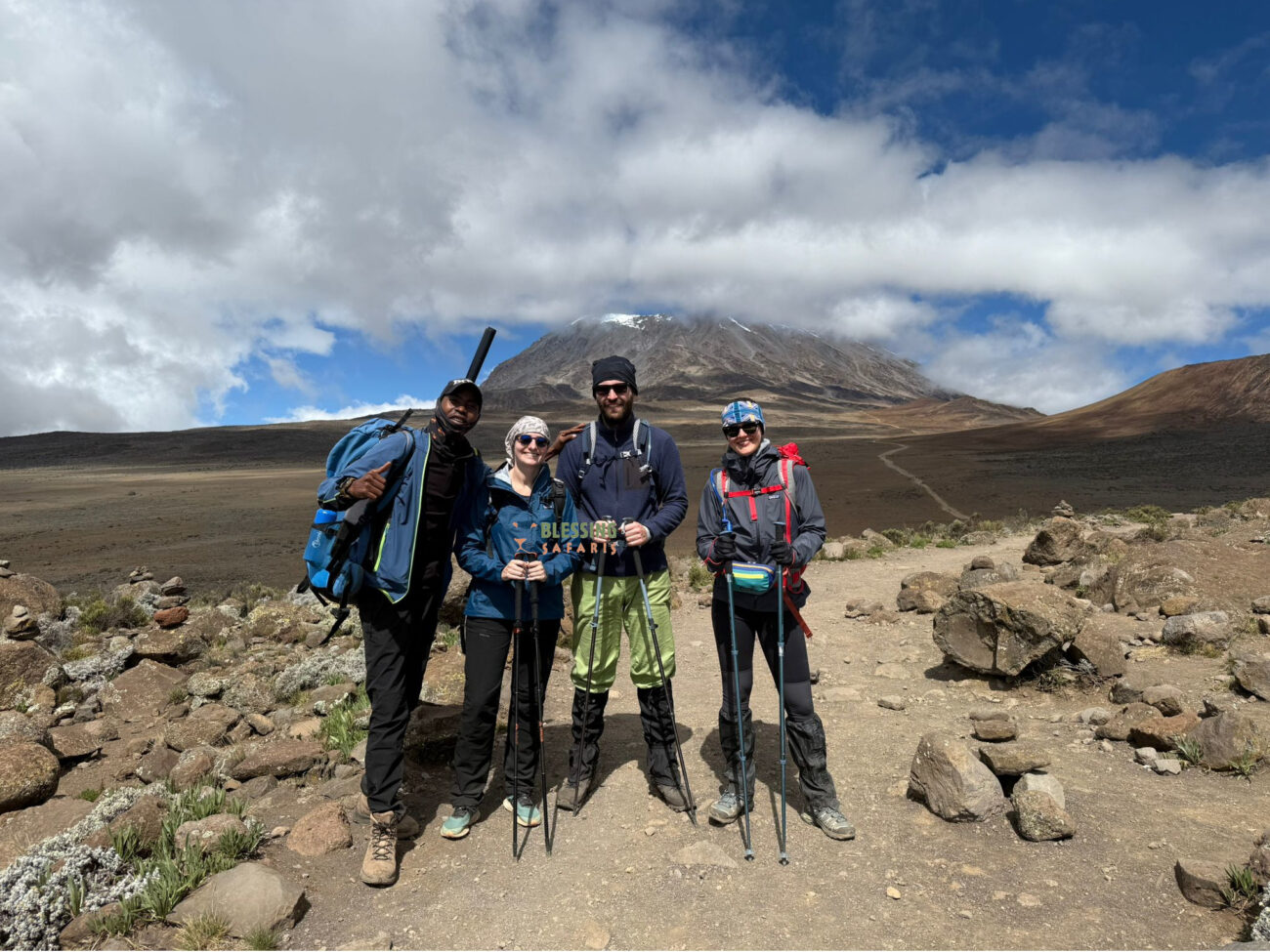
The journey across the “Saddle”—the high-altitude plain connecting Mawenzi and Kibo peaks—provides one of the route’s most dramatic sections. This lunar landscape of volcanic rocks and scree creates an otherworldly atmosphere that builds anticipation for the summit attempt.
The final approach to Uhuru Peak via Gilman’s Point follows the same path as the Marangu Route, allowing trekkers to experience the classic crater rim views while having enjoyed days of solitude on the northern slopes.
Rongai Route Kilimanjaro Map
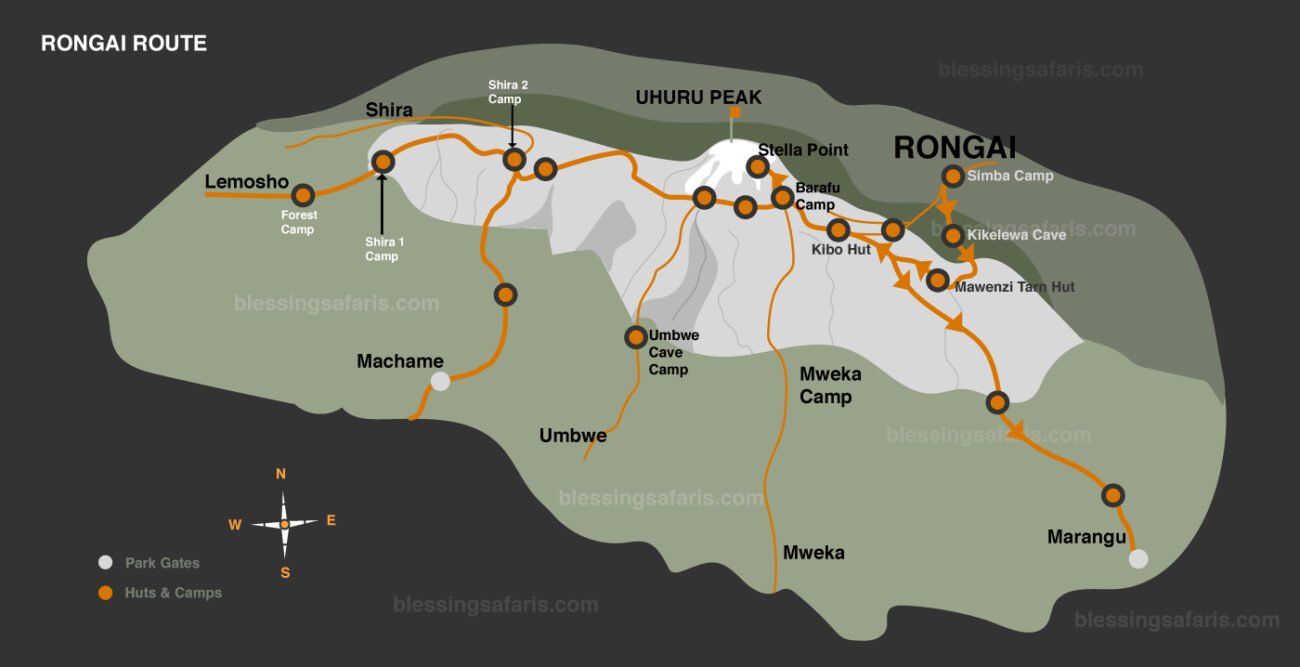
Rongai Route Overview
| DAY |
STARTING CAMP |
ALTITUDE |
FINISH CAMP |
ALTITUDE |
TIME |
DISTANCE |
| 1 |
Rongai Gate |
1879 m |
Simba Camp |
2364 m |
3hrs |
7 km |
| 2 |
Simba Camp |
2364 m |
Kikelelwa Camp |
3600 m |
5 hrs |
11 km |
| 3 |
Kikelewa Camp |
3600 m |
Mawenzi Turn Hut |
4315 m |
2hrs |
3 km |
| 4 |
Mawenzi Turn Hut |
4315 m |
Kibo Hut |
4720 m |
5 hrs |
9 km |
| 4 |
Kibo Hut |
4720 m |
Uhuru Peak |
5895 m |
8 hrs |
6 km |
| 5 |
Uhuru Peak |
5895 m |
Horombo Hut |
3720 m |
5 hrs |
16 km |
| 6 |
Horombo |
3720 m |
Marangu Gate |
1879 |
6 hrs |
19 km |
Rongai Route 7-Day Detailed Itinerary
Day 1: Nale Muru to Simba Camp
Your Rongai Route adventure begins with a drive through villages and coffee plantations to the town of Nale Moru on the mountain’s northeastern side. After meeting your porters, you’ll begin hiking through the dry rainforest, which quickly transitions into the heather zone. The 4-5 hour trek brings you to Simba Camp, located near First Cave at approximately 2,835 meters (9,300 feet). The camp offers magnificent views across the plains of Kenya.
Day 2: Simba Camp to Second Cave
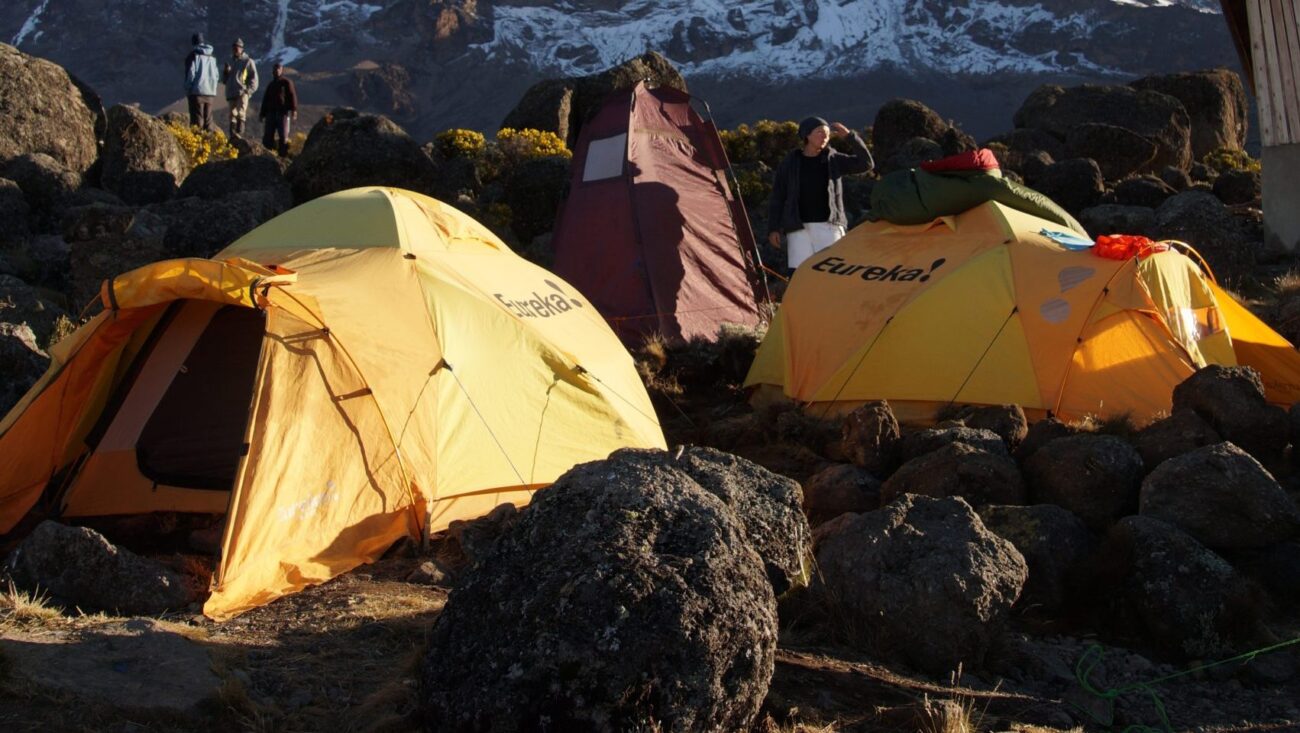
Today’s 3-4 hour hike involves a steady climb through heathland, distinguished by heather, wildflowers, and stony paths. As you walk, you’ll enjoy views of Kibo Peak and the east-facing glaciers on the crater rim. After lunch, you’ll leave the main trail to follow a narrower path toward the jagged peaks of Mawenzi. Second Cave (3,445 meters / 11,300 feet) sits in a sheltered valley surrounded by giant senecio plants.
Day 3: Second Cave to Third Cave
This day is designed for acclimatization to improve your chances of reaching the summit. The morning is spent relaxing at camp, allowing your body to adjust to the altitude. Around lunchtime, you’ll make your way across the heath, following a narrow path toward Third Cave (3,600 meters / 11,811 feet). This 3-4 hour trek provides continued acclimatization while maintaining a relaxed pace.
Day 4: Third Cave to Mawenzi Tarn Hut
Today’s 4-5 hour hike includes a short, steep climb up the grassy mountainside, offering panoramic views. The heathland transitions to rocky highlands with volcanic boulders. Mawenzi Tarn Hut (4,315 meters / 14,160 feet) is set in a valley between Mawenzi Peak’s spires.
Day 5: Mawenzi Tarn Hut to Kibo Hut
This 6-8-hour6-8 hour trek crosses the lunar landscape of the Saddle, the high-altitude plain between the Mawenzi and Kibo peaks. Arrive at Kibo Hut (4,703 meters / 15,430 feet) at the base of the Kibo crater wall. Prepare your summit equipment, keep water in thermoses to prevent freezing, and rest early for the midnight ascent.
Day 6: Kibo Hut to Uhuru Peak to Horombo Hut
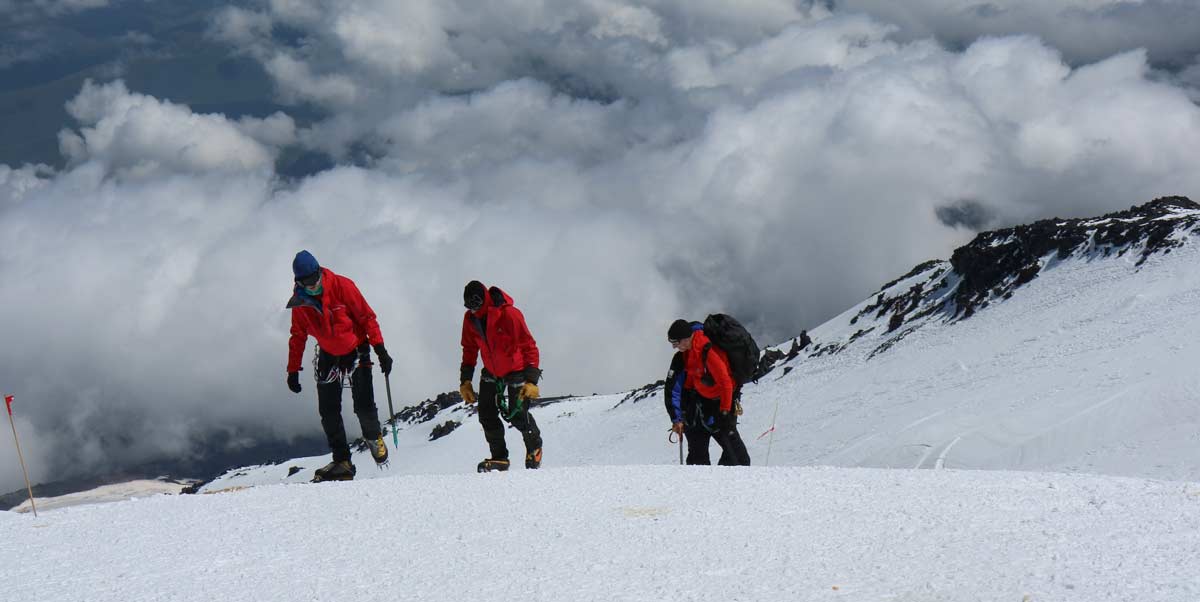
Summit day begins around midnight with a light meal before starting the ascent. The 4-5 hour climb to Gilman’s Point (5,685 meters) involves challenging terrain with loose stones. Aim to reach Gilman’s Point at dawn, then continue along the crater rim to Uhuru Peak (5,895 meters / 19,341 feet).
After celebrating at the summit, descend to Kibo Hut for lunch, then continue to Horombo Hut (3,720 meters / 12,205 feet) for a well-deserved rest.
Day 7: Horombo Hut to Marangu Gate to Arusha
The final day is a 5-7-hour descent through the rainforest to Marangu Gate (1,843 meters / 5,000 feet). After receiving your summit certificate and thanking your mountain crew, return to Arusha for a hot shower and celebratory dinner.
Rongai Route Difficulty and Physical Requirements
The Rongai Route is often called the easiest Kilimanjaro trail due to its gradual ascent. However, this reputation can be misleading, and understanding the real challenges is important for preparation.
Physical Preparation
The Rongai Route does not require technical climbing skills, but good fitness is essential. The gradual ascent does not make the climb easy; summit night still brings significant challenges with altitude, cold, and fatigue.
Begin training 2-3 months before your climb, focusing on cardiovascular fitness through hiking, running, or cycling. Strengthen your legs and core to meet the trail’s demands, especially for summit night.
Altitude Considerations
The Rongai Route’s gradual ascent supports acclimatization, but altitude remains a challenge. It includes fewer “climb high, sleep low” days than Machame or Lemosho, making acclimatization less aggressive.
For this reason, the 7-day Rongai Route itinerary is recommended over the 6-day option. The extra day allows for gradual adaptation, increasing summit success and reducing the risk of altitude sickness.
Mental Preparation
Do not underestimate the mental challenges of the Rongai Route. Summit night tests your resolve with cold, darkness, and fatigue. The 7-day itinerary allows more rest, but mental preparation is still essential.
Rongai Route Summit Success Rates
The Rongai Route has a high summit success rate, especially with the 7-day itinerary. About 80% of climbers reach Uhuru Peak on the 7-day route, compared to 65% on the 6-day version.
Expert operators achieve even higher rates. Climbing Kilimanjaro reports over 95% summit success for both Rongai route options, reflecting the value of experienced guides, proper acclimatization, and quality support.
The difference between the 7-day and 6-day itineraries shows the value of extra time on the mountain. The additional day improves altitude adaptation, comfort, and summit success.
Comparing the Rongai Route with Other Kilimanjaro Routes
Rongai vs. Marangu Route
Both routes share the final summit approach via Kibo Hut and Gilman’s Point. However, the
Rongai Route offers more solitude early on and passes through varied scenery. Its northern approach provides a unique perspective not found on the
Marangu Route.Rongai vs. Machame Route
The Machame Route offers more dramatic scenery and better “climb high, sleep low” acclimatization. The Rongai Route provides a quieter, less crowded experience and drier conditions. Your choice depends on whether you prioritize scenic variety or solitude.
Rongai vs. Lemosho Route
Both routes offer good acclimatization and less traffic than the Marangu route. Lemosho provides more dramatic scenery and the Shira Plateau crossing, while Rongai offers a unique northern perspective and drier conditions. The
Lemosho Route is longer and more scenic; the Rongai Route is more accessible and drier.
Rongai vs. Northern Circuit Route
The Northern Circuit Route offers the best acclimatization and the highest success rates. The Rongai Route is shorter and more accessible for trekkers with limited time.
Best Time to Climb the Rongai Route
The Rongai Route is the driest trail on Kilimanjaro, making it suitable year-round. However, some seasons offer optimal conditions:
- July to September: Best overall conditions with stable weather
- January to February: Warm, clear conditions
- May and November: These months are good for the Rongai Route due to its rain shadow location
April and May are the rainy season, but the Rongai Route’s northern location offers better conditions than southern routes. Some precipitation is still possible, and trails may become muddy.
Frequently Asked Questions About the Rongai Route
Is the Rongai Route the Easiest Kilimanjaro Trail?
The Rongai Route is often considered the easiest due to its gradual ascent. However, it has fewer “climb high, sleep low” opportunities than Machame or Lemosho, which can make acclimatization more challenging. The 7-day itinerary is recommended for better acclimatization.
How Long Is the Rongai Route?
The Rongai Route covers about 79 kilometers (49 miles) from the trailhead to the summit to Marangu Gate. The minimum duration is 6 days, but 7 days is recommended for acclimatization. Including arrival and departure, plan for 9-10 days in Tanzania.
What Is the Summit Success Rate on the Rongai Route?
Industry statistics show about 80% summit success for the 7-day Rongai Route and 65% for the 6-day version. Expert operators achieve over 95% success with proper acclimatization and guidance.
What Scenery Can I Expect on the Rongai Route?
The Rongai Route provides unique northern views of Kilimanjaro and passes through rainforest, heath, moorland, alpine desert, and glacial zones. Highlights include views of the Kenyan plains, the Saddle’s lunar landscape, and Mawenzi’s jagged peaks.
When Is the Best Time to Trek the Rongai Route?
July to September offers the best conditions. The Rongai Route is also a good choice in May and November due to its drier location. April and May are more challenging but still better than southern routes.
Plan Your Rongai Route Adventure Today
The Rongai Route provides a unique and rewarding Kilimanjaro climbing experience, combining solitude, dry conditions, and a gradual ascent.
Whether you seek a quieter climb or plan to trek during the rainy season, this northern trail offers an unforgettable adventure.
Our expert team designs personalized Rongai Route expeditions with a focus on your safety, comfort, and summit success. We provide experienced guides, high-quality equipment, and comprehensive support throughout your Kilimanjaro trek.
Contact us to discuss your Rongai Route climb, customize your itinerary, or combine your Kilimanjaro adventure with a Tanzanian safari. The northern wilderness trail awaits. Let us help you reach Africa’s highest peak. BOOK YOUR TRIP NOW