Table of Contents
- What are the rescue procedures on Mount Kilimanjaro?
- What are the rescue and evacuation options on Mount Kilimanjaro?
- Walking evacuation on Mount Kilimanjaro
- Stoller-type stretcher evacuation on Mount Kilimanjaro
- Vehicle evacuation on Mount Kilimanjaro
- Helicopter rescue and evacuation on Mount Kilimanjaro
- Which are the best hospitals near Mount Kilimanjaro?
- Conclusion
- Are you ready for an adventure of a lifetime?
Rescue services are available to all climbers during a Kilimanjaro ascent.
Assistance and evacuation are provided to those affected by Acute Mountain Sickness (AMS) or sustaining injuries to the foot, ankle, or knees.
There are numerous circumstances that may necessitate requesting rescue or helicopter evacuation.
This article aims to discuss the various rescue options available during your ascent of Mount Kilimanjaro.
Additionally, it will outline the evacuation procedures for Kilimanjaro expeditions.
What are the rescue procedures on Mount Kilimanjaro?
Blessing Safaris’ team monitors the health and well-being of our climbers from arrival to departure.
Our mountain guides are well-trained to handle altitude sickness on Kilimanjaro and injuries that occur among our climbers.
The mountain guide assesses the situation and provides first aid if necessary. The guide will communicate with the ground team to report the situation.
If our climbers are injured or affected by altitude sickness, we will determine whether they will continue hiking.
The report concludes that safety is paramount for our climbers.
The only solution for severe altitude sickness or injury is to descend to the lower camp or seek medical attention outside the park.
Mount Kilimanjaro offers options for rescue and evacuation.
Your mountain guide will determine the best option for rescue or evacuation during your climb of Mount Kilimanjaro.
The choice between a rescue and an evacuation will depend on your location and the severity of your mountain sickness.
What are the rescue and evacuation options on Mount Kilimanjaro?
Walking evacuation on Mount Kilimanjaro
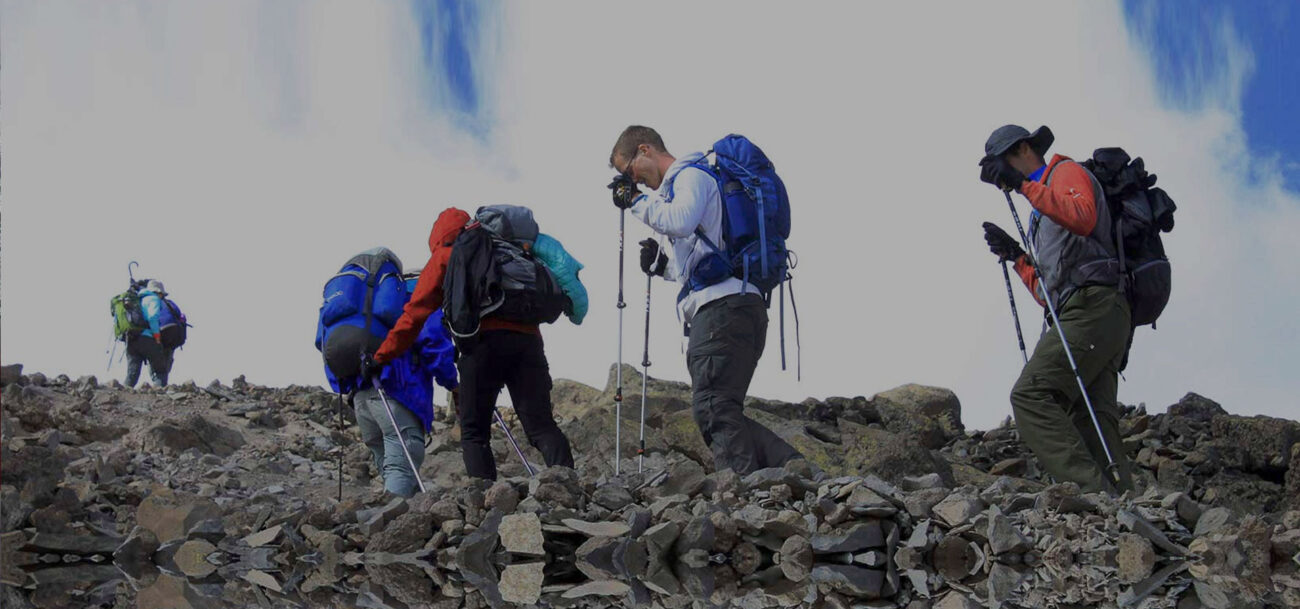
Not every illness or injury requires emergency evacuation for climbers on Kilimanjaro.
Some climbers may sustain minor injuries or experience less severe conditions that prevent them from continuing to other camps.
In such cases, Blessing Safaris guides or crew will accompany you to lower camps or even outside the park.
If you leave the park, our driver will be ready to take you back to either the hospital or the hotel.
Be aware that you may incur additional costs for staying at the hotel or hospital; these should be included in your trip cost. Having the best travel insurance helps.
The Blessing Safaris team will closely monitor your situation, whether in a hospital or at the hotel, to ensure a safe recovery.
Stoller-type stretcher evacuation on Mount Kilimanjaro
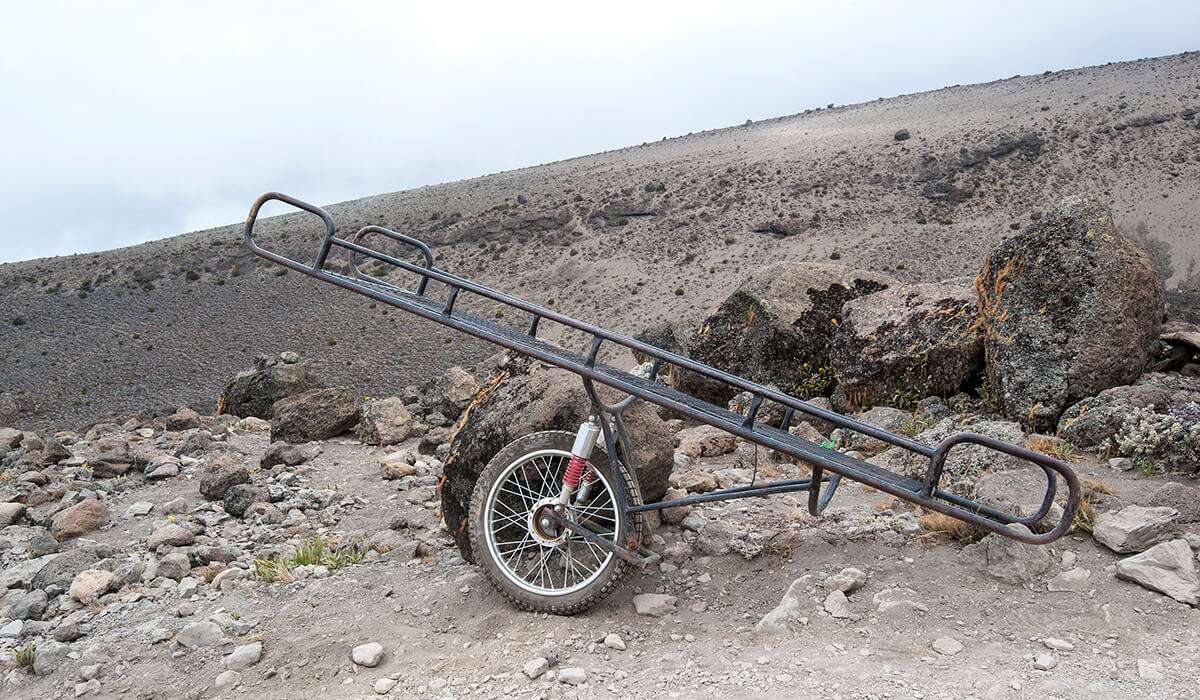
To get an idea of what these stretchers look like, note that they feature a large wheel. These stroller-type stretchers are used to transport climbers with leg injuries, altitude sickness, or other illnesses requiring evacuation.
Instead of carrying a climber on the back, this type of stretcher is used. These stretchers are limited to the other Kilimanjaro routes; you can find them on the Marangu route.
Each hut on the Marangu route is equipped with this type of stretcher. Learn more about the Marangu route climbing packages
Vehicle evacuation on Mount Kilimanjaro
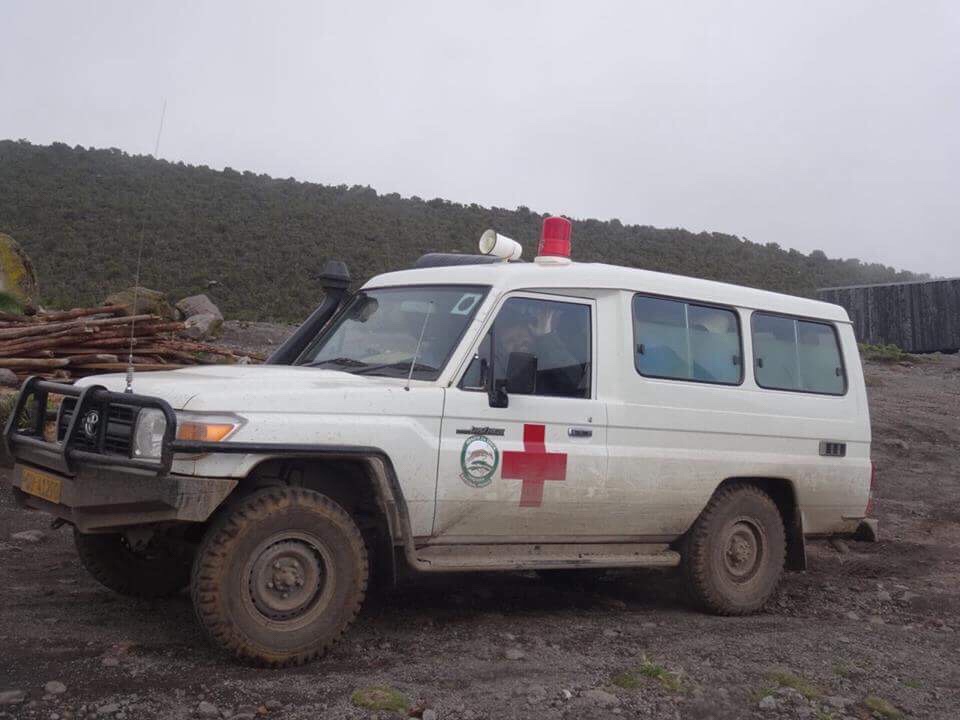
The Kilimanjaro National Park Authority (KINAPA) provides two standby rescue vehicles.
These vehicles are essential for meeting climbers’ needs during their trip to Kilimanjaro.
The mountain’s terrain prevents these vehicles from reaching every part of the mountain.
If you’re climbing via the Marangu or Rongai routes, the rescue vehicle can reach as far as the Horombo camps (3780m) and return to the Marangu Gate.
For climbers on the Machame and Lemosho routes, the rescue vehicle arrives at the Shira Cave Camp. It then takes the climber back to the Londorossi Gate.
Depending on the relevant gate, Blessing Safaris‘ vehicle will be waiting to transfer our climber to either a hospital or a lodge, depending on their health condition.
Helicopter rescue and evacuation on Mount Kilimanjaro
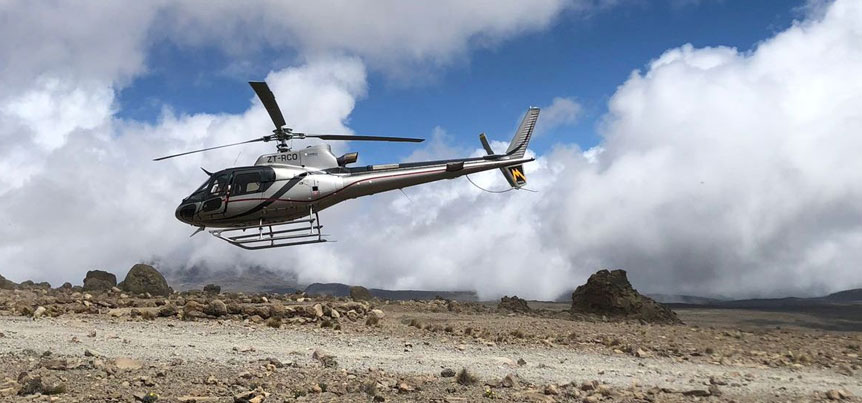
For severe illness or serious injury, the only option is a helicopter rescue.
With support from our guides, we request helicopter evacuation services from our partners.
For Mount Kilimanjaro, we partner with Kilimanjaro Search and Rescue (SAR).
SAR is a private company that provides search-and-rescue services during emergencies on Mount Kilimanjaro.
SAR operates 24/7, with medical doctors on board to provide first aid on arrival. SAR uses Airbus AS 350 B3 helicopters based in Moshi town.
It’s a life-saving service. SAR uses well-trained pilots, rescue doctors, and aircrew for every mountain rescue.
In addition, SAR operates a medical facility focused on high-altitude conditions.
As a reminder, to request a helicopter evacuation, all climbers must have travel insurance that covers evacuation up to 6,000 meters above sea level.
Which are the best hospitals near Mount Kilimanjaro?
There are many hospitals and medical facilities in Kilimanjaro and Arusha.
Some hospitals are government-run, while others operate privately. These hospitals serve local and international patients.
The nearby health centers include KCMC Hospital, Machame Hospital, and others.
Conclusion
As we bring our discussion of Rescue and Evacuation for Mount Kilimanjaro to a close, we’d like to emphasize a crucial rule:
“Don’t hurry!” This is perhaps the most important guideline for any trekker aiming to reach the summit of Kilimanjaro.
In Swahili, “pole-pole” means “don’t hurry.” Your mountain guide will often remind you of this.
It’s imperative to heed their advice and maintain a slow, steady pace during your climb. Many altitude-related illnesses result from rapid ascent.
Your mountain guides possess invaluable knowledge of the mountain, and it’s essential to follow their instructions carefully.
For any further questions or information, please don’t hesitate to reach out to our experts today!
Are you ready for an adventure of a lifetime?
Is Kilimanjaro on your bucket list? Ready to turn your dream into reality? Let’s start planning. Complete the form below.